Most Lodi driveways still have hardware from the 1960s and 70s. Here's what our valley heat does to springs, tracks, and panels that old, and what to watch for.
Most of the housing stock around here went up between 1946 and 2001, with the median year sitting at 1974, and the bulk of it in that 1960s-to-70s window. That matters because a lot of what's hanging in these garages is original or close to it: single-thickness steel panels, torsion springs sized for hardware nobody stocks fresh anymore, and tracks bolted to framing that's shifted a little over fifty years.
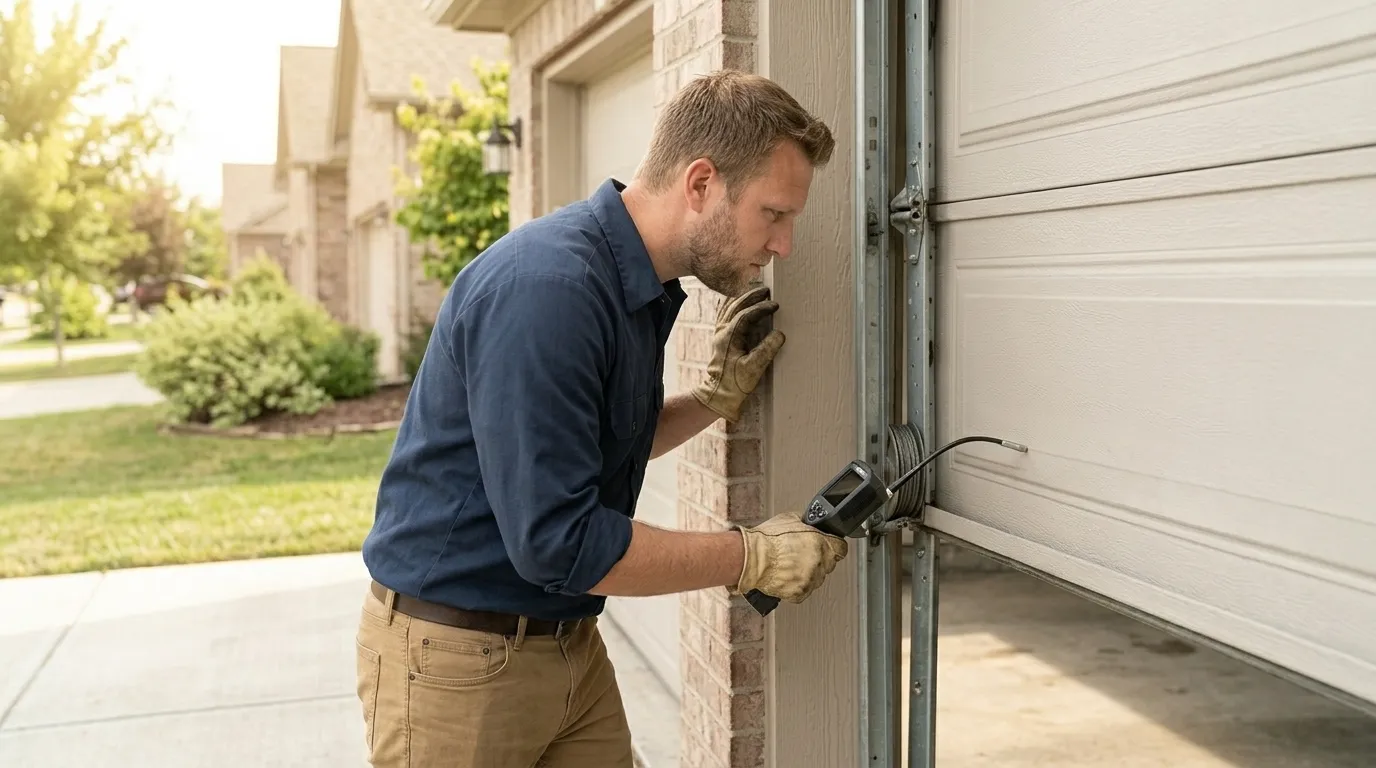
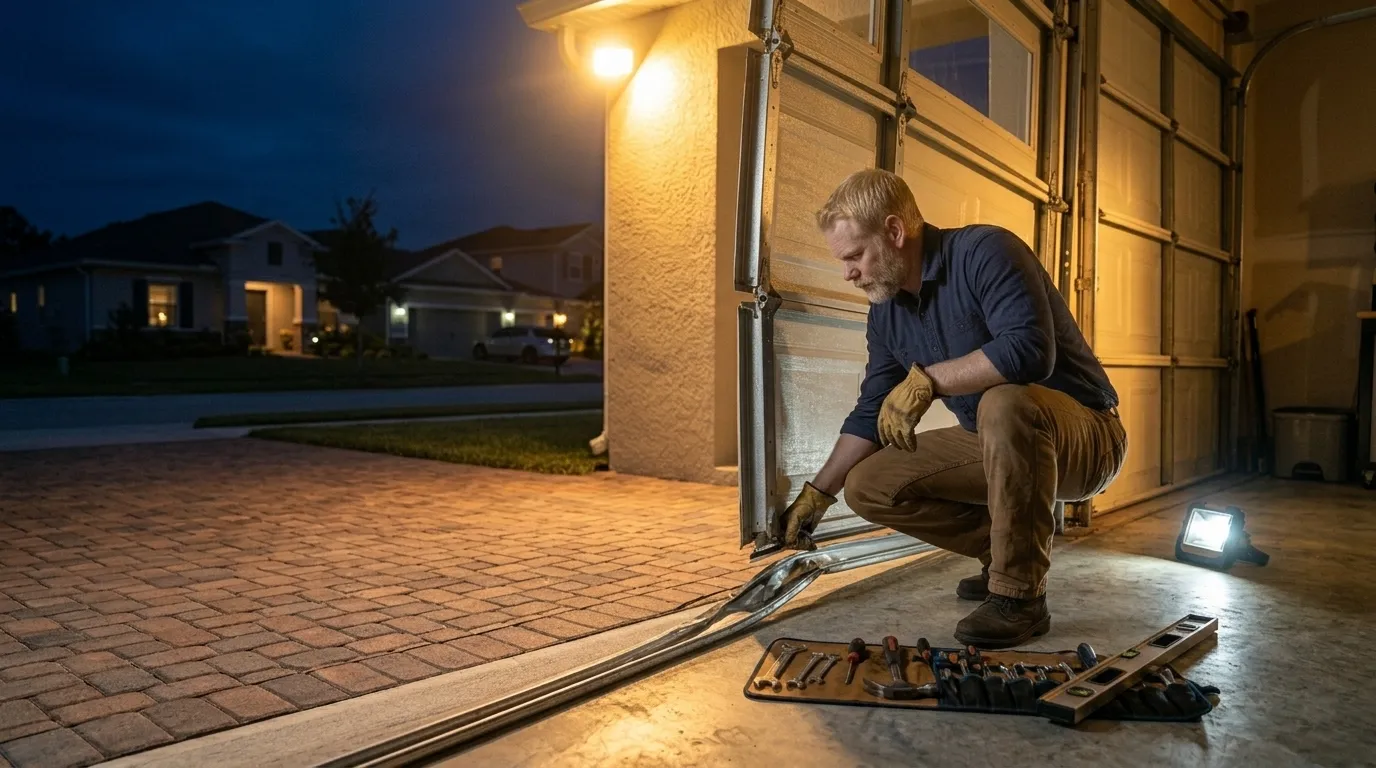
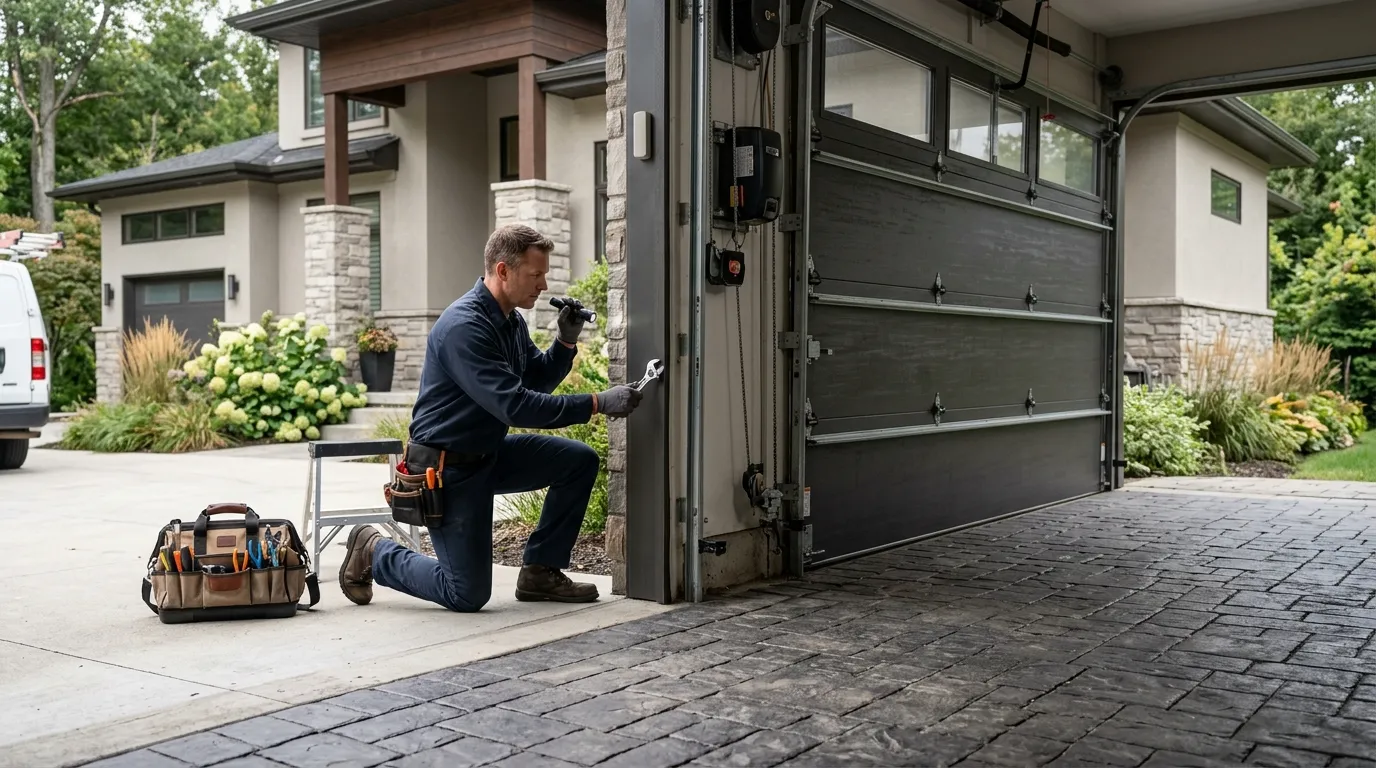
The mistake we see most is homeowners chasing the wrong part. A door that's slow to close or grinding on the way up gets blamed on the opener, so people swap the opener unit and the door still binds, because the actual problem is a track that's out of plumb or a spring that's lost tension on hardware that predates the opener by decades. If your house is one of the older ones on its block, the opener is rarely the first thing worth checking. The spring and the track brackets are.
We won't tell you every door from that era needs replacing. Plenty of that original steel is still straight and sound. But it's worth knowing what you're actually working with before you spend money on the wrong fix.
What the Weather Here Does to It
This is a moderate-heat climate band, not a freeze-thaw one, and that changes what actually breaks. You're not dealing with ice locking a track or a spring snapping from cold contraction. You're dealing with steady heat load on hardware that's often 40 to 60 years old.
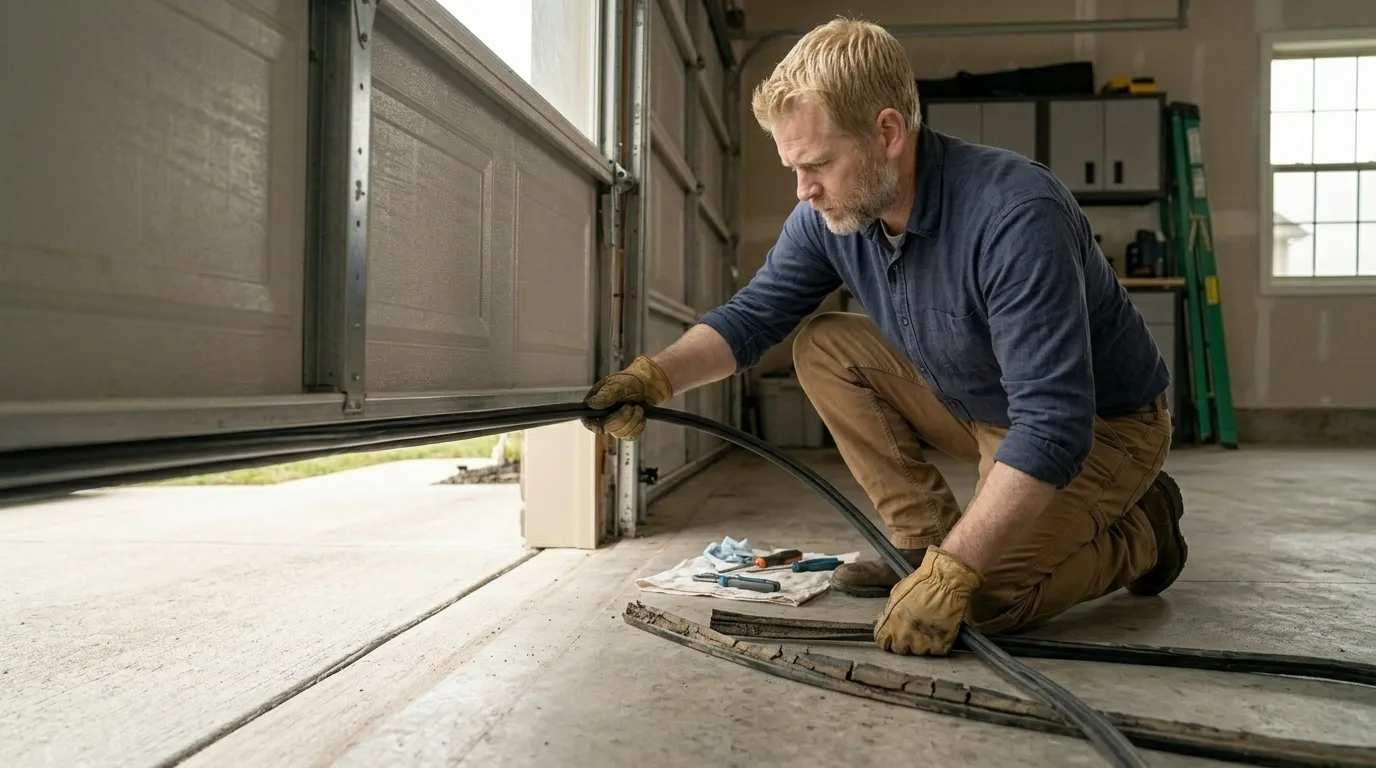
Grease and lubricant on original rollers and hinges thins out and runs off in sustained heat, which leaves metal grinding on metal longer than it should. Rubber weatherstrip along the bottom of older doors dries and cracks under repeated sun exposure on south- and west-facing garages, and once it cracks it stops sealing, which lets more heat and dust in and accelerates wear on everything downstream of it. Steel panels from the 1960s and 70s expand slightly across a hot afternoon and contract overnight, and on a door that's already a little out of square from decades of that cycle, the panel seams work loose faster than they would on a newer, better-braced door.
None of this is dramatic. It's slow wear, which is exactly why it gets ignored until a cable frays or a spring finally lets go.
The Situation
Across the service area there are roughly 26,985 households, with about 17,555 of those in owner-occupied houses, and median household income sits at $91,429. That's a lot of houses in the same boat: original garage hardware, moderate heat wear, and owners who've generally got the means to fix things properly rather than patch them, once they know what's actually wrong.
We cover the towns and unincorporated areas around here, including places like Woodbridge, Collierville, and out to Lockeford, Galt, and Thornton. The housing age pattern holds across most of that footprint, since the growth that put these neighborhoods up happened in roughly the same stretch of decades.
The practical upshot: if your door is original to a house built anywhere near that 1974 median, the spring, the rollers, and the weatherstrip are the parts most likely to be at or past their working life, regardless of how the opener is behaving. Panels usually outlast the moving parts around them.
Doing Nothing For Now
Not everything needs a call today. A dry, squeaky roller on an otherwise straight door can wait weeks. Faded, hardened weatherstrip that still seals can wait until you're doing other work on the door.
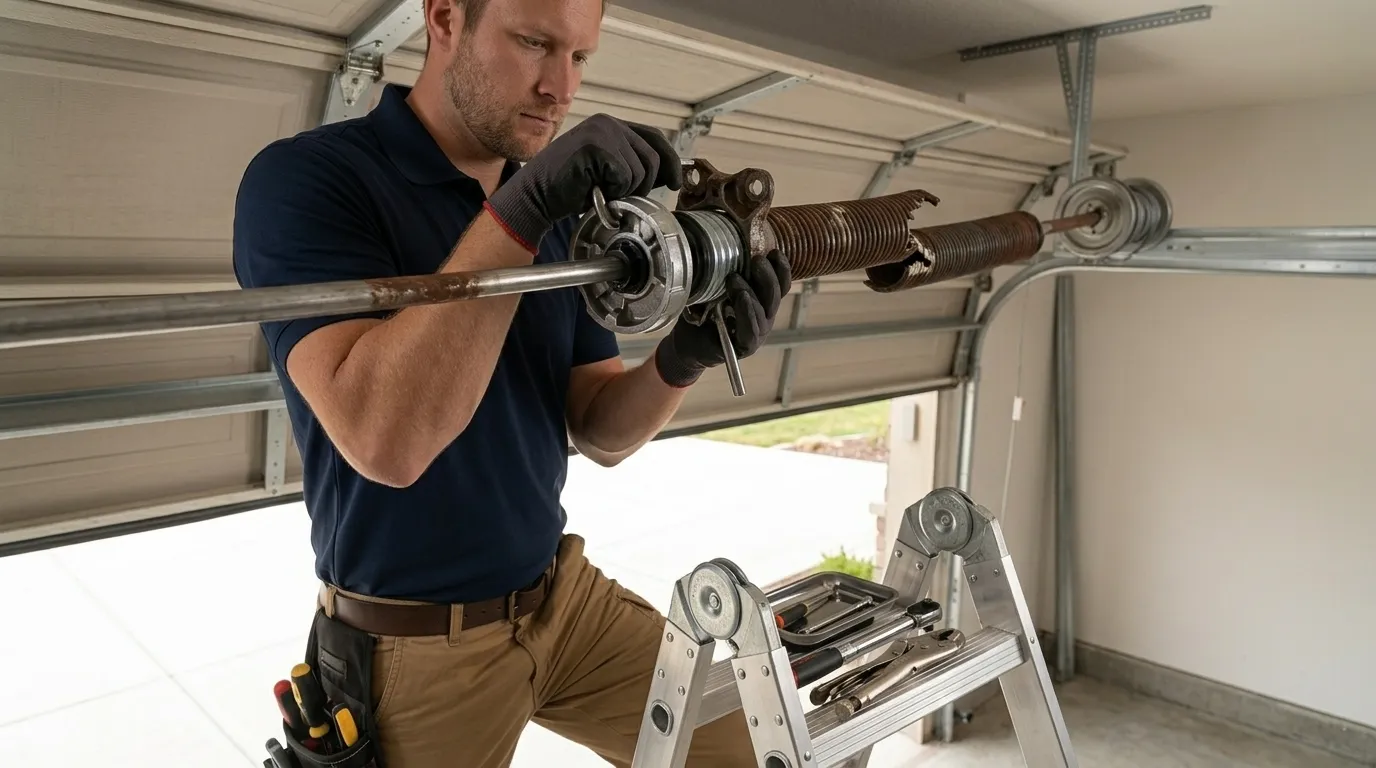
What can't wait is a torsion spring that's visibly stretched, rusted through, or has a gap in one of the coils, and a cable that's frayed or kinked anywhere along its length. Those parts hold the full weight of the door under tension, and on a door this old the hardware is often original, meaning it's had 40-plus years of heat cycling on it with no idea when it was last inspected. When one of those fails, it fails all at once, not gradually.
Honest limitation: we don't do cosmetic refinishing on original wood-panel doors from this era, and if a door's steel has rusted through structurally rather than just cosmetically, replacement is usually the better call than a repair that won't hold. We'll tell you which one you're looking at before we quote anything.
How it works
From “it’s stuck” to “it’s fixed”
1
Tell us what’s wrong
Describe the symptom - won’t open, loud bang, opener runs but the door won’t move.
2
On-site diagnosis
A technician tests the door under power and by hand and finds what actually failed.
3
Clear, up-front plan
You get the fix that’s needed and what drives the cost - before any work starts.
4
Repaired & tested
The repair is done, the door is set true and tested, and the work area left clean.
Next step
Serving Lodi, CA - tell us what your door’s doing and we’ll take it from there.
Why does my garage door feel stiff in the afternoon but fine in the morning?
Steel panels and tracks expand slightly as they heat up over the day, and on an older door that's already a little out of square, that small expansion is enough to make it bind. It's common on doors from the 1960s and 70s stock still common around here, and it usually points to a track or spring adjustment rather than the opener.
Is my original garage door hardware from the 1970s worth fixing or replacing?
Depends on what's actually worn. Steel panels from that era often outlast the moving parts around them, so a straight, unrusted door can usually keep its panels while the spring, rollers, and weatherstrip get replaced. If the steel itself has rusted through, replacement is the more honest answer.
Do I need to worry about cold-weather spring failures in Lodi?
Not really. This is a moderate-heat climate band, not a freeze-thaw one, so the wear pattern here is heat drying out lubricant and weatherstrip over years, not sudden cold-snap failures. The failures we see tend to be slow wear catching up with older hardware, not weather shock.
How do I know if my door's spring is original to the house?
If the house was built anywhere near the local median year of 1974 and the spring has never been replaced that you know of, it's a safe bet it's original or close to it. A spring that old showing rust, gaps between coils, or visible stretching should be dealt with before it fails under tension.
Ready to get your garage door sorted?
Tell us what it’s doing and where you are in Lodi - we’ll take it from there.