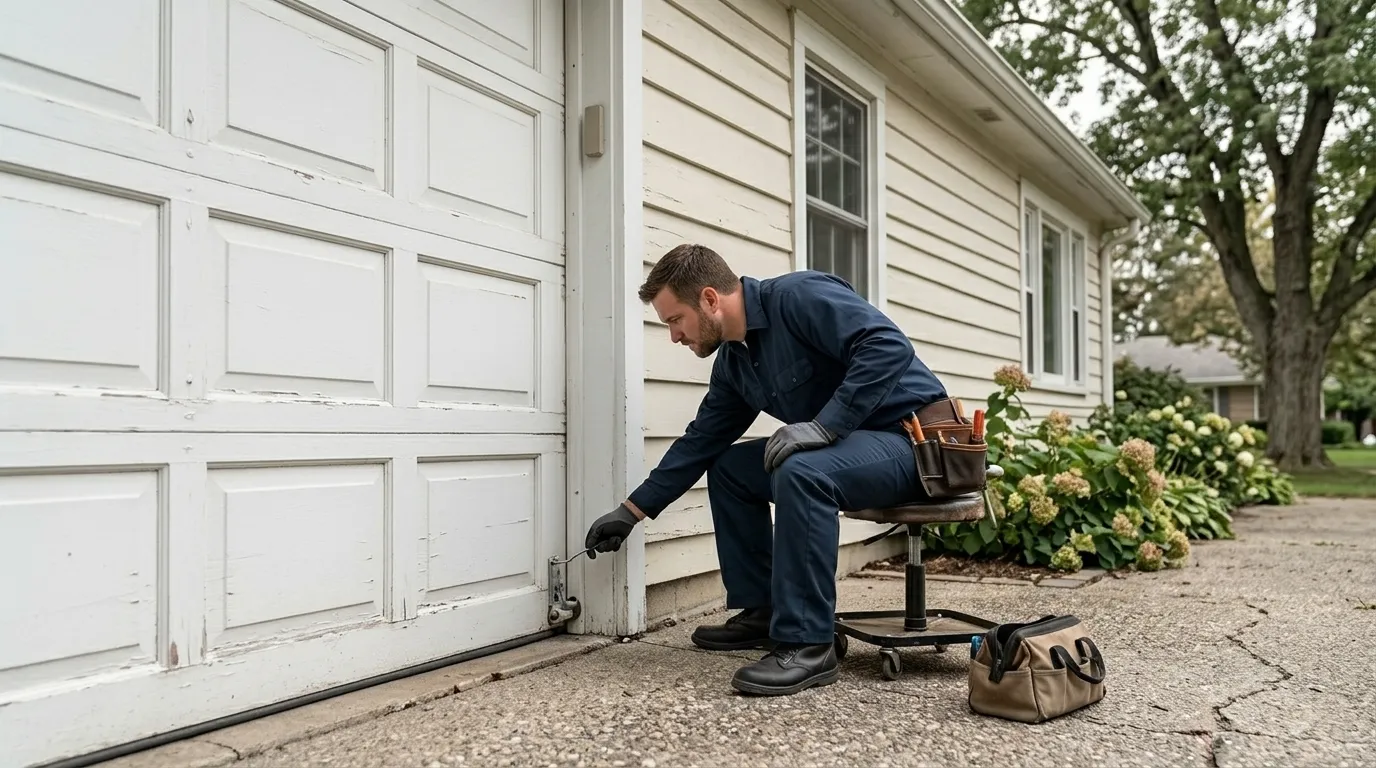
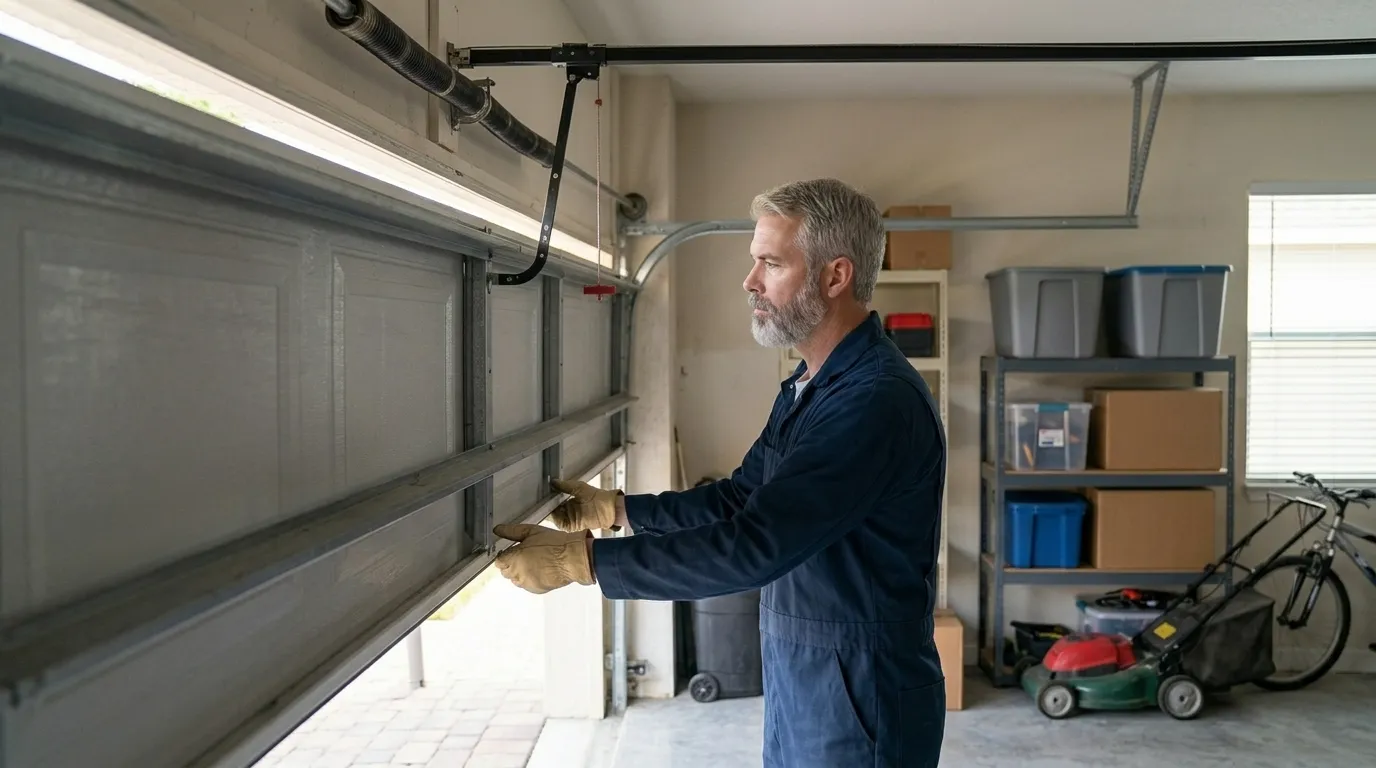
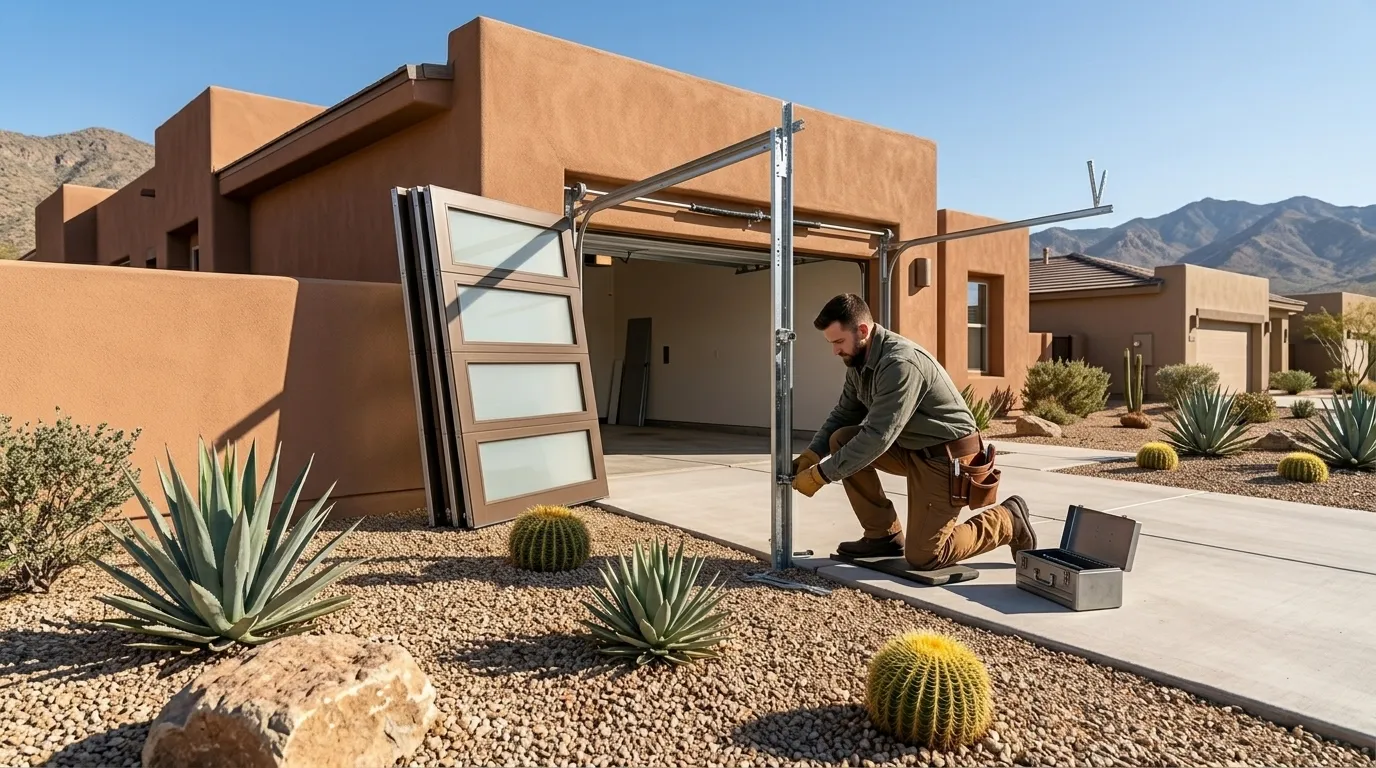
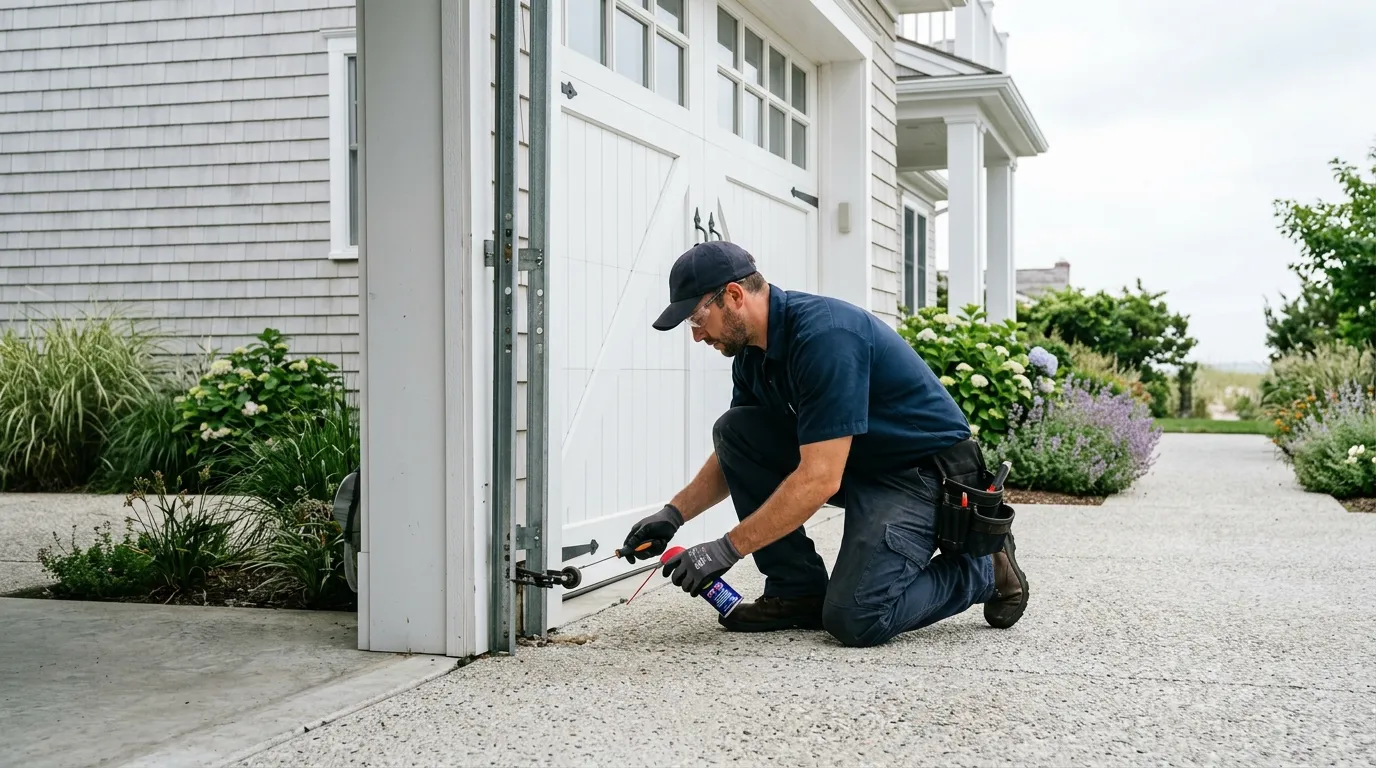
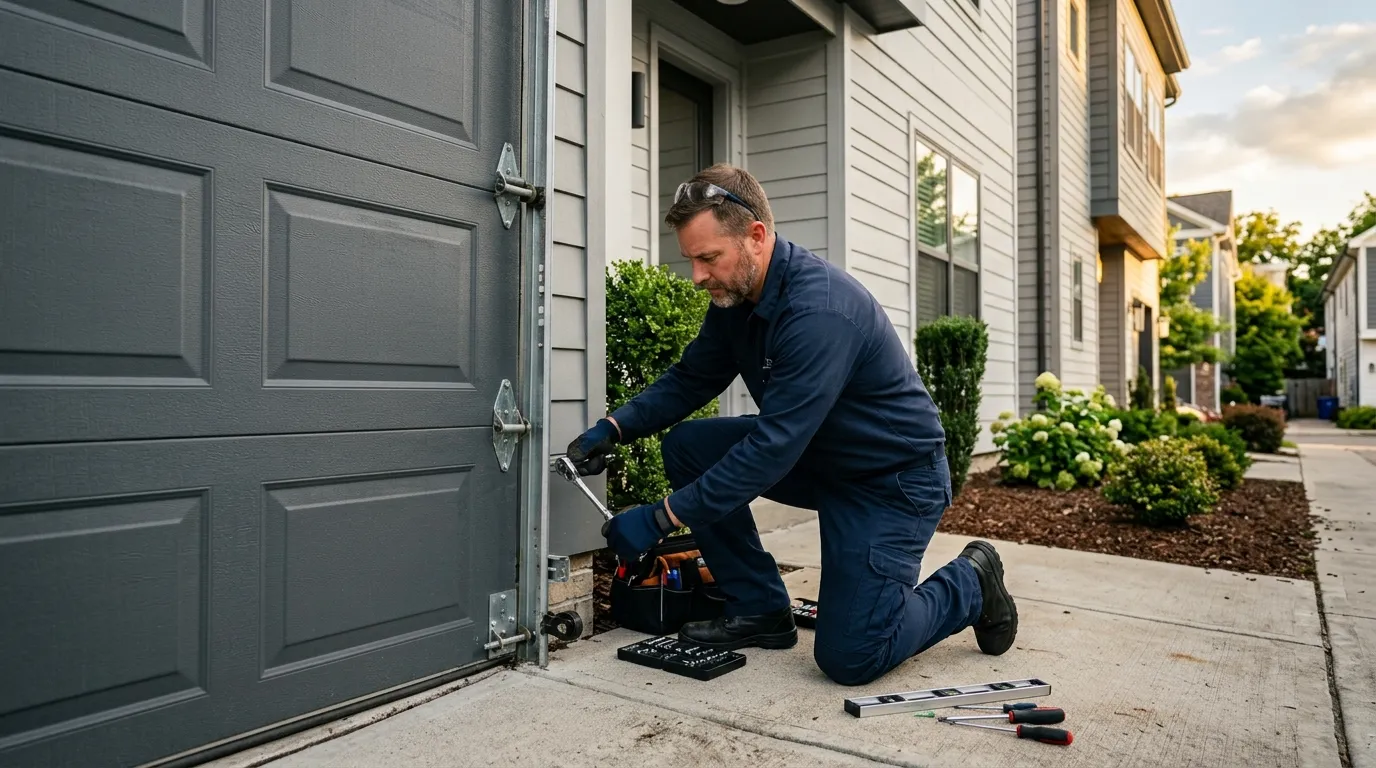
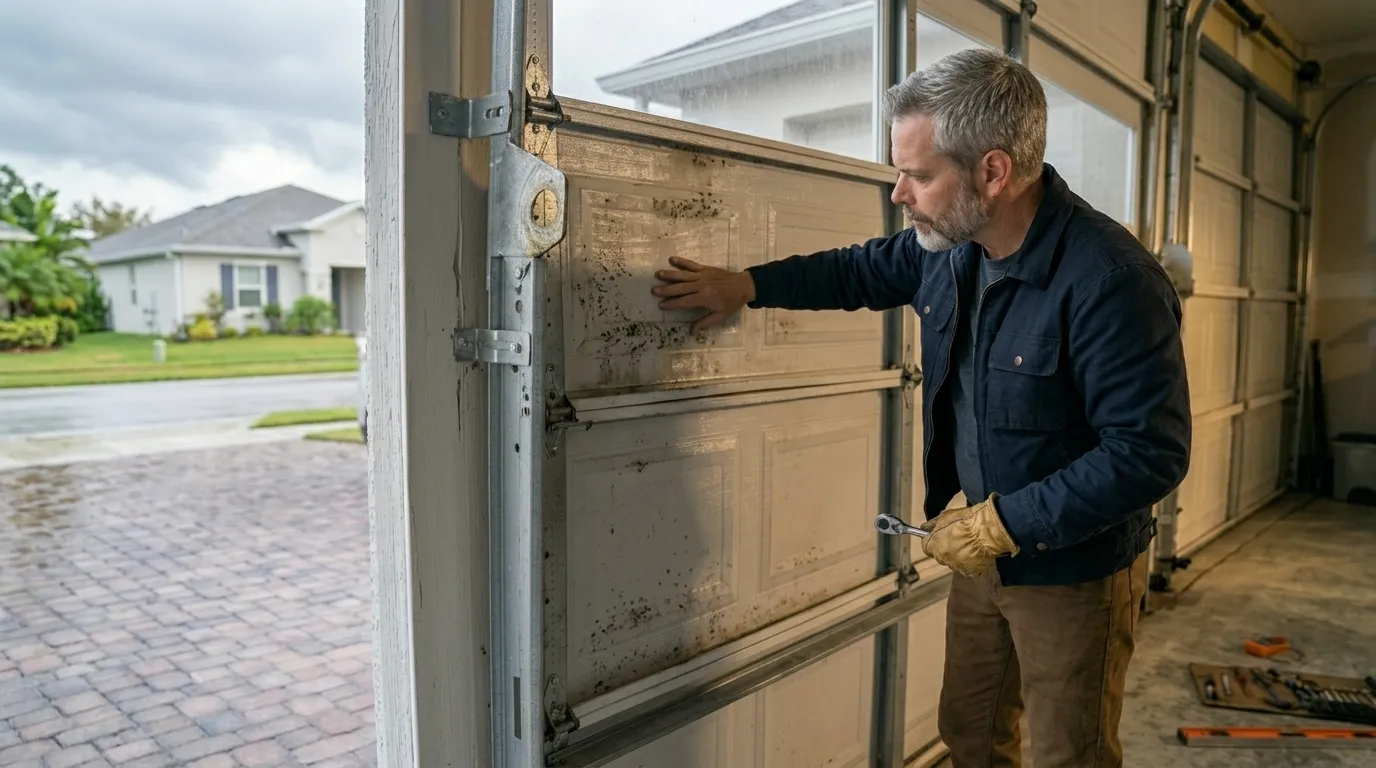
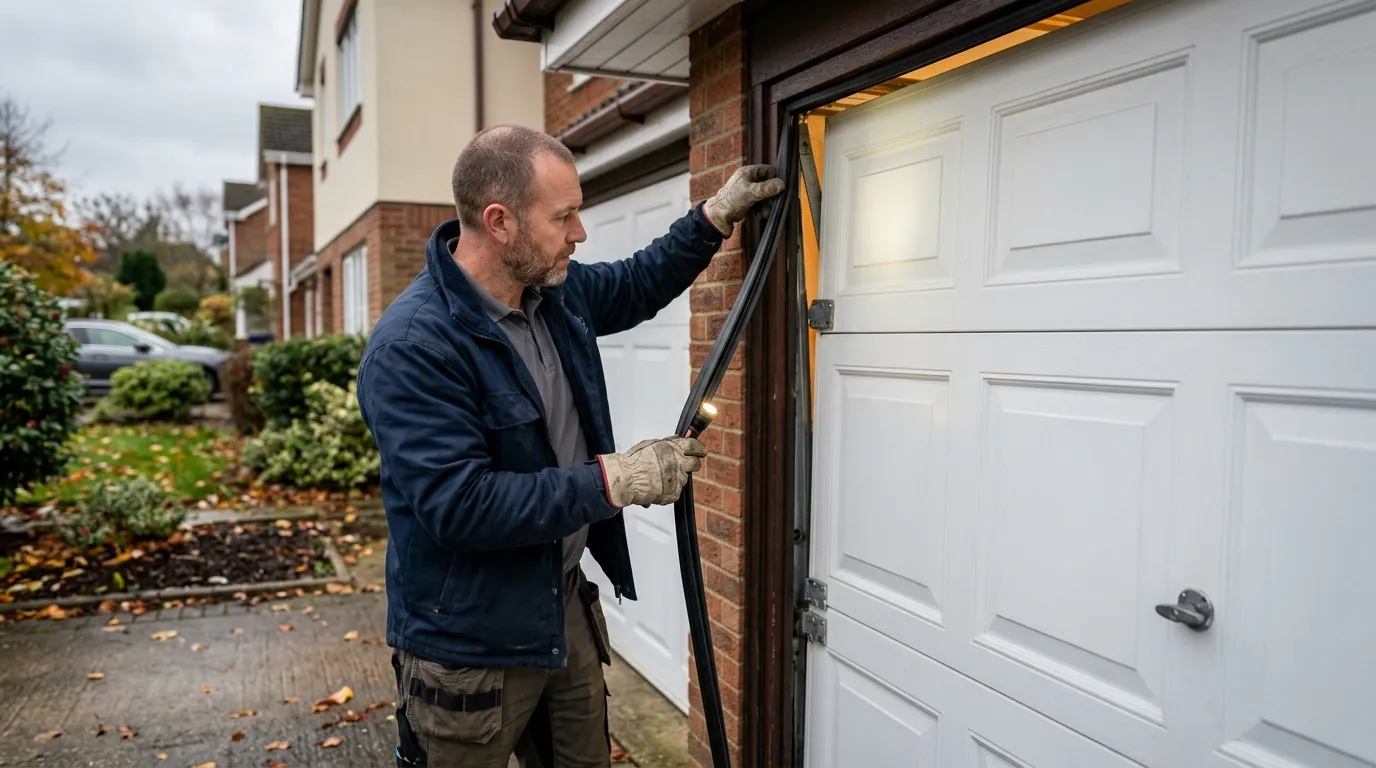
You'll hear it before you see it. A grinding or popping sound as the door travels, usually worse right where the roller passes the bend from vertical to horizontal track. Some owners notice the door jerks at that spot instead of gliding through it. Others see a roller stem worn down to a nub, or a roller that's cracked clean through and hanging by the bracket.
On a lot of the houses in this service area, the original hardware is still in place. Housing here runs from 1946 up through 2001, with the median build landing around 1974 - so a steel roller on a plain stem, riding steel-on-steel in the track, is not unusual. Those rollers were fine hardware for their era, but they were never sealed and they were never quiet, and fifty years of use wears the stem thin enough that the roller starts binding instead of turning.
If the noise is only on one side of the door, that's usually one bad roller, not the whole set. If it's every roller on both tracks, the door's original hardware is just at the end of its life and a full set makes more sense than fixing one at a time.
What Is on the Truck
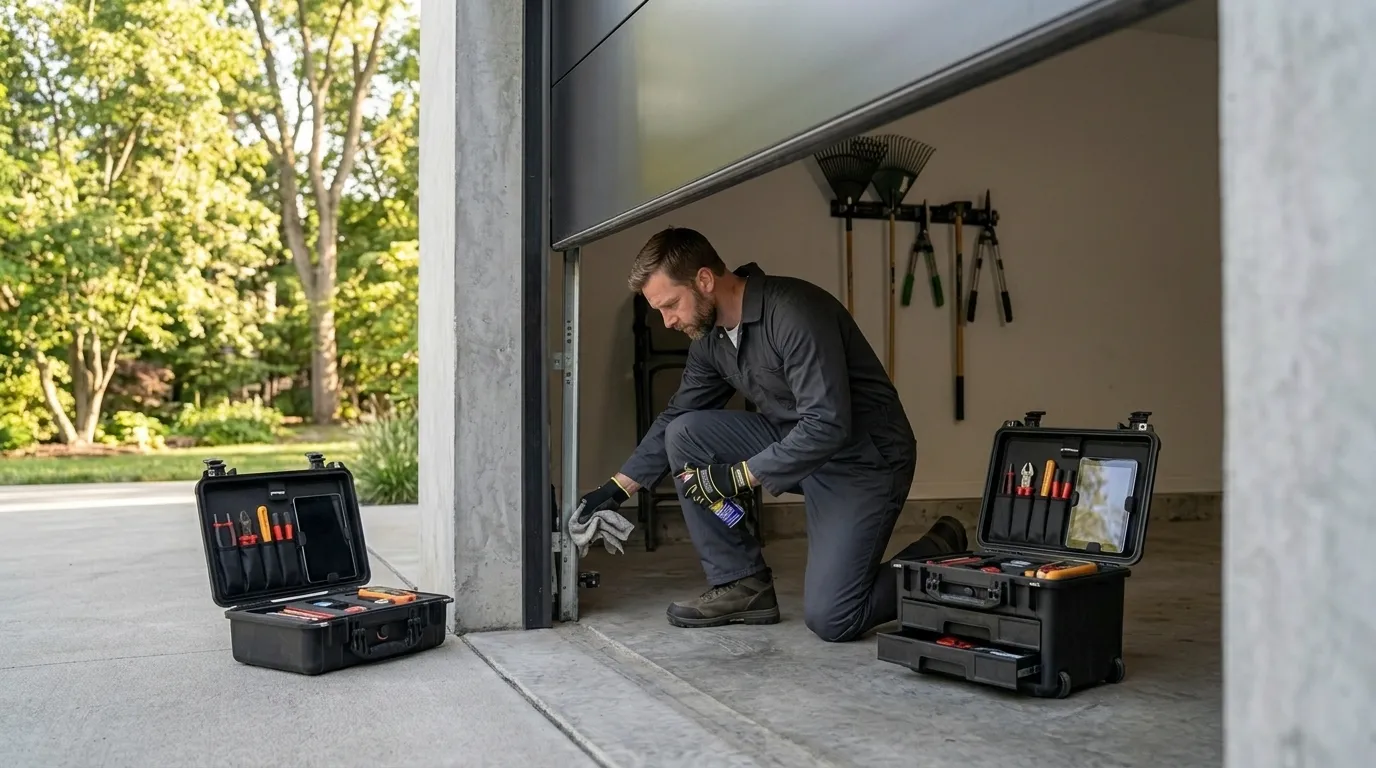
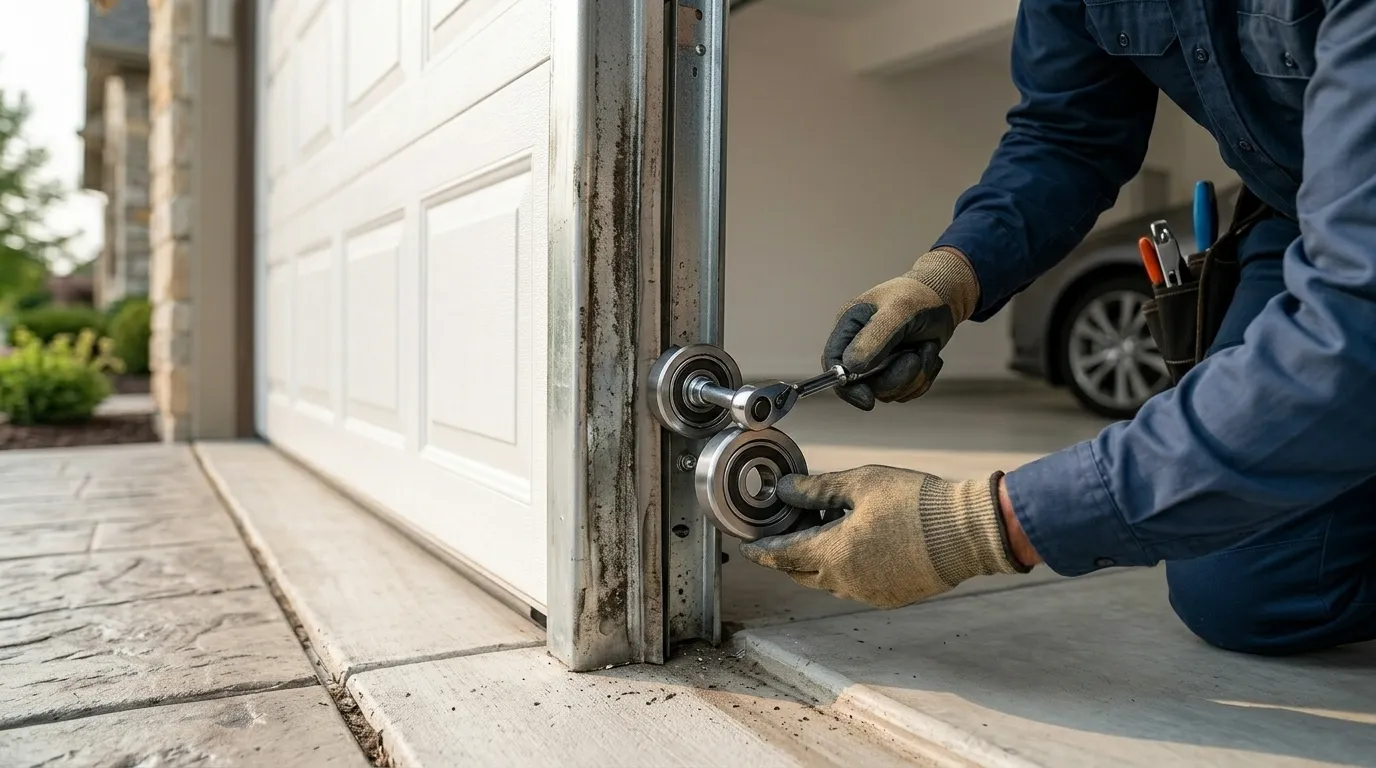
For this job the truck carries steel rollers with sealed bearings and nylon rollers with sealed bearings, in the stem lengths and roller diameters that cover residential doors - both the short-stem and long-stem setups. Sealed bearing rollers are the standard replacement now; they run quieter than the open steel rollers a lot of older doors still have, and they don't need the periodic oiling those old rollers wanted.
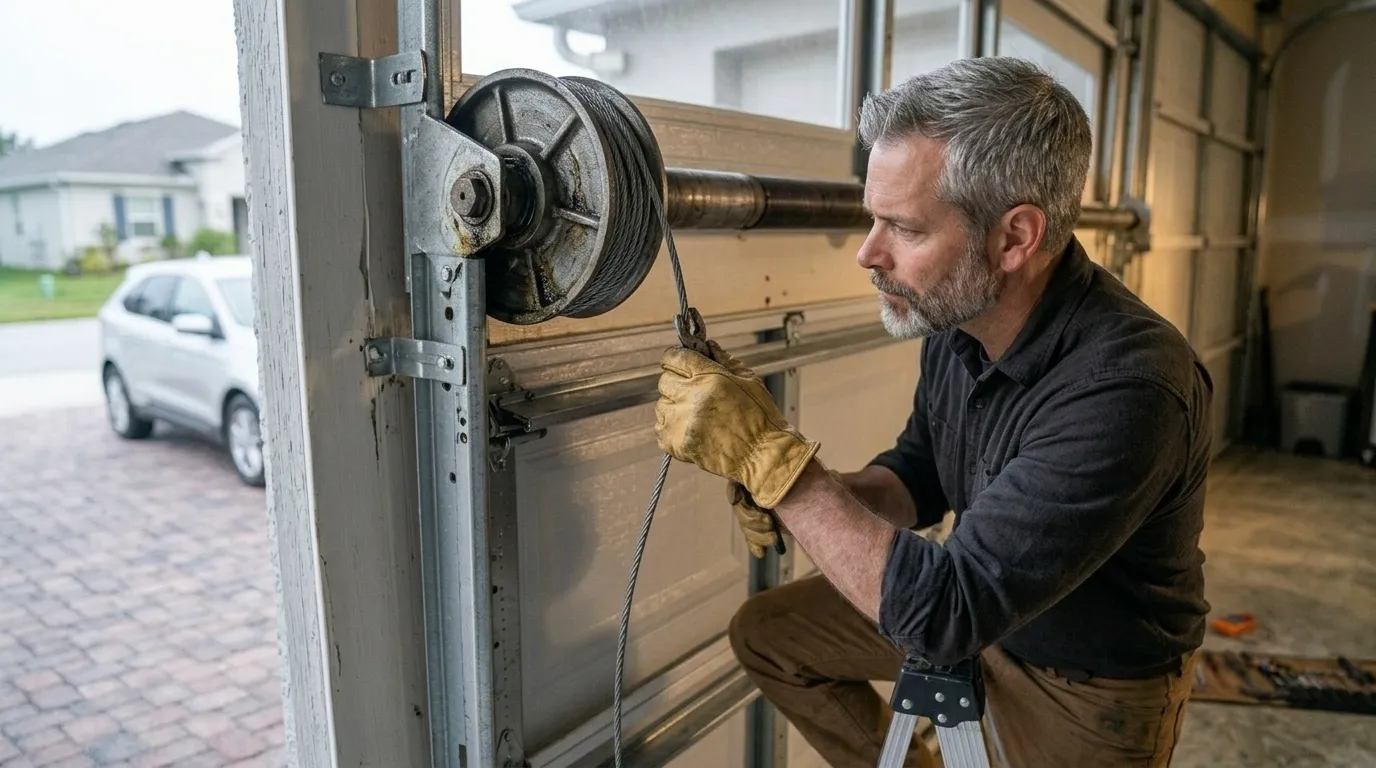
Along with the rollers, the truck carries the brackets that hold them, since a bracket that's worked loose or bent from a stuck roller often needs to come out with it. There are also spacers and shims for track alignment, because a new roller in a track that's slightly out of true will wear the same way the old one did.
One thing the truck does not carry: replacement track sections in every gauge and length. Track comes in enough width and gauge variations that matching a bent or rusted section usually means ordering the right piece rather than pulling one off the truck. That's the one part of this job that can turn a same-visit fix into a two-visit job.
What the Fix Involves
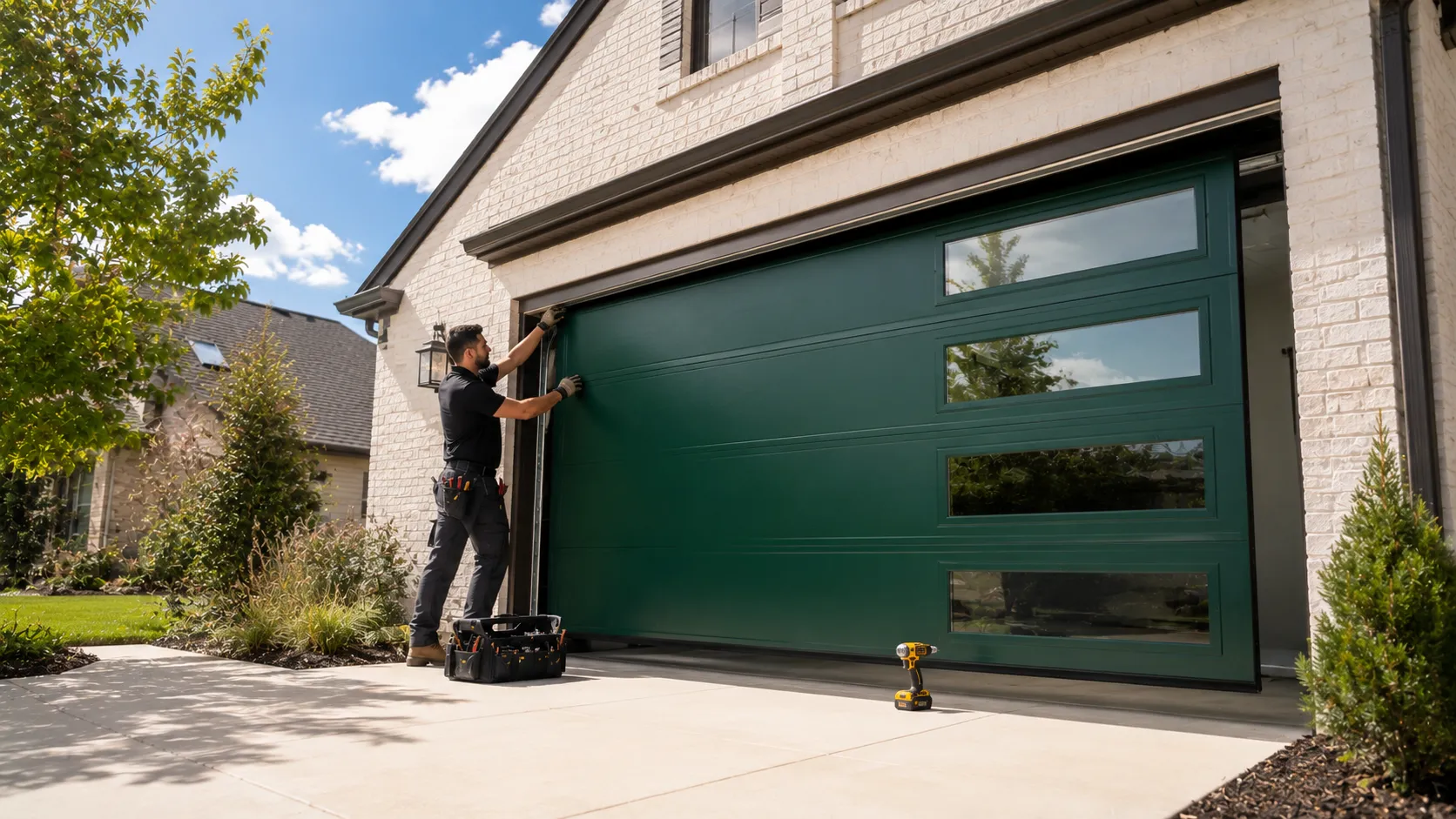
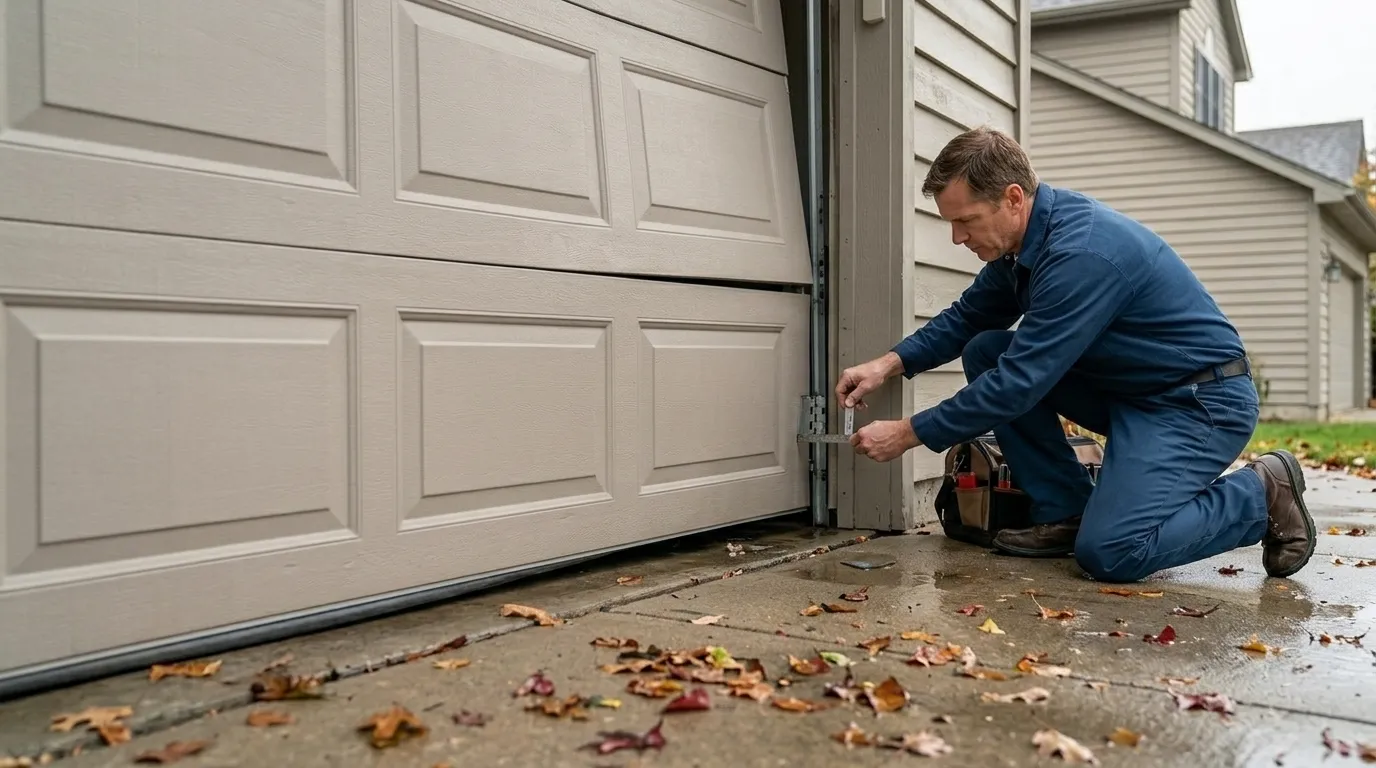
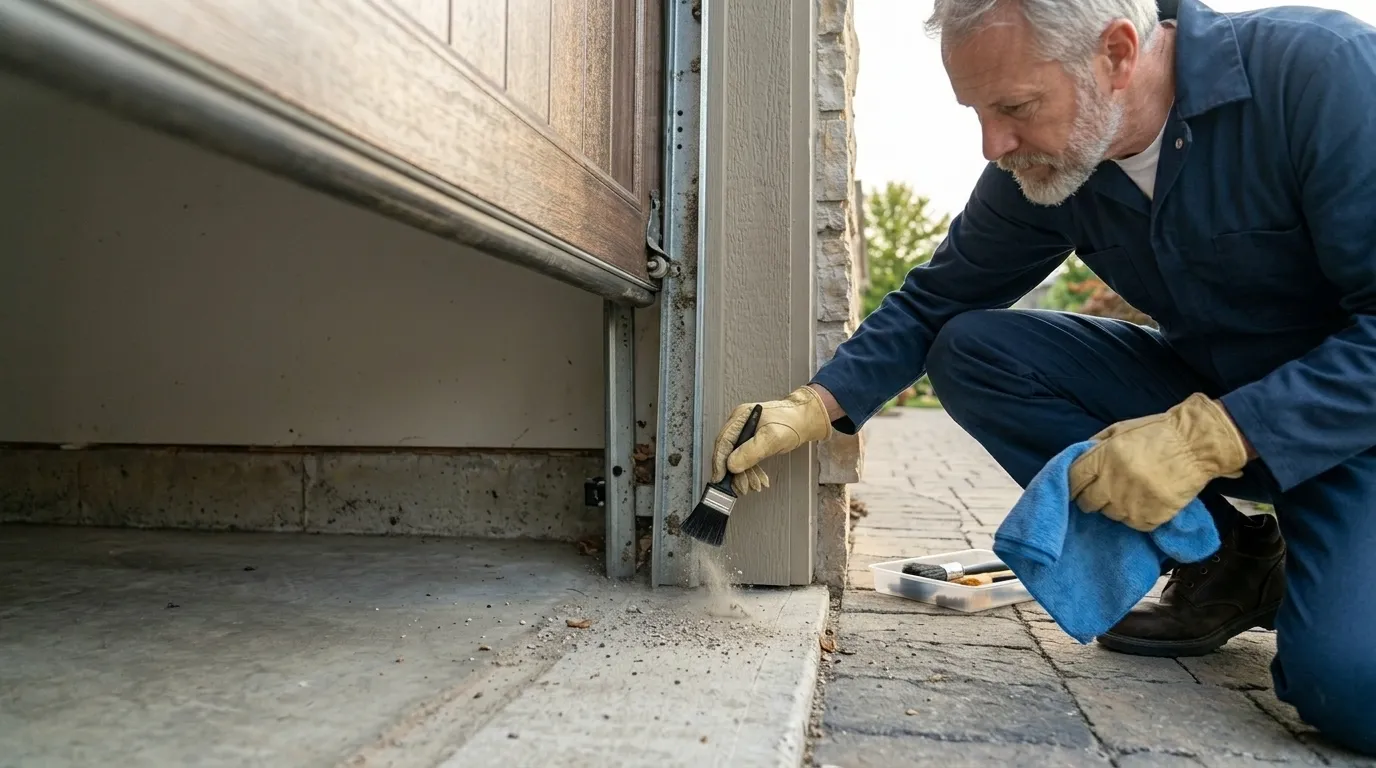
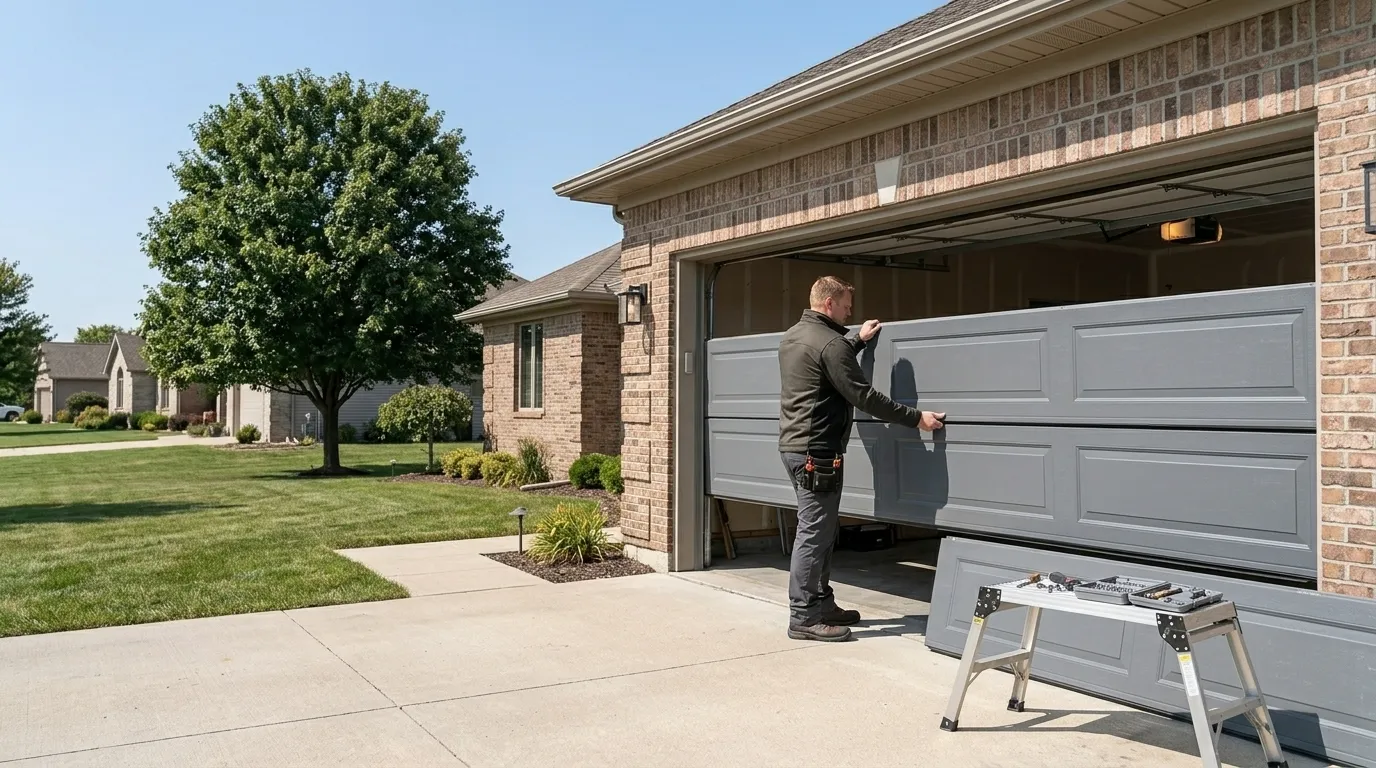
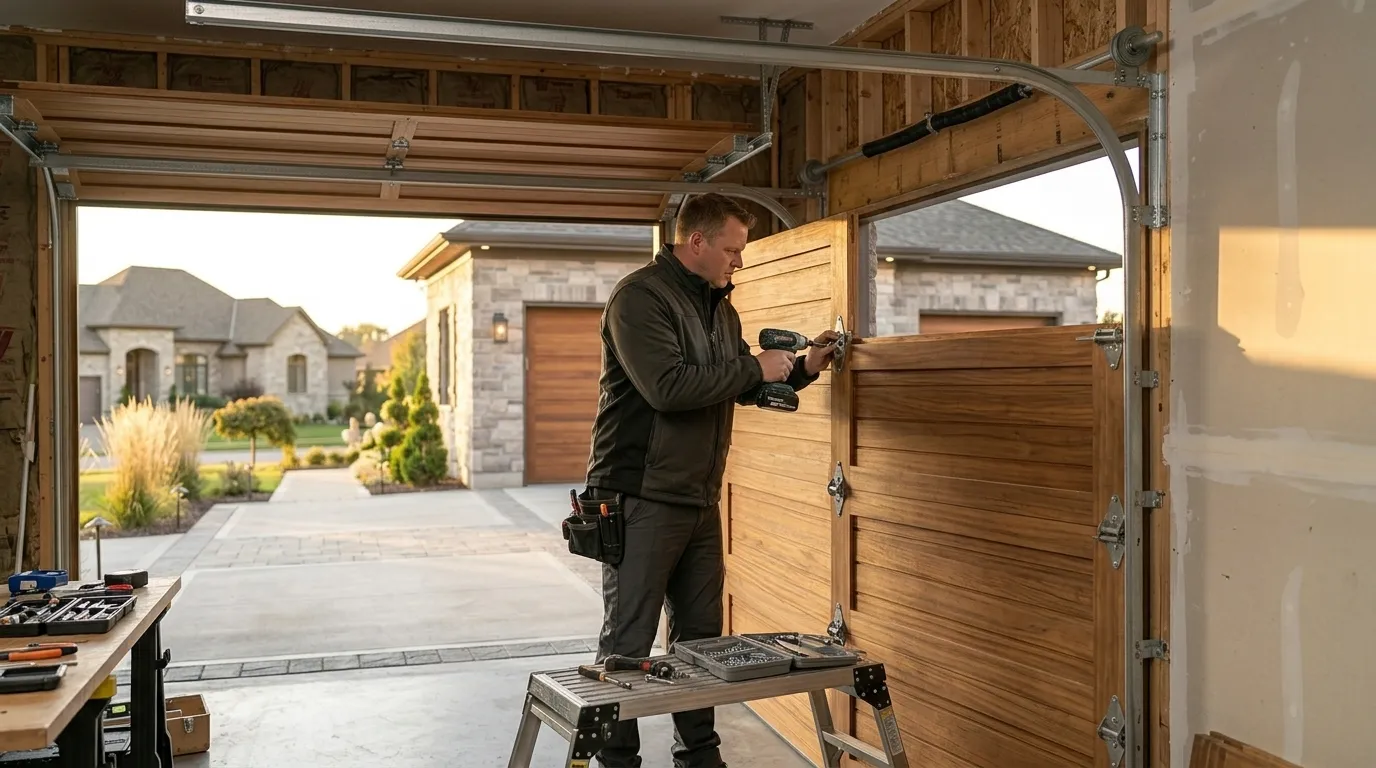
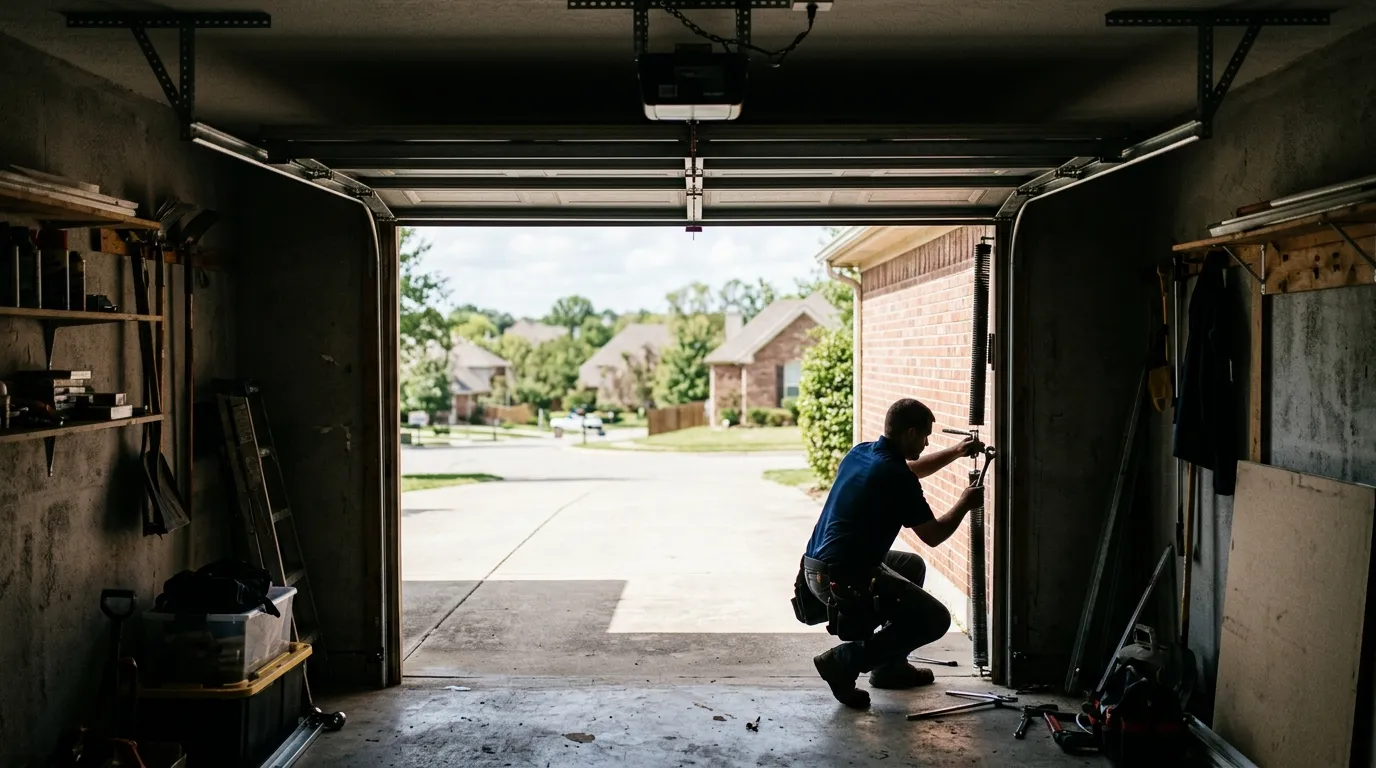
The door comes down, the torsion spring gets locked off, and each roller comes out of its bracket one at a time so the door stays supported on the tracks throughout. Every roller gets checked against the track it rides in - not just replaced blind - because a roller that's wearing unevenly is often telling you something about the track alignment, not just the roller itself.
Nylon goes in where quiet operation matters most, usually the rollers nearest the house. Steel sealed-bearing rollers go in where load is highest, typically the bottom rollers on a heavier door. Brackets get re-set square before the new roller goes in, since a roller seated in a crooked bracket wears out again fast regardless of what it's made of.
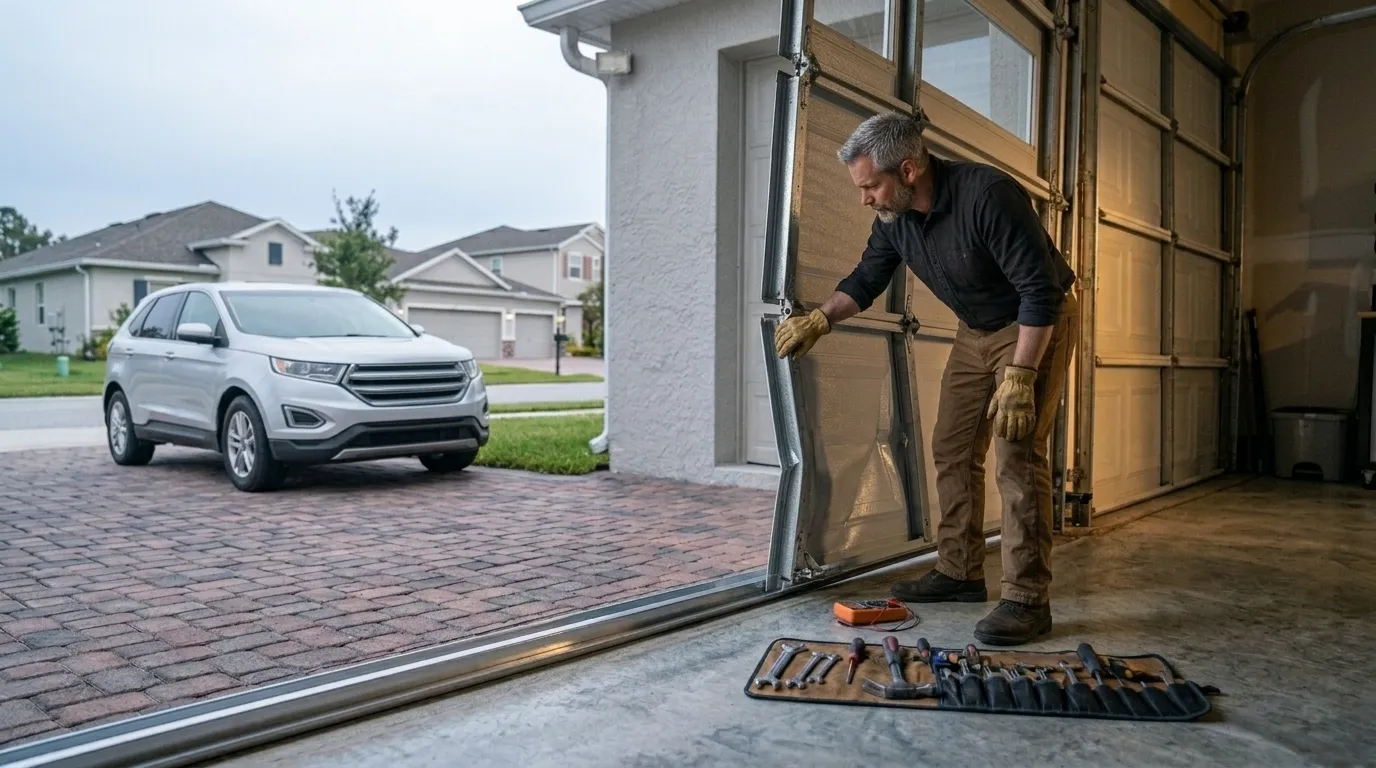
The honest limitation here: if the track itself is bent, rusted through, or was never leveled right to begin with, new rollers alone won't fix the noise or the binding. That's a track repair or replacement on top of the roller swap, and it's worth saying so before the job starts rather than after.
Why This Fails Locally
This service area covers a stretch of communities built mostly in the 1960s and 70s, with the overall range running 1946 to 2001 and a median build year around 1974. That means a large share of the roughly 17,555 owner-occupied houses across the area's 26,985 households are carrying garage door hardware that's original, or close to it - steel rollers, unsealed bearings, stems that have been riding the same track for decades.
Lodi sits in a moderate heat band, and that matters more than people expect for a part this small. Steel track expands and contracts with the daily temperature swing, and over enough summers that shifts the bracket alignment just slightly - not enough to notice day to day, but enough that a roller riding slightly off-center wears faster on one side of the stem than the other. That uneven wear is what turns into the grinding noise.
This pattern shows up the same way whether the house is a few miles out toward Woodbridge or further out toward Lockeford or Galt - the roller wear tracks the age of the hardware, not the address. With a median household income of $91,429 across the area, most owners here are the kind who'd rather replace a $20 roller than let it take out a track or an opener, and that's the right call.
How it works
From “it’s stuck” to “it’s fixed”
1
Tell us what’s wrong
Describe the symptom - won’t open, loud bang, opener runs but the door won’t move.
2
On-site diagnosis
A technician tests the door under power and by hand and finds what actually failed.
3
Clear, up-front plan
You get the fix that’s needed and what drives the cost - before any work starts.
4
Repaired & tested
The repair is done, the door is set true and tested, and the work area left clean.
Next step
Serving Lodi, CA - tell us what your door’s doing and we’ll take it from there.
If one roller is grinding, it's often just that one and its bracket. But on original hardware from the 1960s-70s stock common in this area, once one roller has worn through, the rest are usually close behind. Most owners get a full set done together rather than paying for a second visit in six months.
Are nylon rollers better than steel?
Nylon sealed-bearing rollers run quieter and don't need oiling, which is why they go in on most residential jobs now. Steel sealed-bearing rollers hold up better under heavier loads, so they're often used on the bottom rollers of a heavier door even when nylon goes in everywhere else.
Can a roller replacement fix a door that's binding on the track?
Sometimes. If the binding is from a worn roller stem, yes. If the track itself is bent, rusted, or was never leveled correctly, new rollers alone won't solve it - that needs a track repair or replacement done alongside the roller swap.
Why do original rollers wear out around the same age across so many houses here?
Most of the housing in this service area was built between 1946 and 2001, with a lot of it concentrated in the 1960s and 70s. Houses built in the same stretch of years tend to have hardware installed around the same time, so the wear shows up on a similar timeline across a lot of these houses at once.
Ready to get your garage door sorted?
Tell us what it’s doing and where you are in Lodi - we’ll take it from there.