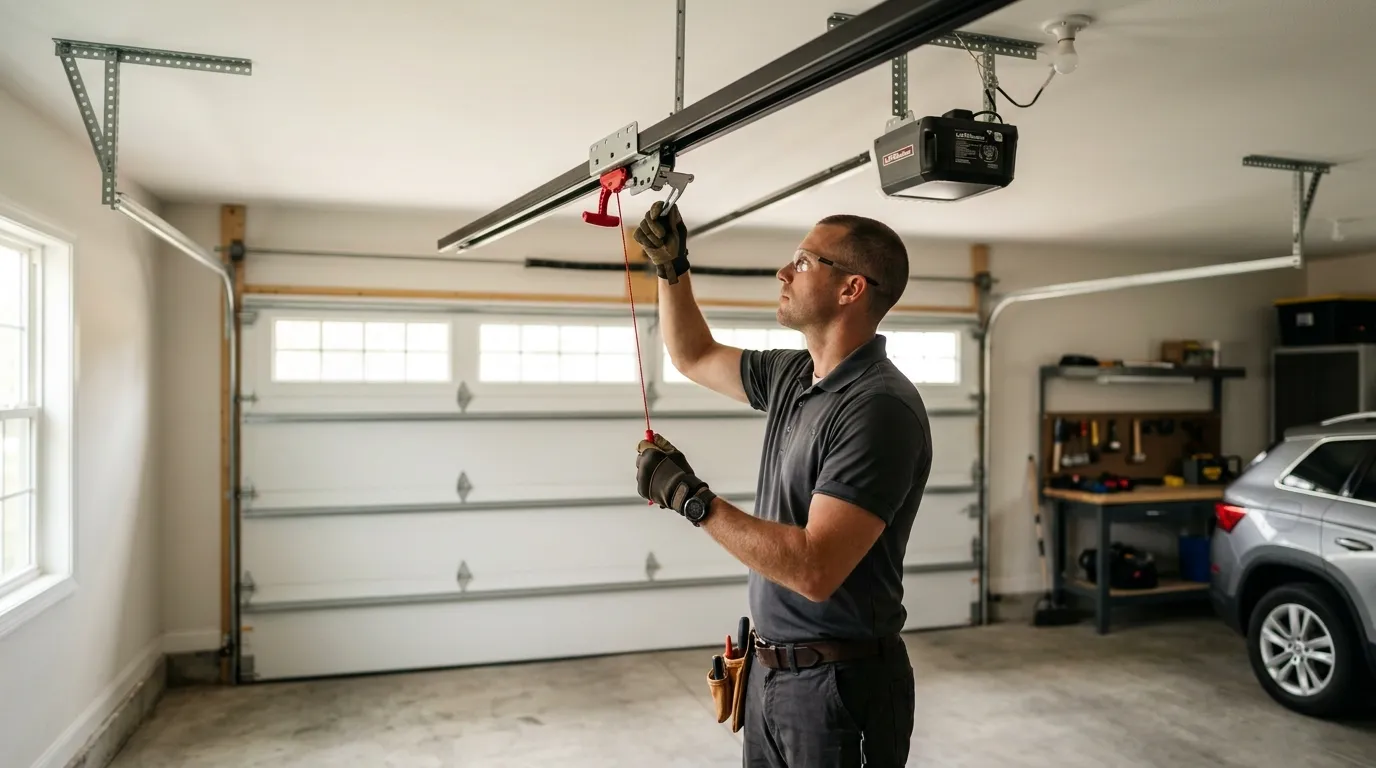
Most calls start the same way: the door doesn't move when the remote is pressed, or it moves partway and stops. Sometimes the light on the opener blinks a set number of times and nothing else happens. Sometimes the motor hums but the door doesn't budge, which usually means the drive gear or belt has given out, not the motor itself.
A lot of what we see traces back to age. Housing across the Lodi service area was mostly built between 1946 and 2001, with a big concentration in the 1960s and 70s stock, so a large share of the openers still running are original chain-drive units or early belt-drive replacements from decades ago. Those units use logic boards and safety sensor wiring that were never designed to run this long, and they fail in ways newer openers don't - a slow drift into intermittent operation rather than a clean break.
Owners often think the whole opener is dead when it's really one part: a stripped gear, a burnt capacitor, or sensors that have drifted out of alignment after years of the door frame settling. Knowing which one it is before you start pulling things apart saves a trip.
What Is on the Truck
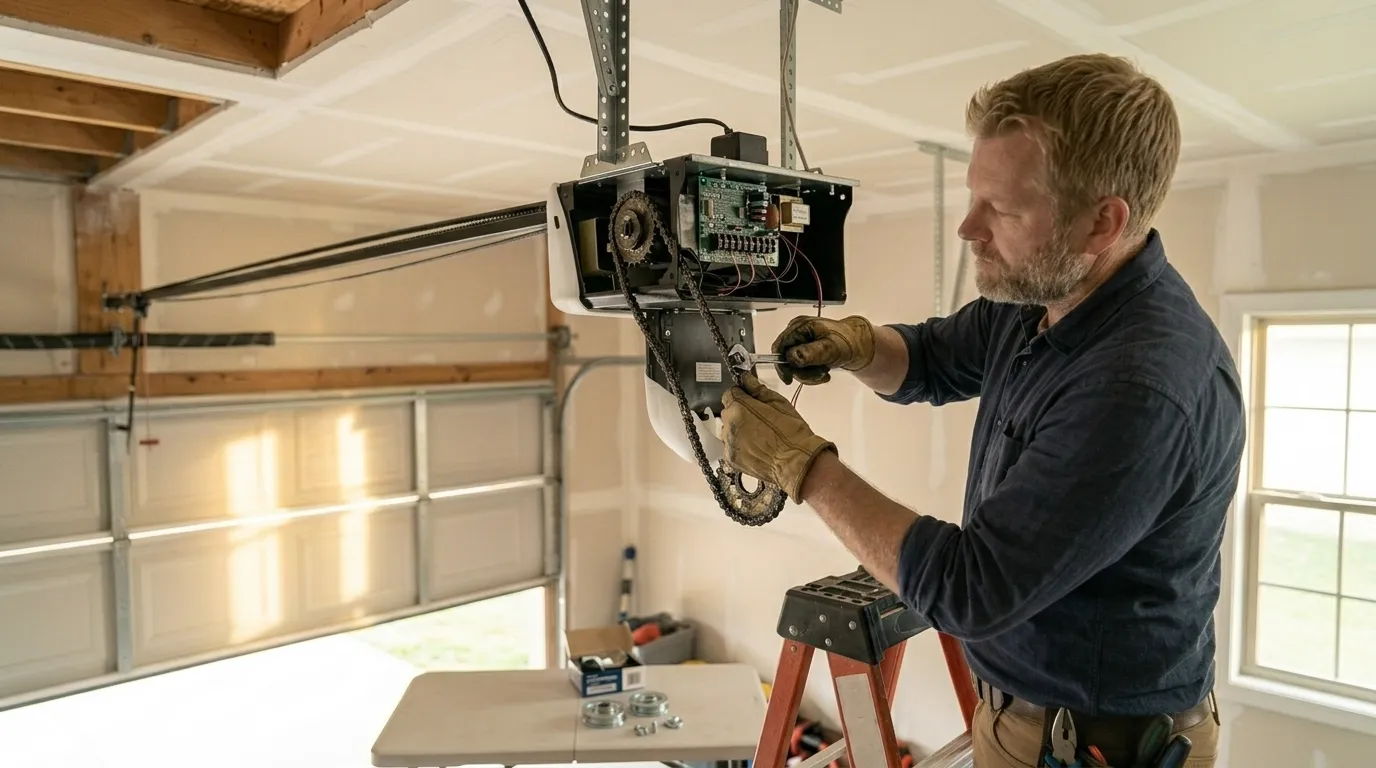
For opener calls we carry drive gears and sprockets sized for the chain and belt units common in older Lodi houses, plus the standard travel modules and logic boards that fail most often in that same generation of hardware. We stock replacement safety sensors and the wiring harnesses that go with them, since misaligned or corroded sensor eyes are one of the most common no-start complaints we get.
We also carry remotes and keypads compatible with the major opener brands that show up across the service area's 26,985 households, since a lot of repair calls turn out to be a dead remote battery or a keypad that's lost its code, not a motor problem at all.
What we don't carry on the truck: openers themselves aren't always a same-day stock item, since brand and horsepower vary house to house. If a full opener swap is the right call rather than a repair, that sometimes means a short order wait rather than a fix on the spot. We'll tell you straight if that's where your job is headed instead of replacing a part that isn't the actual problem.
What the Fix Involves
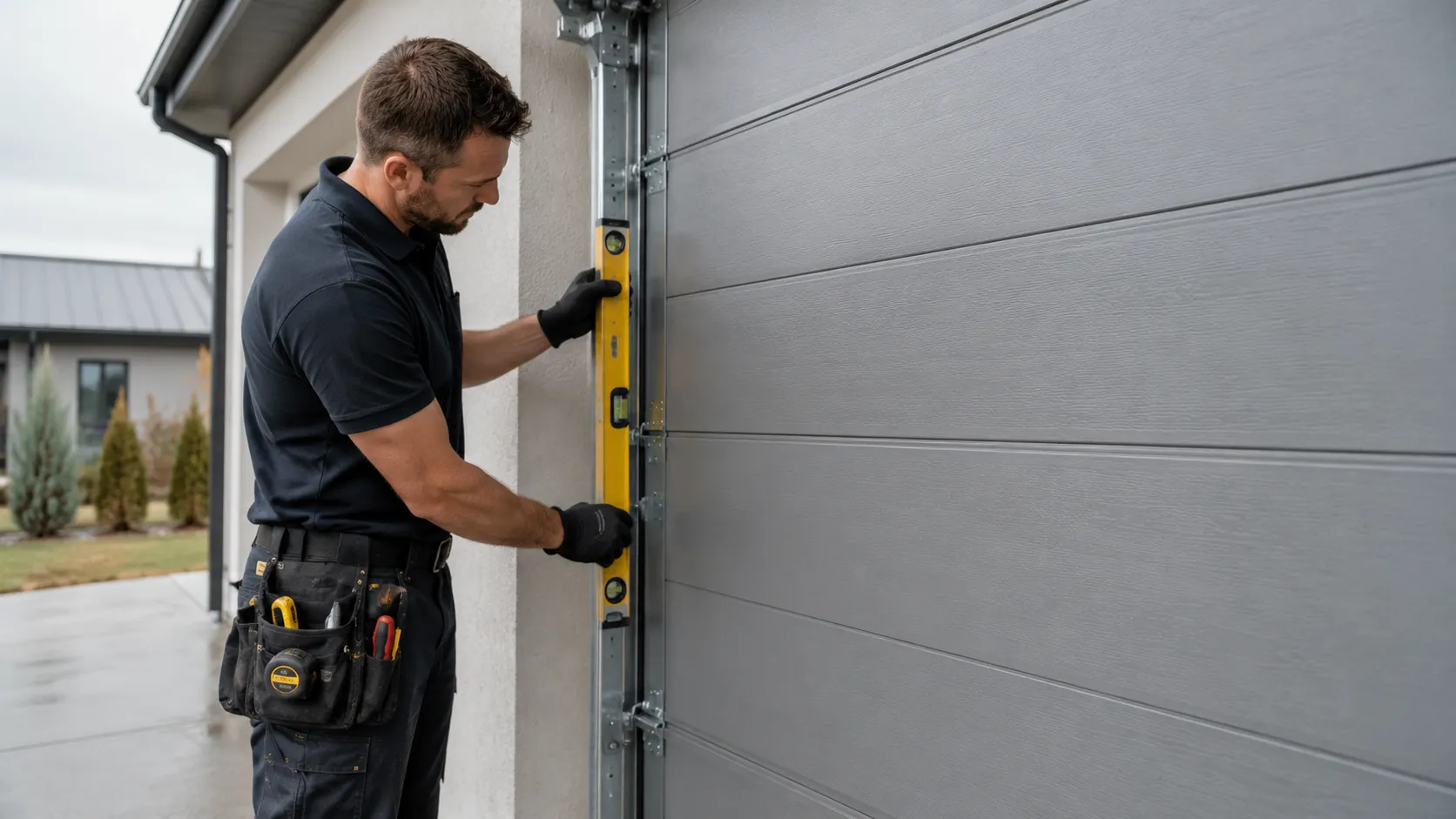
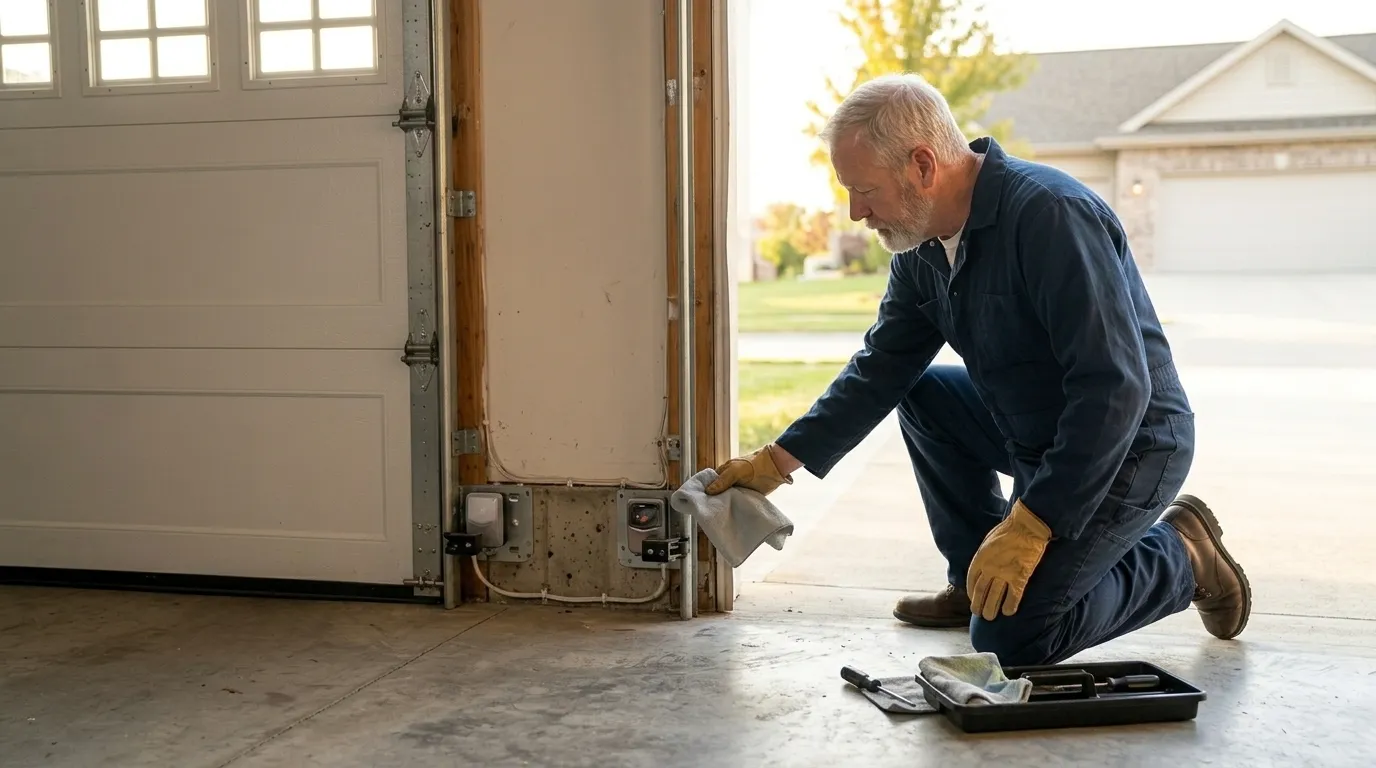
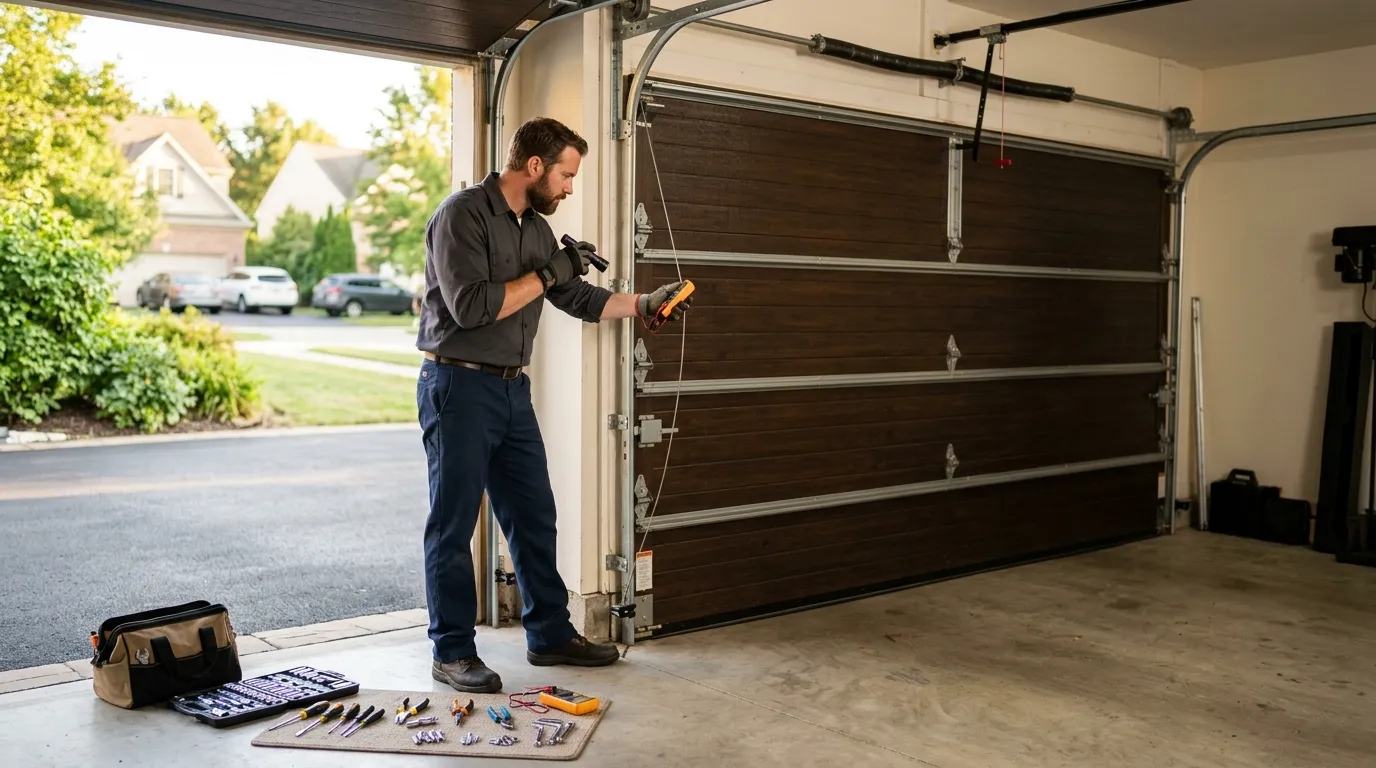
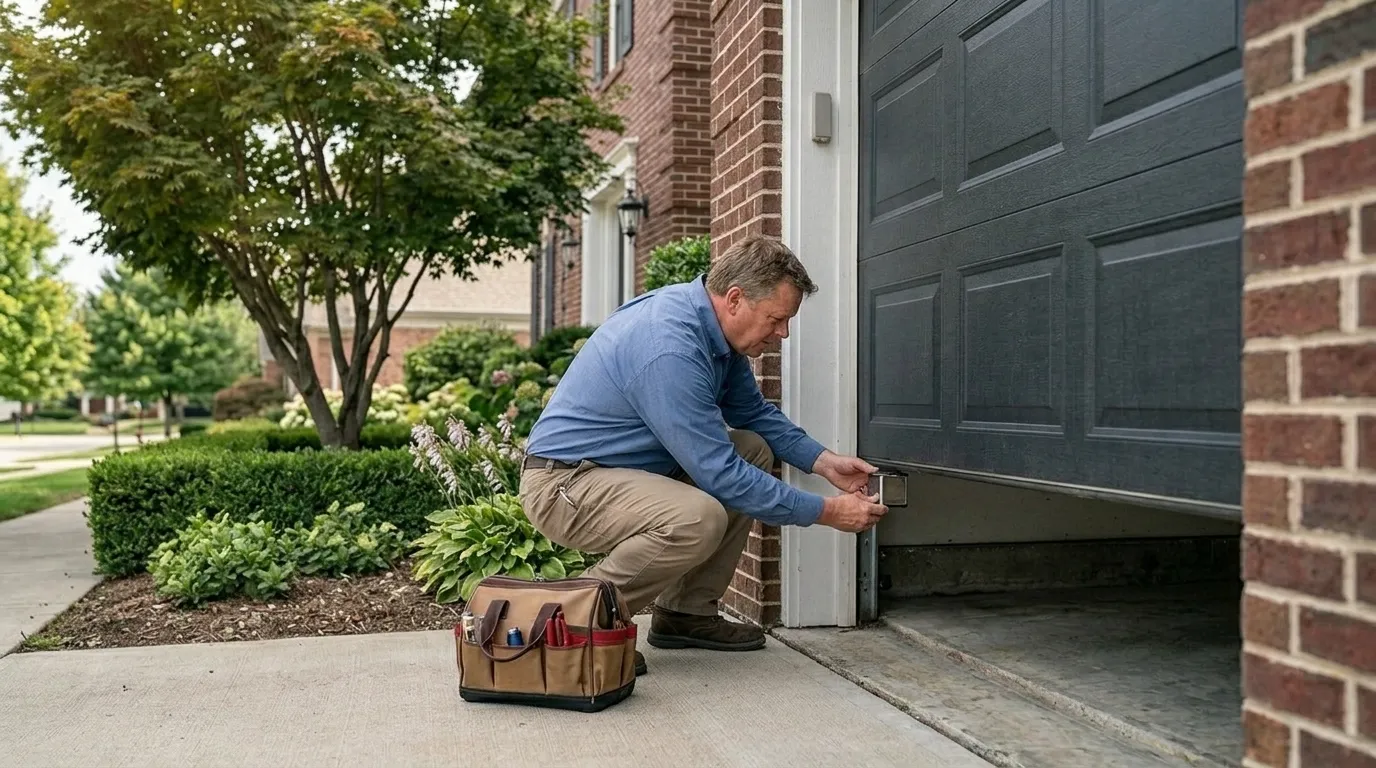
Diagnosis starts at the wall button and the sensors before we ever touch the motor unit. If the sensors are misaligned or dirty, that's a five-minute fix, not a parts job. If the logic board isn't sending power to the motor, we test the circuit before assuming the board itself failed - a tripped breaker or a loose wire nut looks identical from the outside.
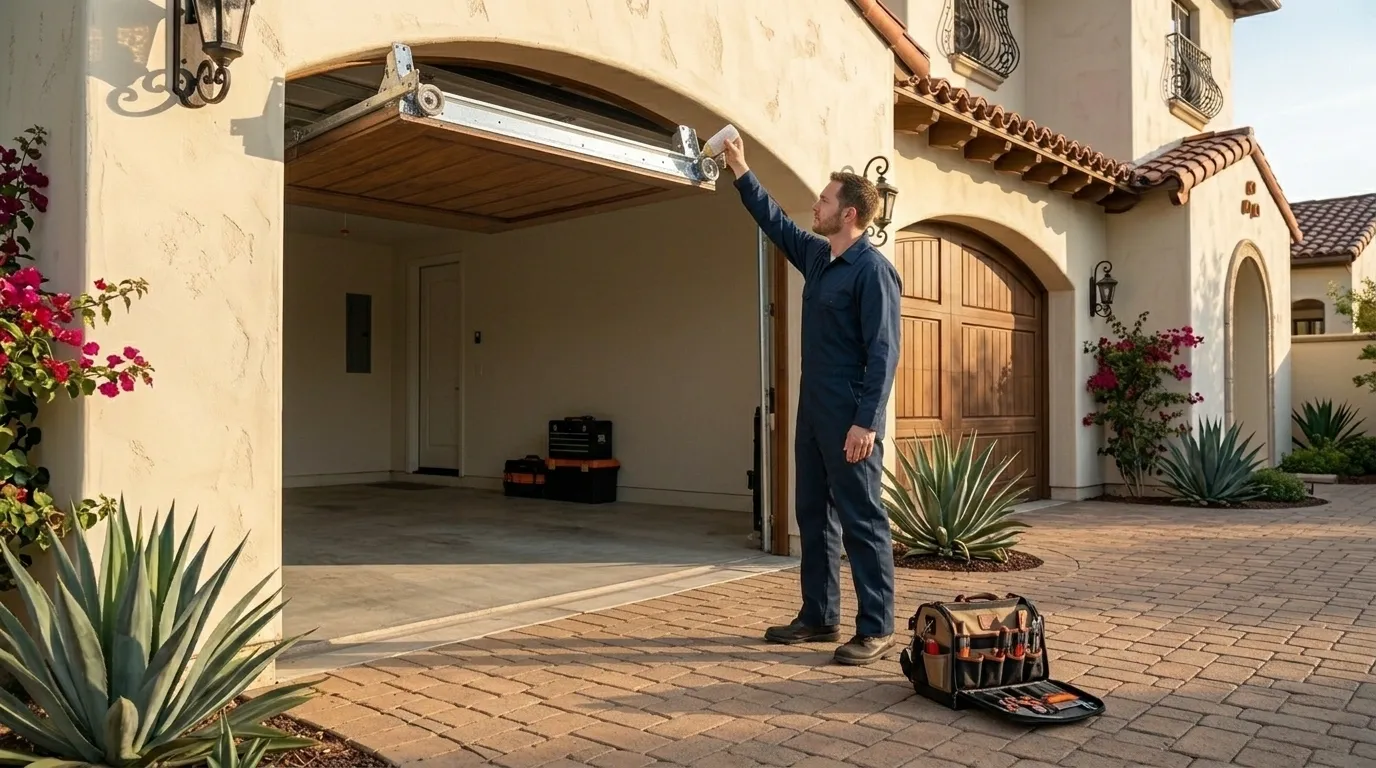
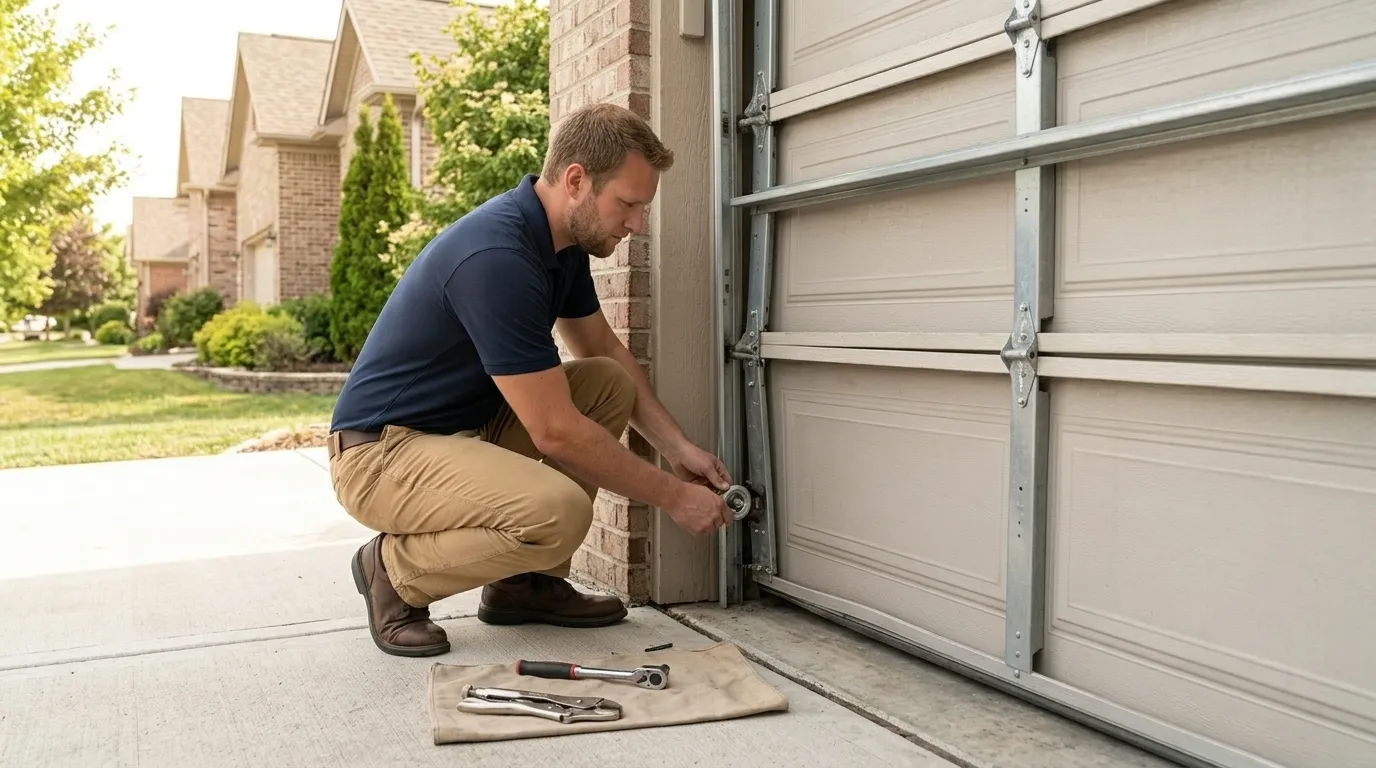
If it's a mechanical failure - stripped gear, worn belt, chain that's jumped its track - we replace the specific part rather than the whole unit when the motor itself still tests good. That's usually the cheaper and faster route, and it's the right call more often than not on openers from the older end of the local housing stock, where the motor housings were built heavier than what typically ships today.
We won't push a full opener replacement on a unit that just needs a $30 part. But if the motor windings are burnt or the board has failed for the second time in two years, we'll say so and explain why a repair at that point is just delaying the same call.
Why This Fails Locally
Lodi's climate band runs moderate on heat, which sounds mild, but repeated heat cycling still does real damage to opener electronics over the decades this area's housing has been standing. Logic boards and capacitors in a garage that isn't temperature controlled take a slow beating year after year, and that shows up as the intermittent, hard-to-diagnose failures we see more of here than sudden, obvious breaks.
Pair that with a housing stock where the median build year sits around 1974: a large share of openers in the service area are old enough that the original units have already been swapped once, sometimes with a mismatched replacement that doesn't quite fit the original door hardware. That mismatch is its own failure mode - a modern opener bolted to an old track and drum setup it was never sized for.
Across the 19 named communities in this service area, the pattern repeats: older homes, older openers, heat-driven electronic fatigue rather than storm damage or humidity failure. That's a different repair profile than you'd plan for in a coastal or high-humidity climate, and it's why we stock what we stock.
How it works
From “it’s stuck” to “it’s fixed”
1
Tell us what’s wrong
Describe the symptom - won’t open, loud bang, opener runs but the door won’t move.
2
On-site diagnosis
A technician tests the door under power and by hand and finds what actually failed.
3
Clear, up-front plan
You get the fix that’s needed and what drives the cost - before any work starts.
4
Repaired & tested
The repair is done, the door is set true and tested, and the work area left clean.
Next step
Serving Lodi, CA - tell us what your door’s doing and we’ll take it from there.
Intermittent failure almost always points to electronics rather than the motor itself - a logic board or capacitor degrading from years of heat cycling, or a sensor connection that's gone loose. It rarely means the whole unit is about to die outright, but it usually means a specific part needs testing rather than guessing.
Is it worth repairing an opener from the 1970s or 80s?
Often yes. Older motor housings tend to be built heavier than a lot of what ships today, so if the motor itself still tests good, replacing a stripped gear or a failed board is usually cheaper and faster than a full swap. If the motor windings are burnt, that's a different call.
How do I know if it's the opener or the door itself?
If the motor runs but the door doesn't move, or moves and reverses, that's usually the opener's drive mechanism or sensors. If the door is heavy to lift by hand with the opener disengaged, that points to a spring problem, which is a separate repair from opener work.
Ready to get your garage door sorted?
Tell us what it’s doing and where you are in Lodi - we’ll take it from there.