What Can Go Wrong
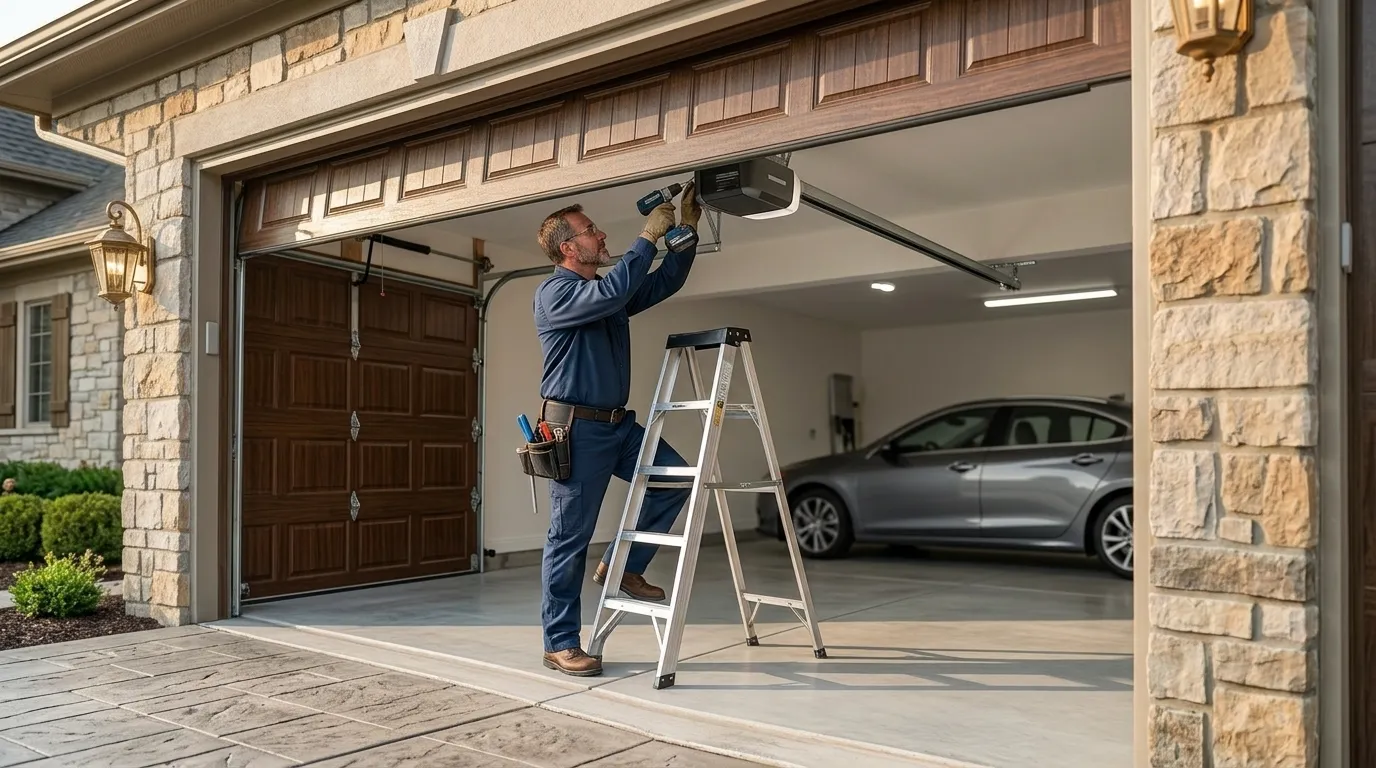
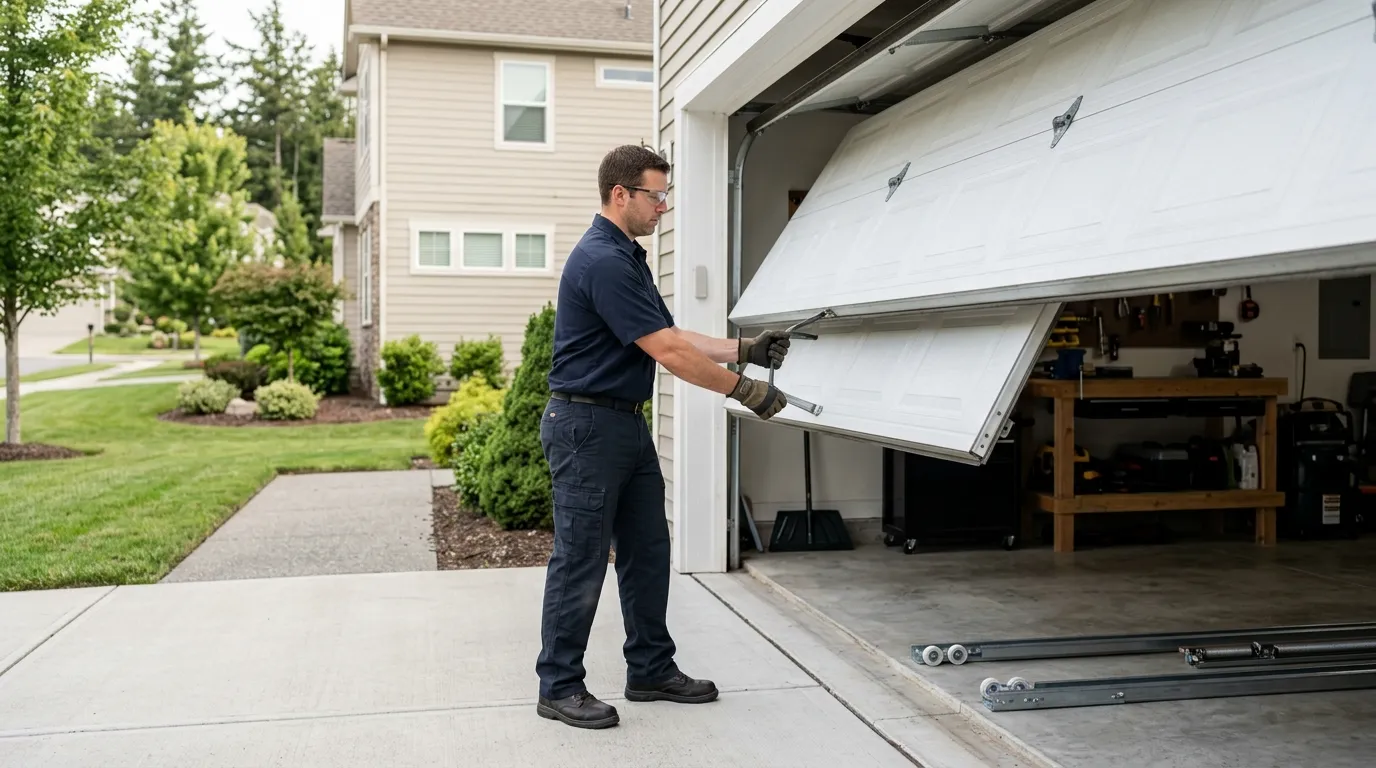
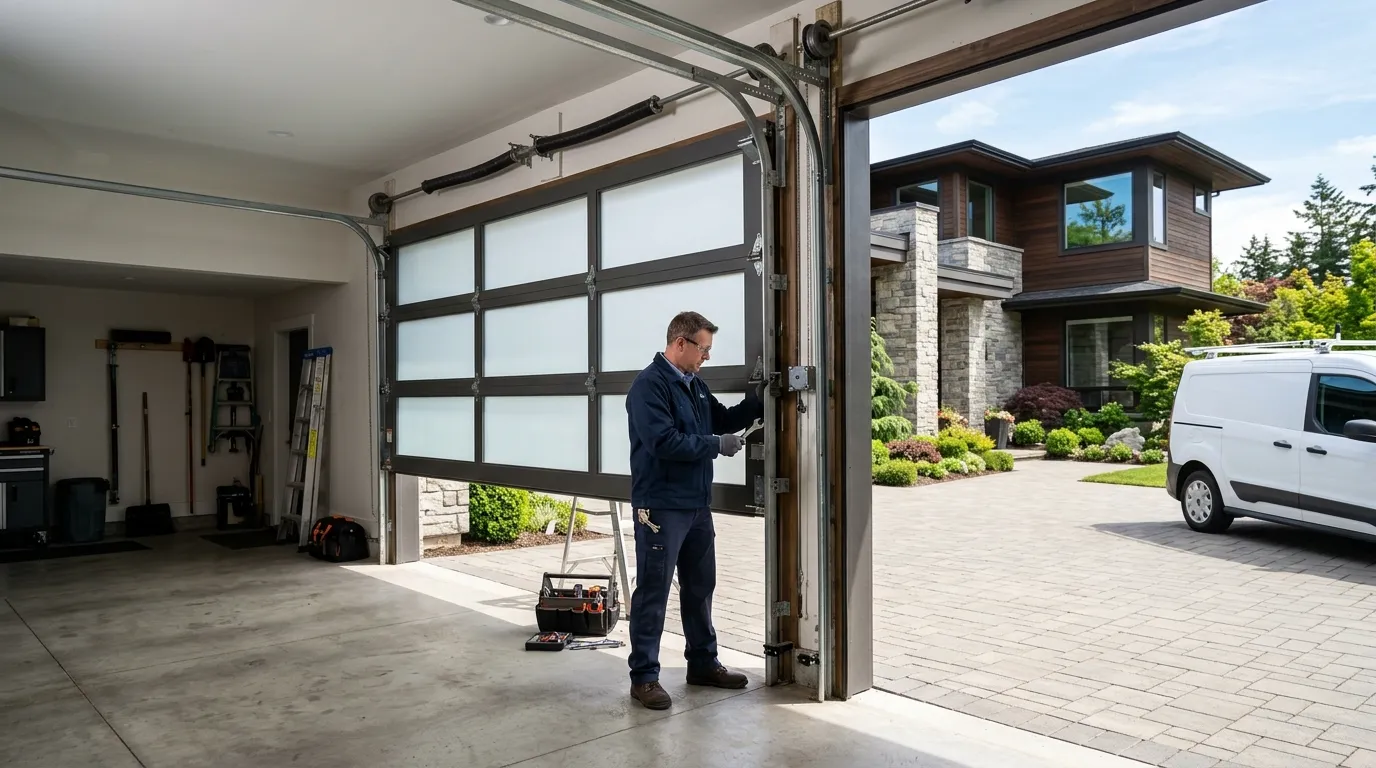
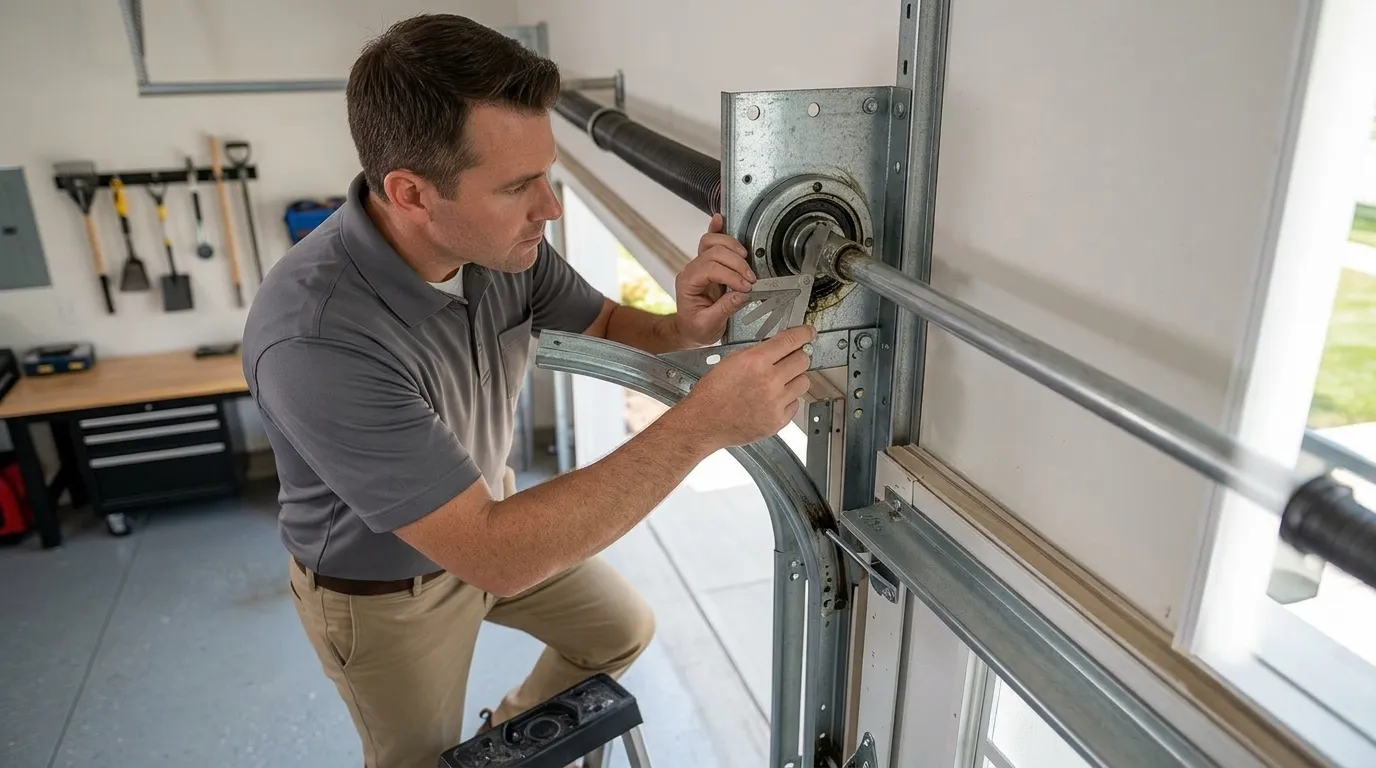
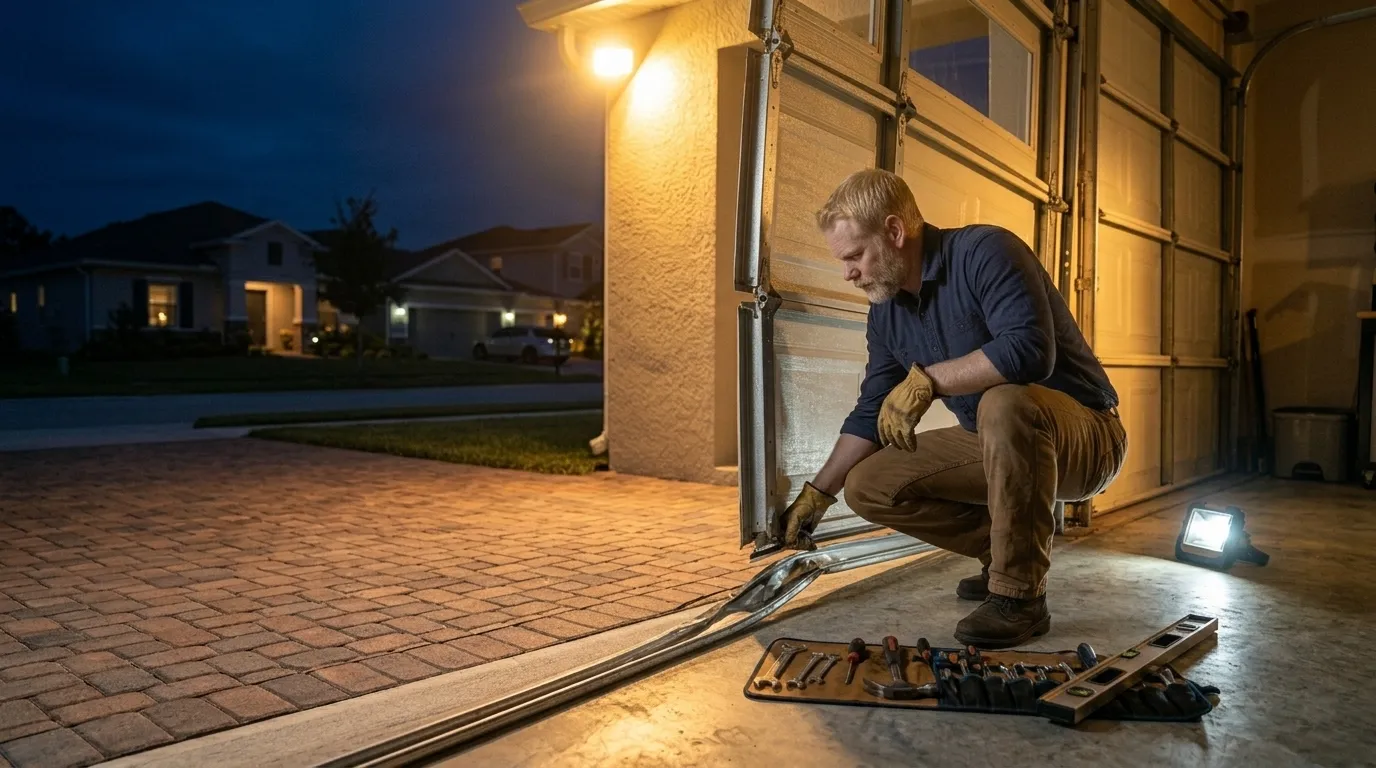
The most common call we get from this side of the service area is a door that grinds or hangs up a few inches from full open or full close. On a 1956-era track, that's usually a roller that's worn oval instead of round, catching on the seam where two track sections bolt together. Left alone, it puts uneven load on the opener and can crack a panel where the hinge bracket pulls loose.
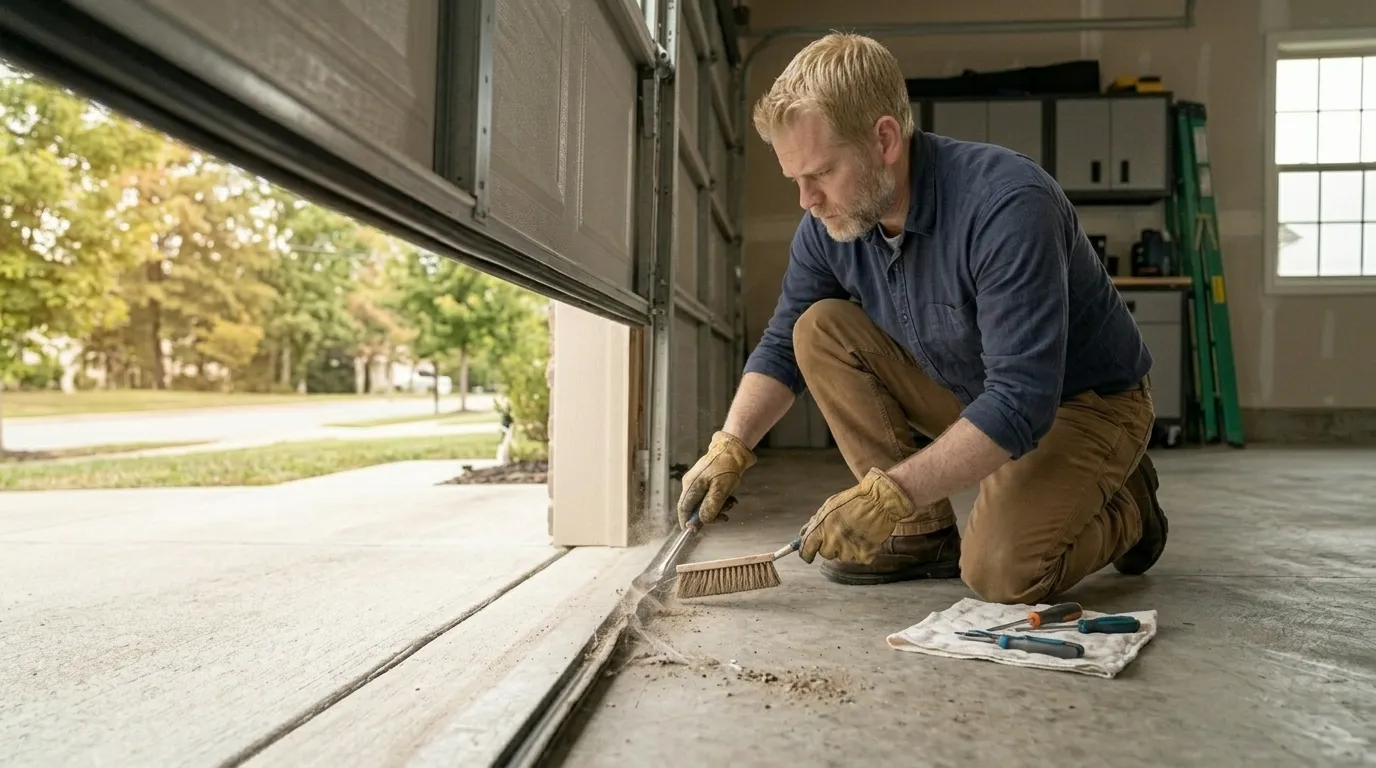
We also see rollers that have simply rusted solid in the bracket, so instead of spinning they drag, chewing a flat spot into the wheel and scoring the track. On these older single-car openings the clearance is tight enough that a bent roller stem can let the door edge rub the jamb, which people mistake for a settling foundation issue when it's really just worn roller hardware. One honest limitation: if the track itself is bent badly rather than just grooved, roller replacement alone won't fix the binding, and we'll tell you that up front rather than sell you rollers that won't solve it.
What Is on the Truck
For a service area with 3,365 households, most of them still running original or first-generation replacement hardware, we carry a mix of roller sizes on the truck rather than one standard part. Steel doors from the 1950s and 60s often used a shorter stem than what ships on newer doors, so we stock both lengths along with sealed 7-ball and 10-ball nylon rollers to match whatever bracket spacing the existing hinges use.
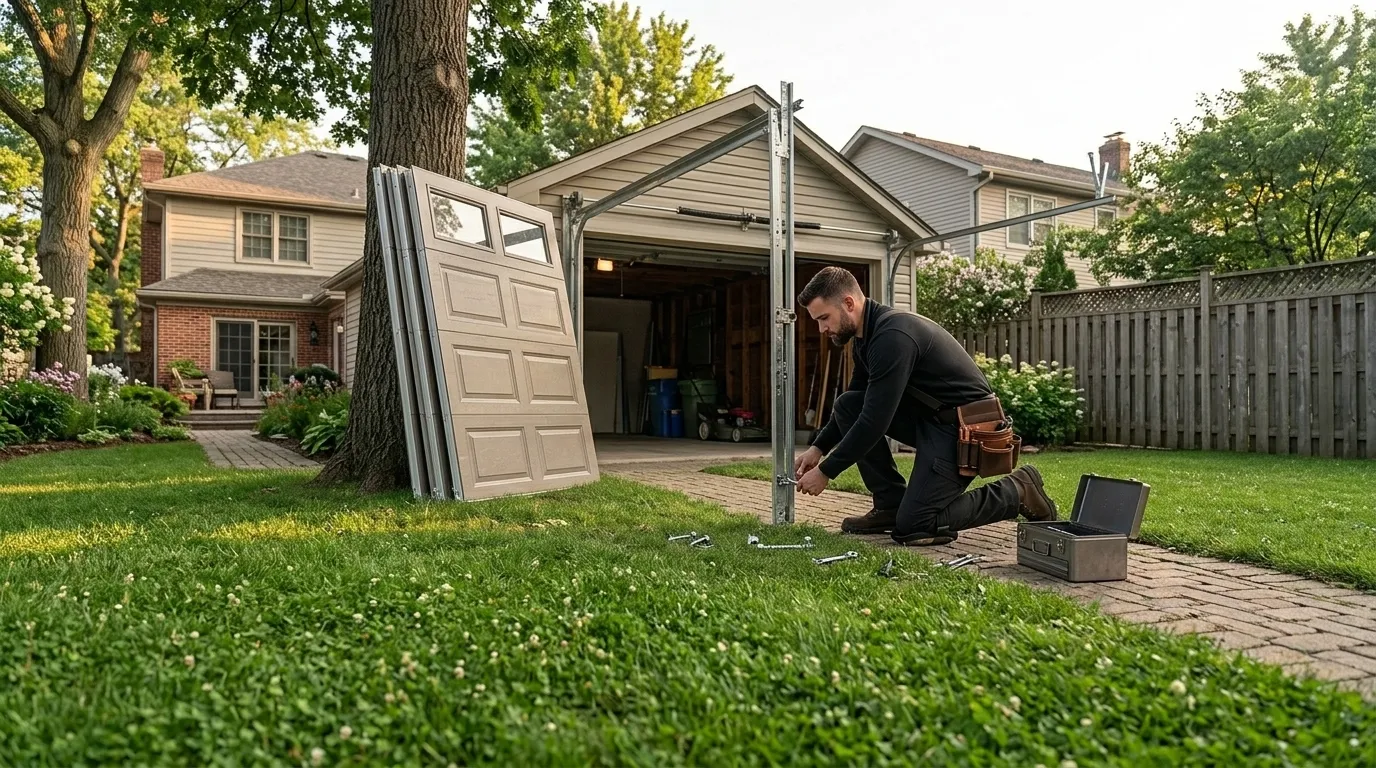
We also carry hinge sets and a handful of track sections, since a groove-worn track section sometimes needs swapping rather than just straightened. What we don't carry is a full custom track kit for anything wider than a standard two-car opening - if a door has been modified from its original size, we may need to order that piece rather than complete the job same-visit. That's rare on this side of the county, but it happens on a few of the older converted garages we've run into.