Can You Do This Yourself
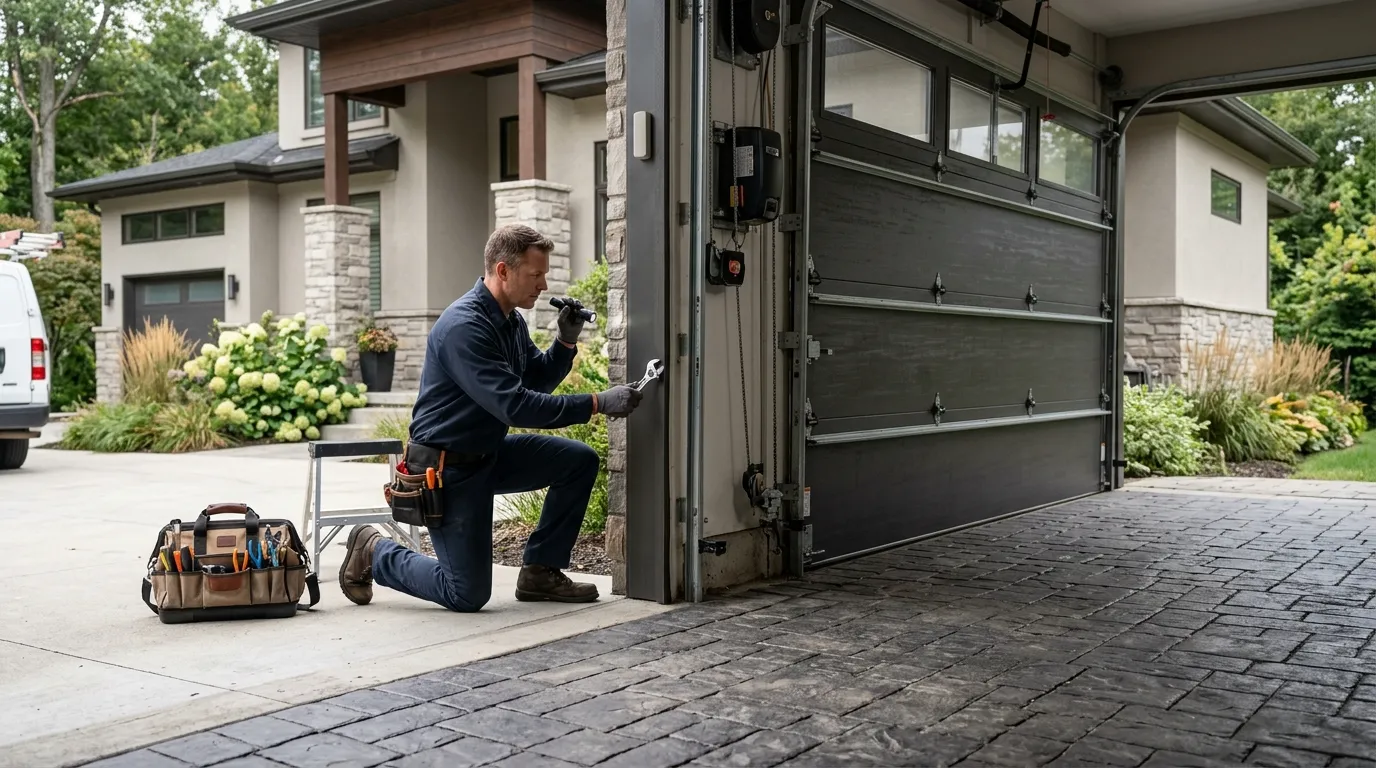
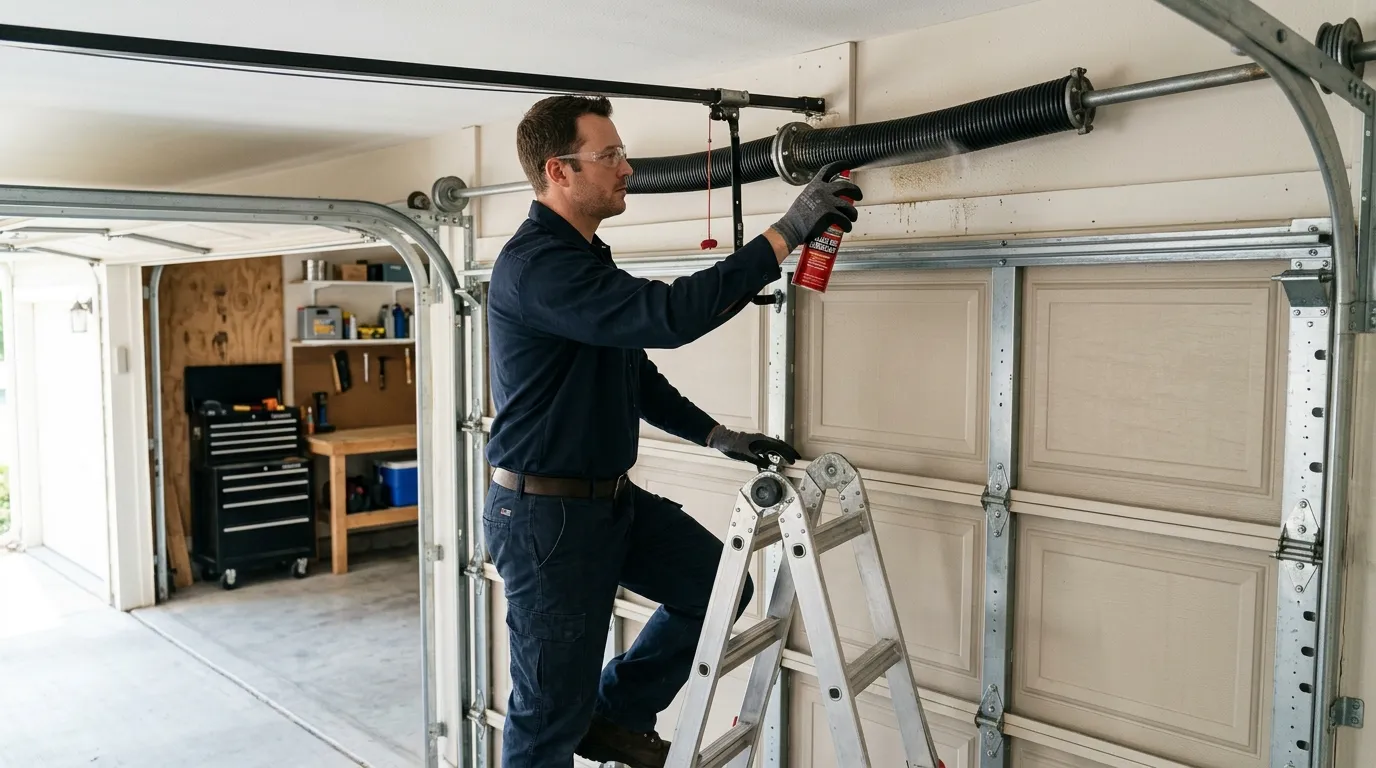
If the door is a mid-80s sectional on a chain-drive opener, a fair number of the small stuff is within reach for someone comfortable with a ladder and a screwdriver. Photo-eye sensors knocked out of alignment, a limit switch that needs resetting, or a remote that's lost its code - these are all things you can troubleshoot without calling anyone. Where we draw the line is anything involving the torsion or extension spring itself. Those springs are wound under enough tension to break a bone or take out an eye if the winding cone slips, and that risk doesn't change because the house is newer. We also don't recommend DIY on the opener's logic board repairs - by the time a board fails, the part is usually cheaper to replace as a unit than to diagnose piece by piece, and guessing wrong means buying twice. If you're not sure which category your problem falls into, describe what you're seeing before you start pulling things apart.
What the Fix Involves
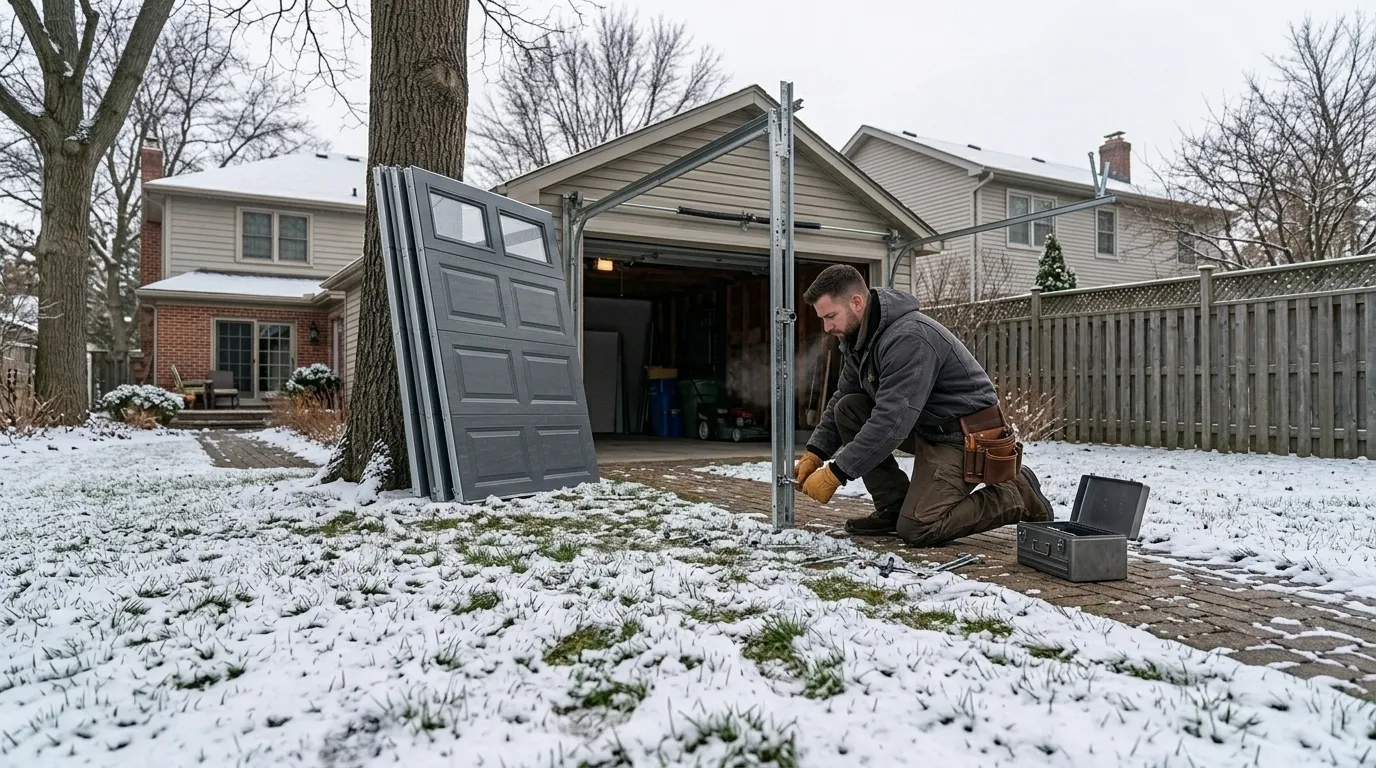
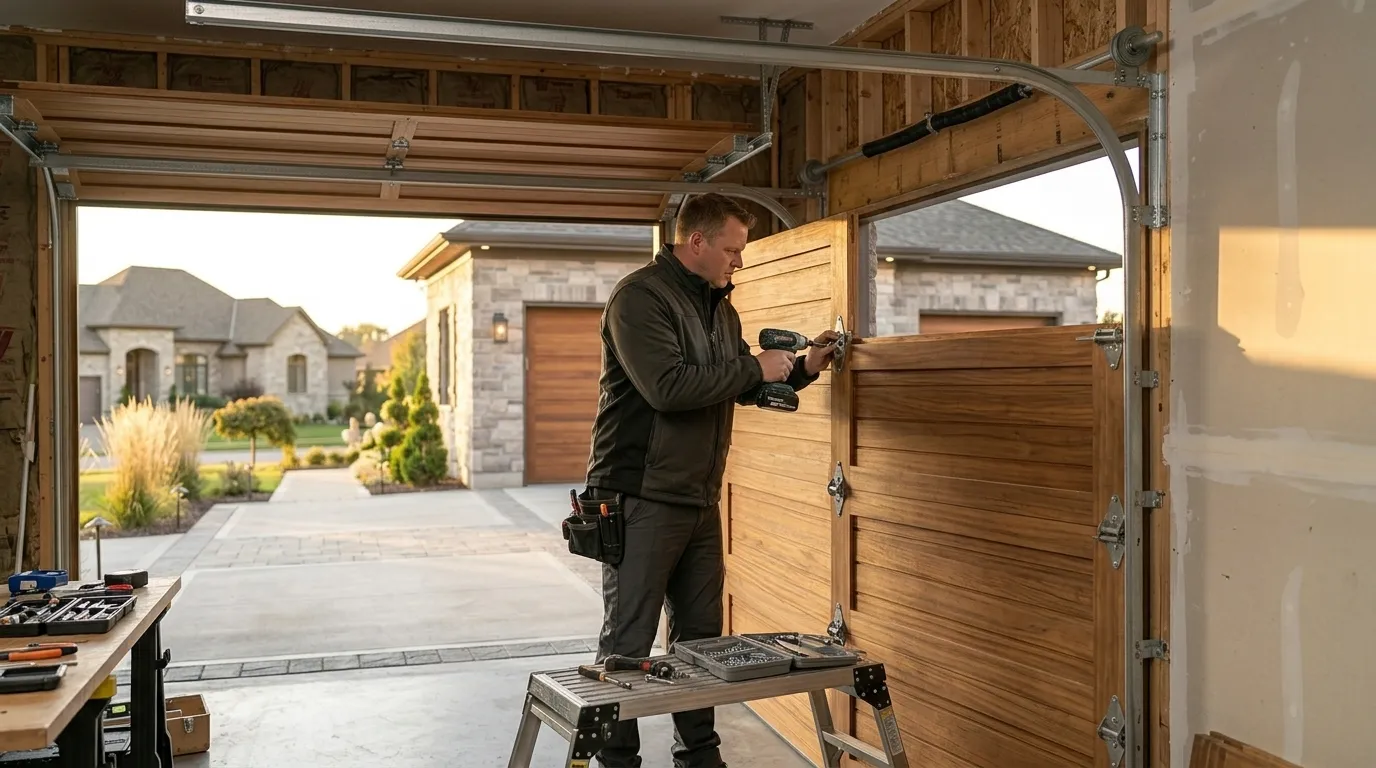
On a typical Woodbridge job, we're working with hardware that's had roughly 40 years of wear rather than 60 or 70, so the fix is usually more about replacing worn moving parts than fighting corrosion or extinct part numbers. A broken extension spring gets replaced with a matched pair, since running one old and one new throws the door off balance and strains the opener. A failing chain-drive opener from this era often gets swapped rather than repaired once the board itself is the issue, because rewiring a 30-plus-year-old control board rarely holds up. Tracks on these doors are standard-gauge steel, so bent sections get swapped rather than bent back, which holds alignment longer. We check the balance point on every job regardless of what brought us out, since a door that's even slightly out of balance will keep chewing through openers and cables no matter how many times you replace the failing part alone.
Booking a Visit
When you call, tell us the age of the house if you know it, roughly - a door installed new in the 80s behaves differently under load than one that's been retrofitted since. That one detail changes which parts we bring. We serve Woodbridge as part of the wider Lodi coverage area, and scheduling here works the same as it does across that area: describe what the door is doing, and we'll tell you what we expect to find before we're on site.
What Can Go Wrong
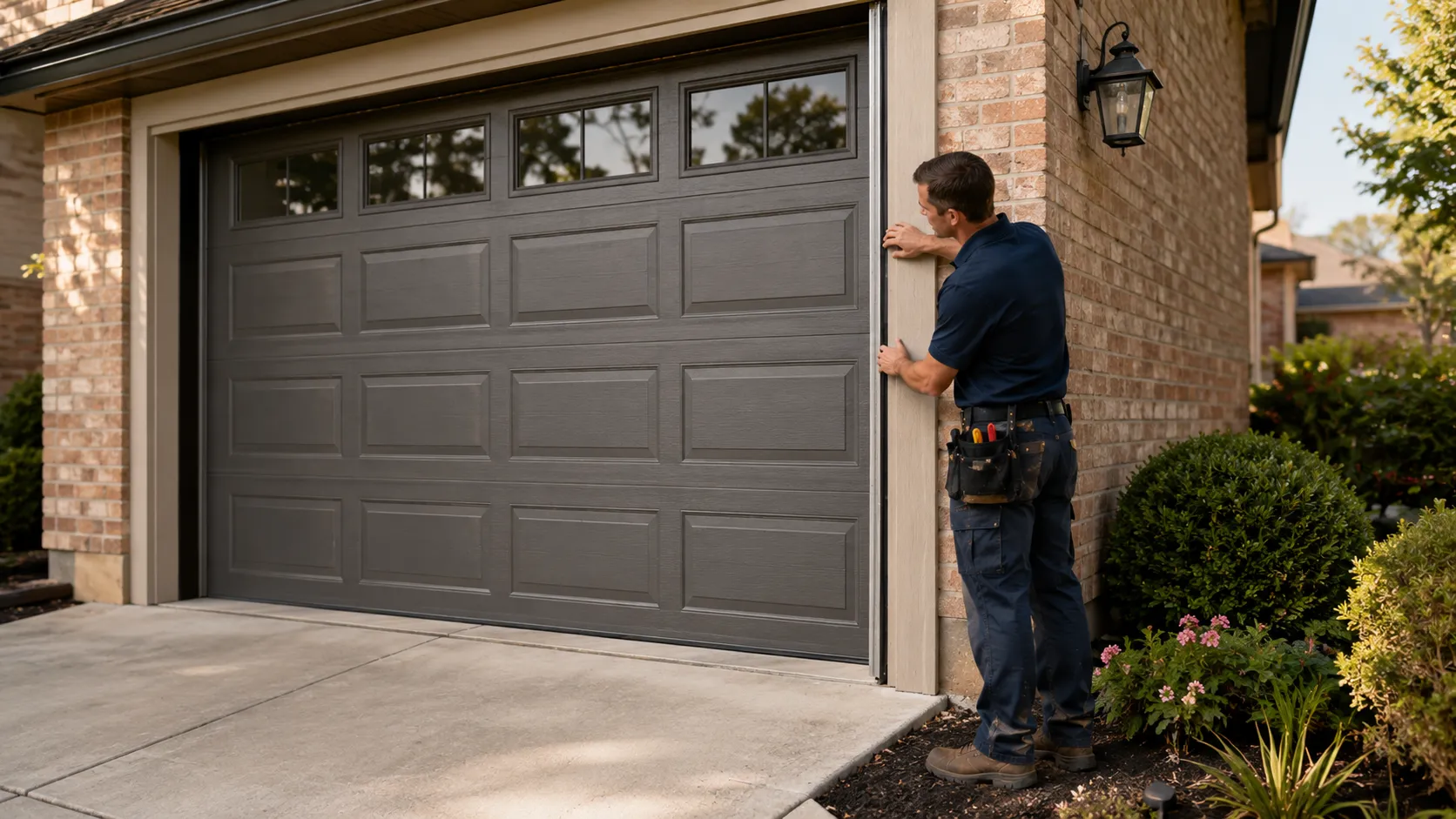
The most common surprise on a mid-80s door is a rusted-through bottom panel hiding under paint, which only shows up once we're up close - if that's the case, patching it isn't worth the labor and full panel replacement is the honest recommendation. Openers from this era occasionally have proprietary remote codes that no longer match any replacement remote sold today, which means a full opener swap instead of just a new clicker. And a door that's been rebalanced by a previous owner without matching the spring to the door's actual weight will fight the opener every time, wearing out drive gears faster than normal - that's a repeat call waiting to happen if it's not caught and corrected.