What Is on the Truck
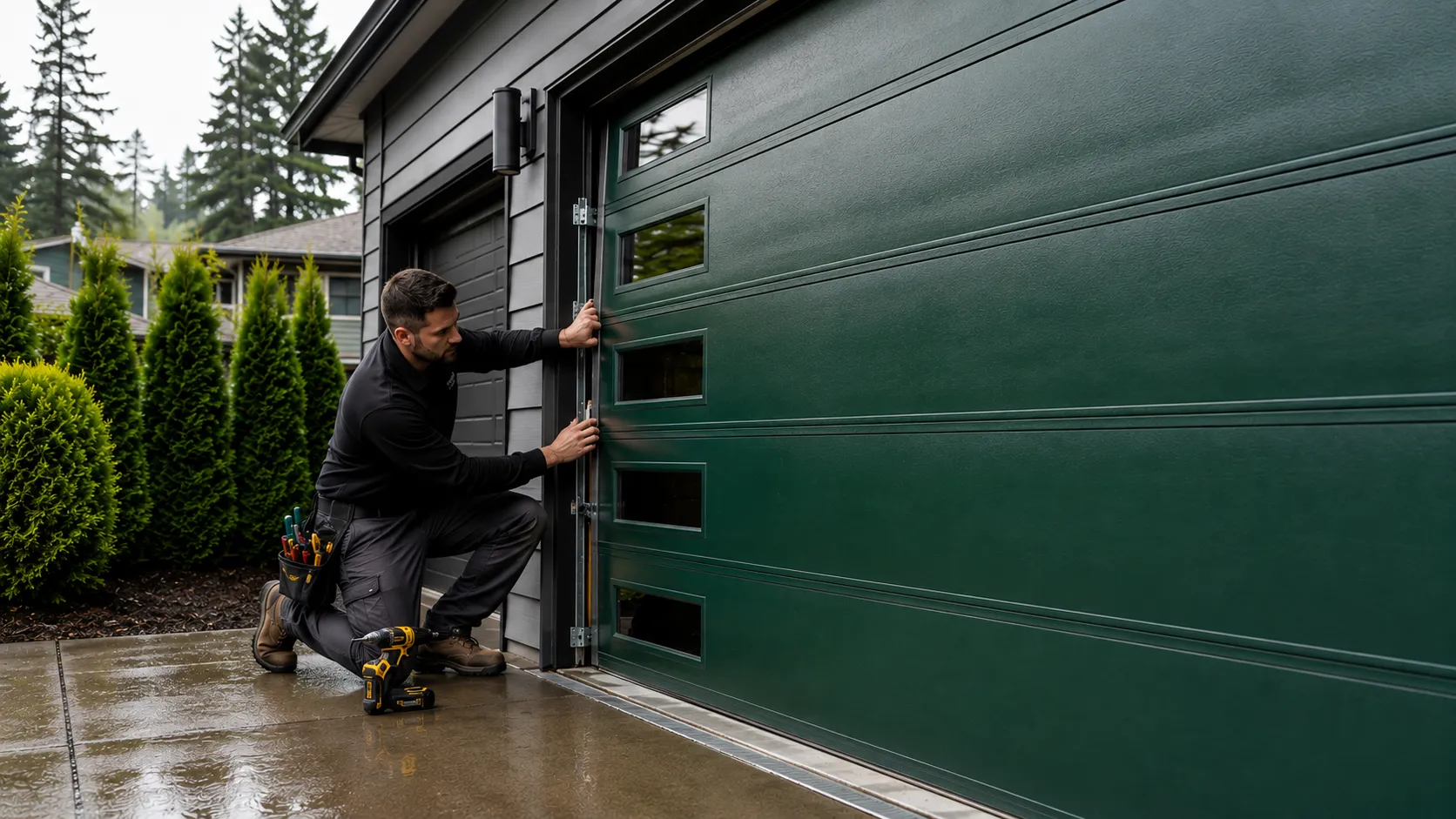
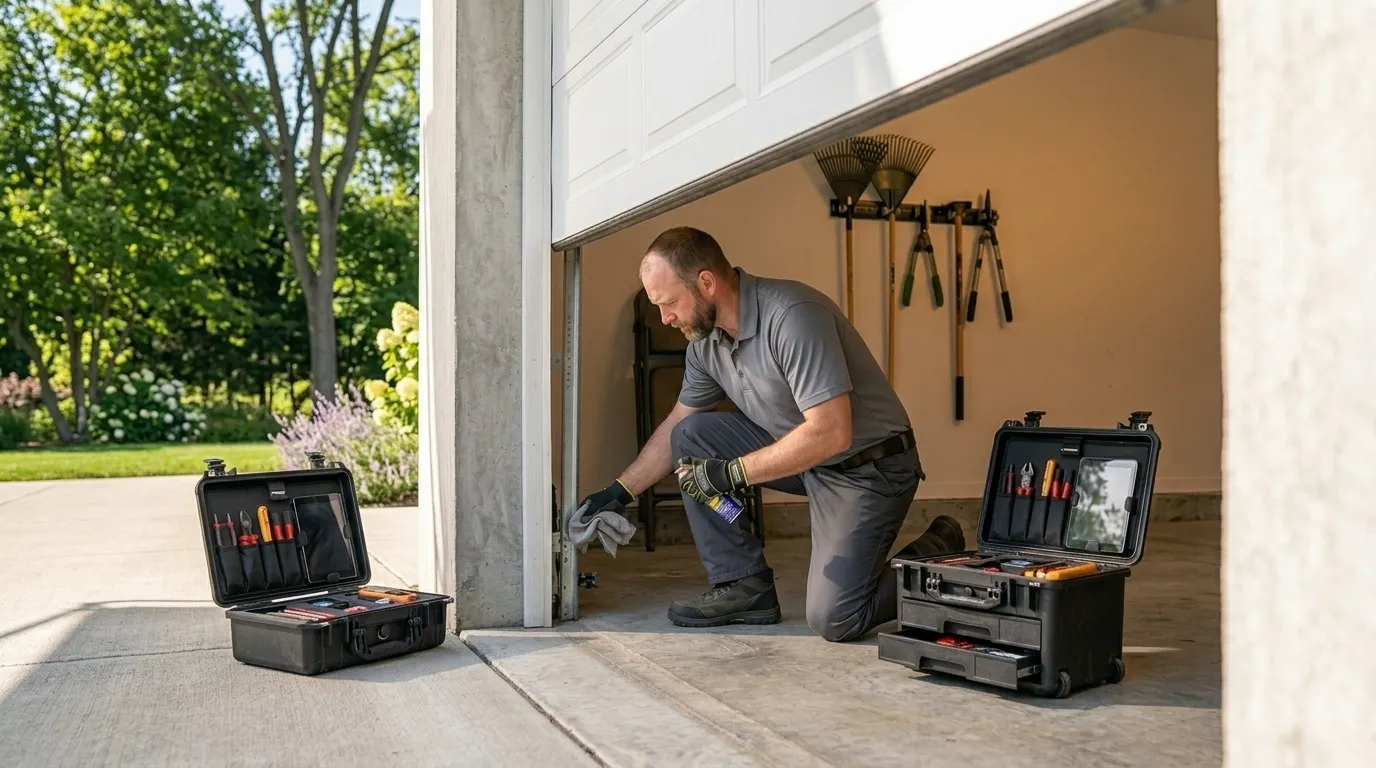
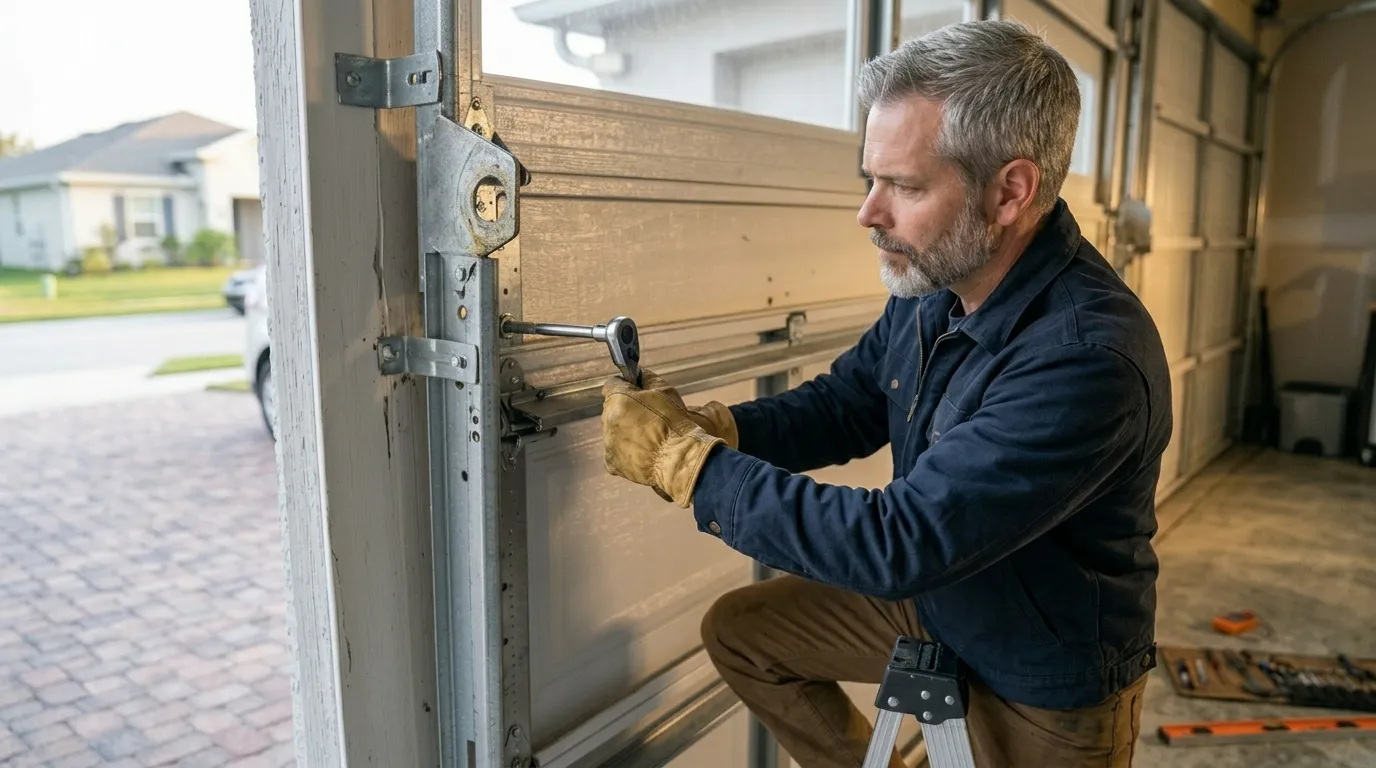
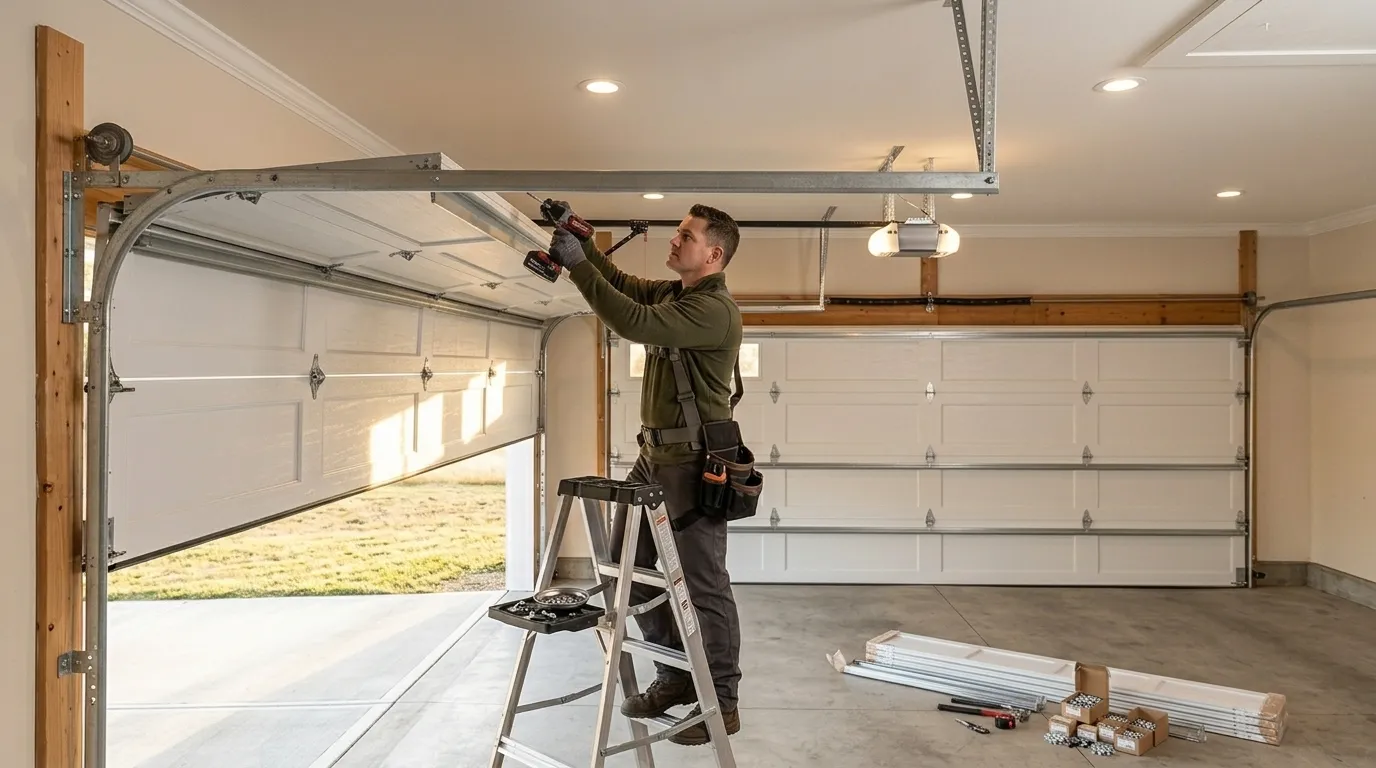
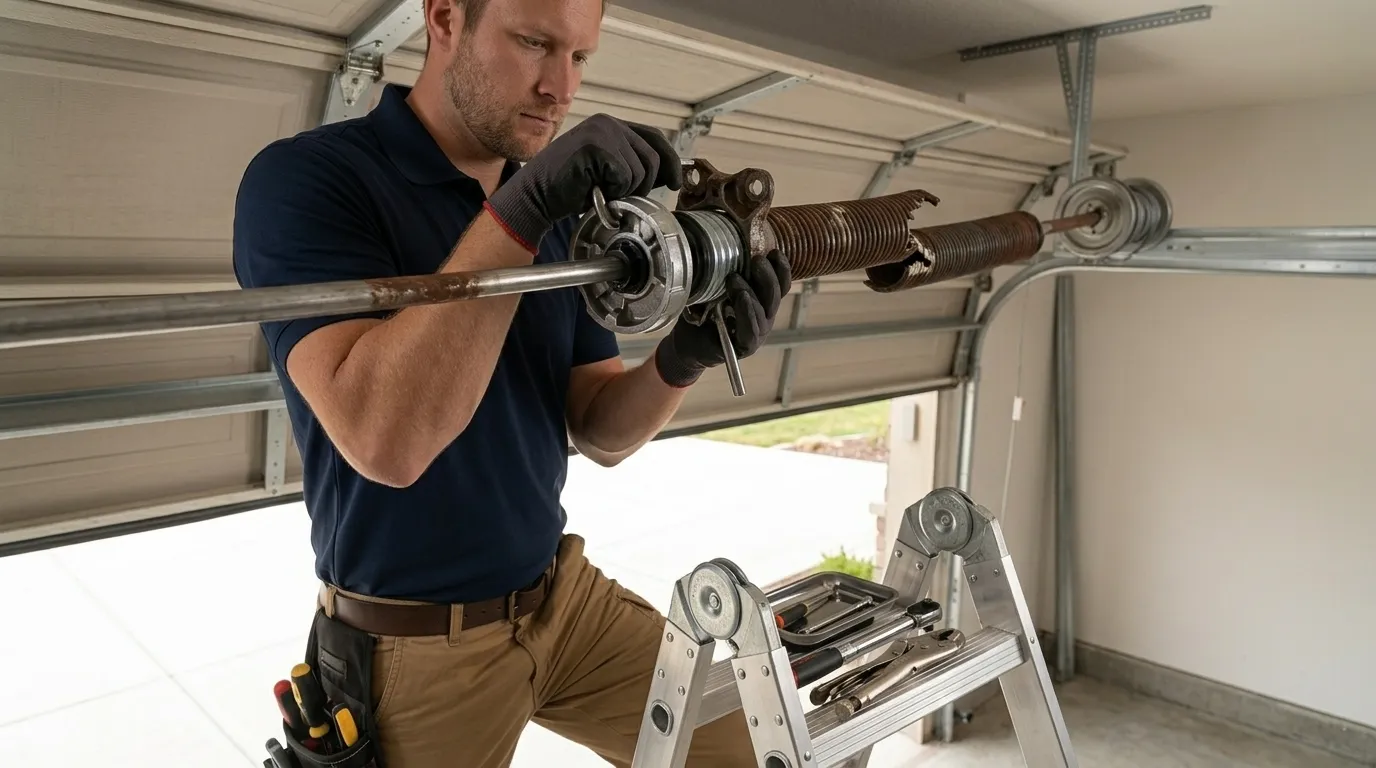
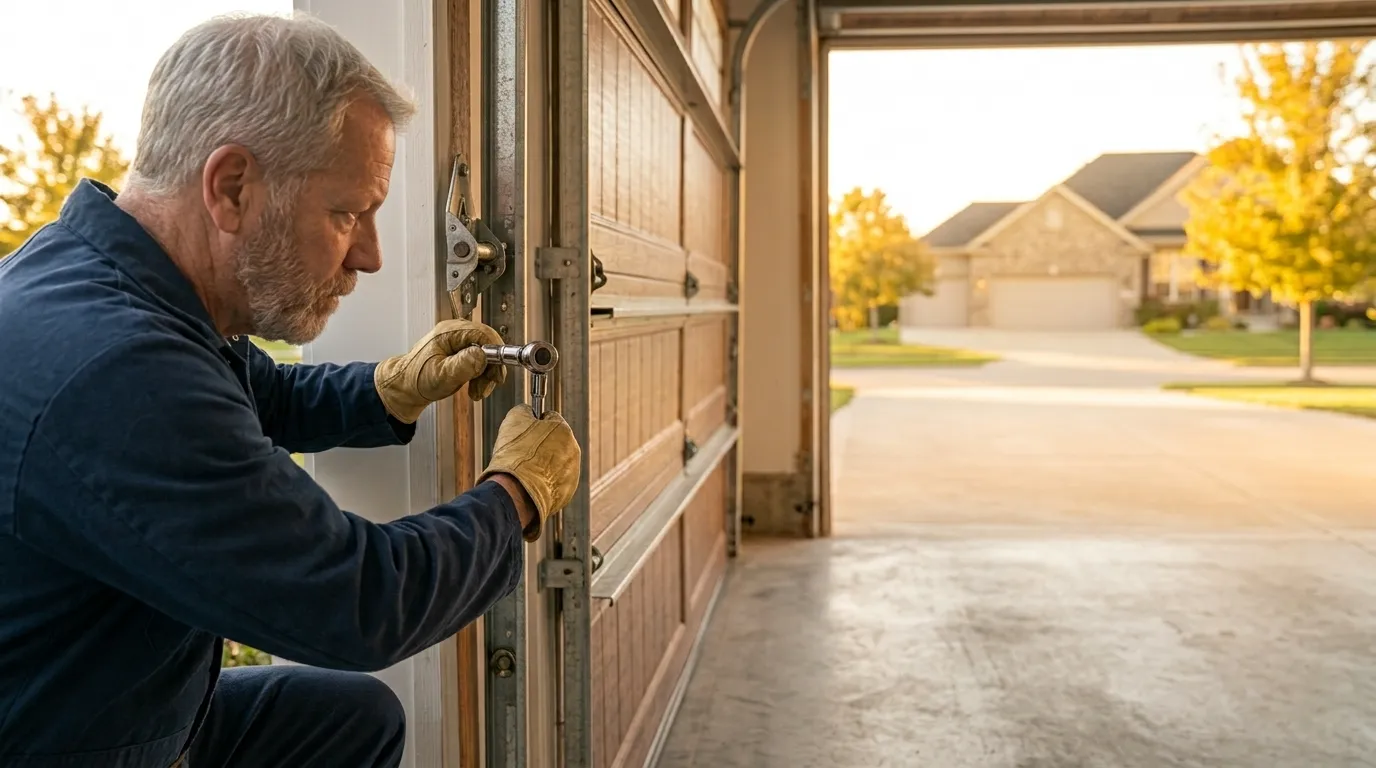
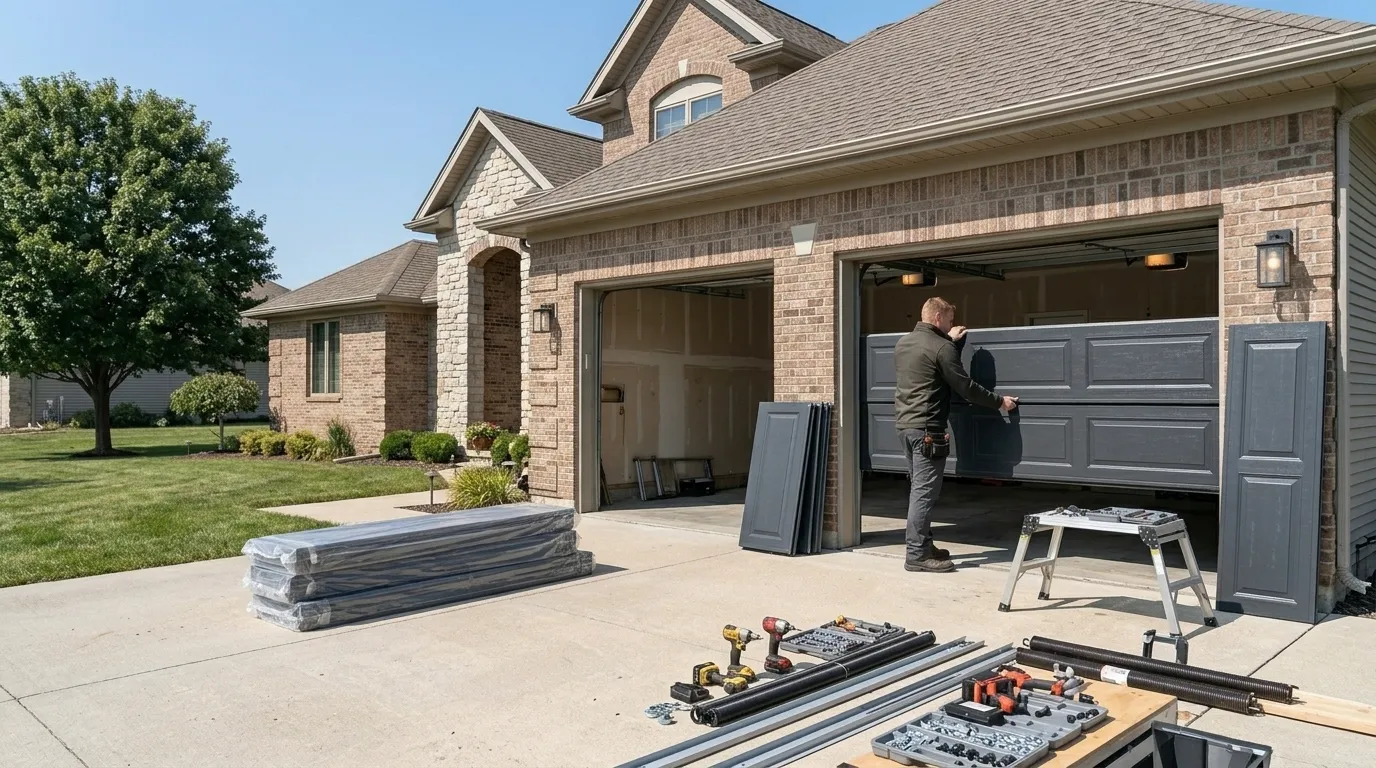
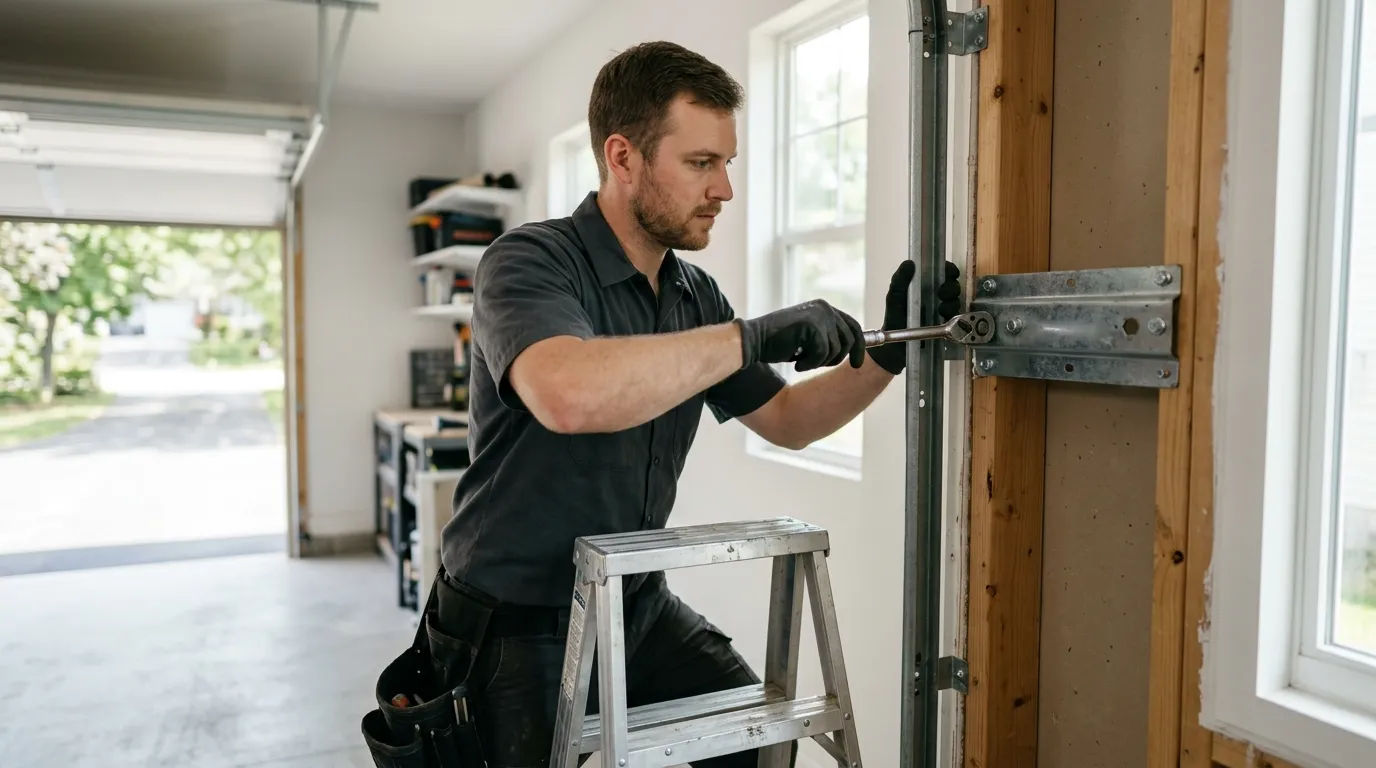
For an off-track call in a place like Thornton, we bring what fits the era of door we're likely to find: replacement track sections in a couple of standard widths, lag bolts and brackets sized for older stud spacing, rollers in both nylon and steel, and cable clamps. We also carry spring winding bars, because a door that's jumped track sometimes takes the tension off a spring unevenly, and that has to be corrected before the door goes back on track - not after.
What we don't carry is a guess at what's behind your wall. If the track bracket has pulled framing wood loose, or if the header above the door has sagged over the decades, that's carpentry, not garage door repair, and we'll tell you straight rather than bolt hardware to something that won't hold it.
We also don't stock every custom track width. Most 1960s-era doors here use standard sizing, but if yours has been modified or replaced with a nonstandard unit at some point, we may need to order a piece rather than pull it off the truck that day.
Booking a Visit
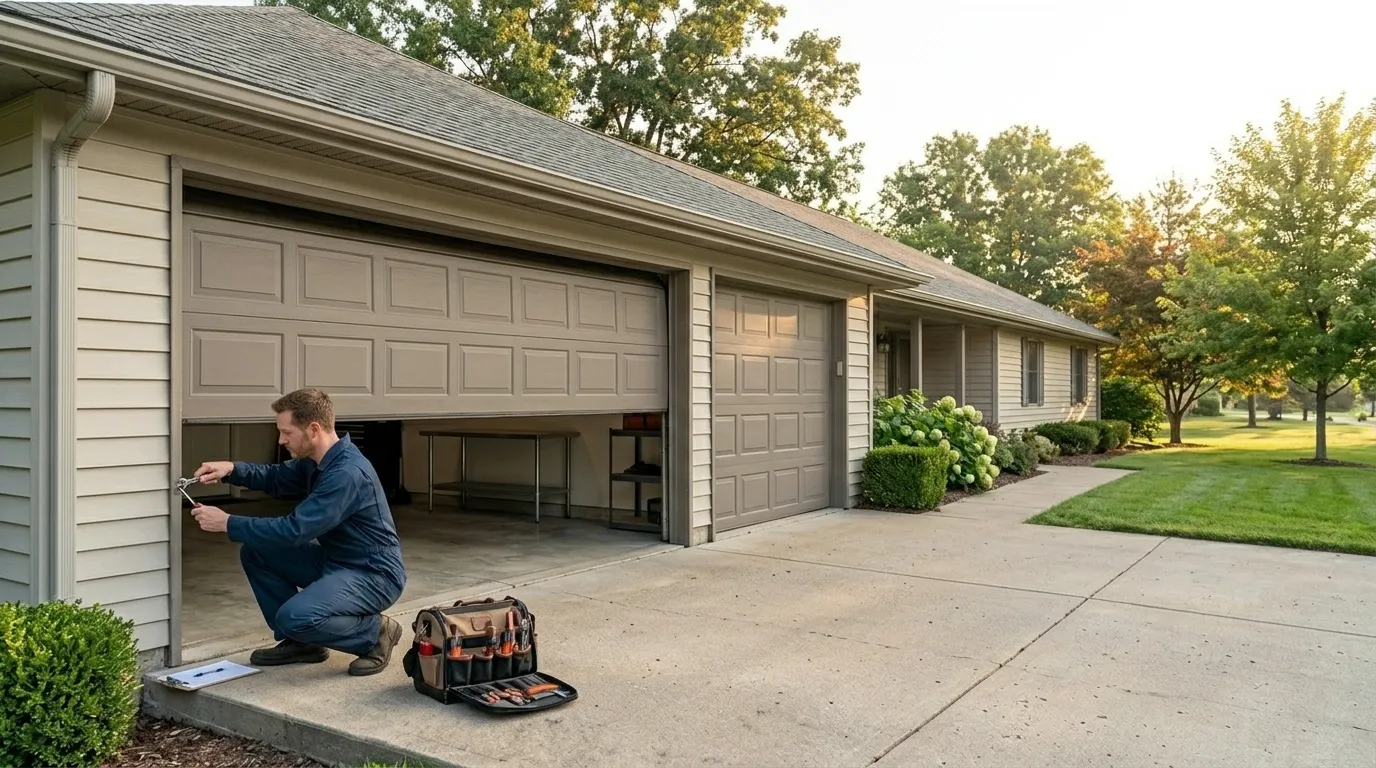
Because Thornton is a 10-mile trip from our Lodi base, we ask for a bit more detail up front than we would for a closer call: whether the door is stuck open or shut, whether you hear grinding when the opener runs, and whether anyone has already tried to force it back on track. That last one matters - a door forced back into a bent track can look fixed and then fail again within days.
Give us the make of your opener if you know it and roughly how old the door itself is. With most Thornton homes built around 1966, we're usually expecting original or first-generation replacement hardware, but a heads-up either way saves a second trip.
We schedule the visit around the drive, so we're not the fastest call in our own service area for last-minute same-day requests - we'd rather tell you that now than promise something we can't hold to.
Can You Do This Yourself
If the door is only slightly off track and nothing looks bent, some homeowners can carefully release the roller back into the channel with the door manually lifted partway and the opener disconnected. That's about the limit of what's safe to attempt alone.
What you shouldn't do is run the opener to try to force the door back into track, or cut the cables to free a jammed panel - a spring under tension can cause real injury, and on an older door like the ones common in Thornton, hardware may already be fatigued in ways you can't see. If the door won't move freely by hand, or if you hear the spring or cable under strain, stop and call it in rather than push further.