Why This Fails Locally
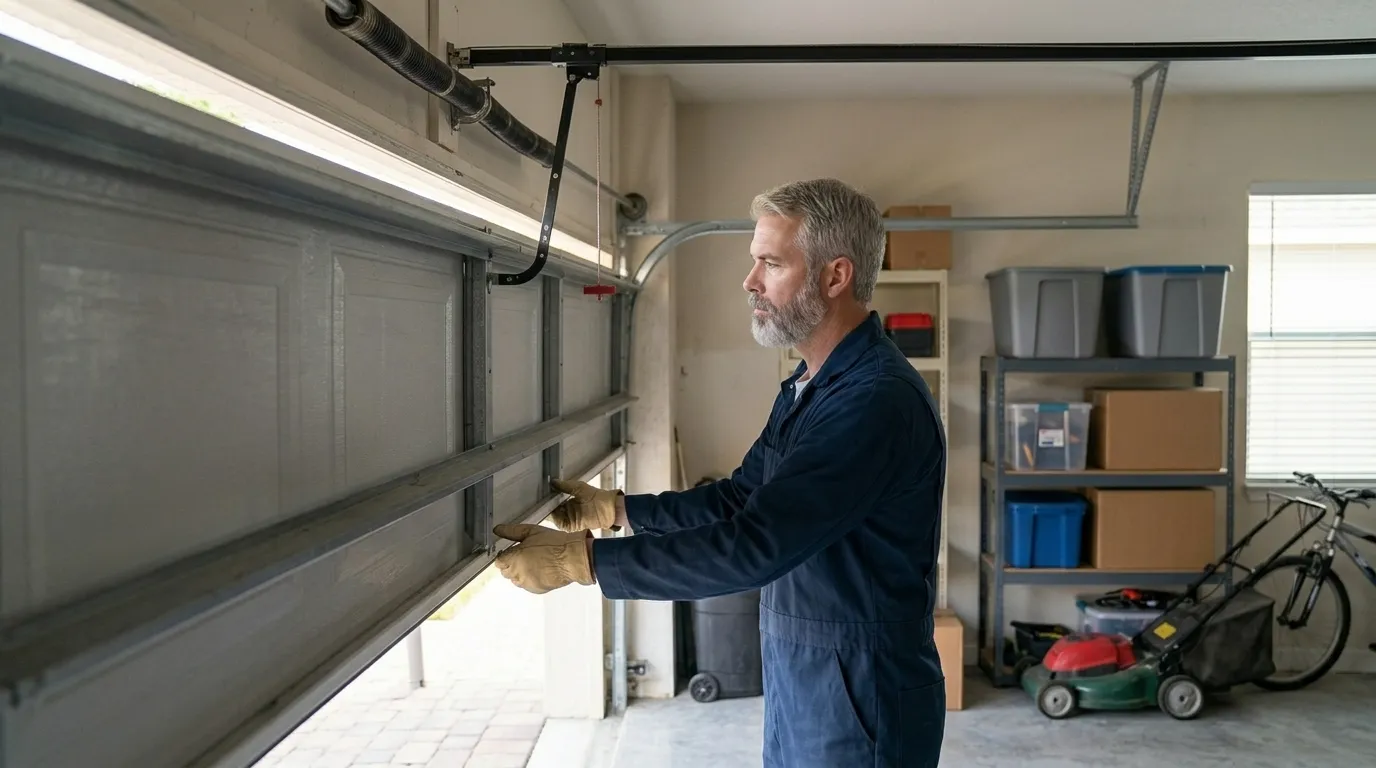
The homes around Dogtown were mostly built around 1977, right in the middle of the broader 1960s-to-70s wave that shaped this part of the county. That's a specific age for a garage door system: old enough that the original torsion or extension springs are decades past their rated cycle count, but not so old that the door itself is always the problem. Springs from that era were sized for lighter doors than what often gets installed as a replacement panel later, which is a common way a "new" door ends up with an undersized spring that fails within a year or two.
Heat is the other factor. This area sits in a moderate-heat climate band, and repeated summer expansion and winter contraction on 45-plus-year-old tracks and hardware speeds up metal fatigue in ways that don't show until the spring lets go, usually without warning, often on the hottest or coldest day of the stretch. Add a household income here running well above the wider service area's $91,429 median, and we see more owners who upgraded to a heavier insulated door on original-era track and springs - a mismatch that fails the same way, just sooner.
What Is on the Truck
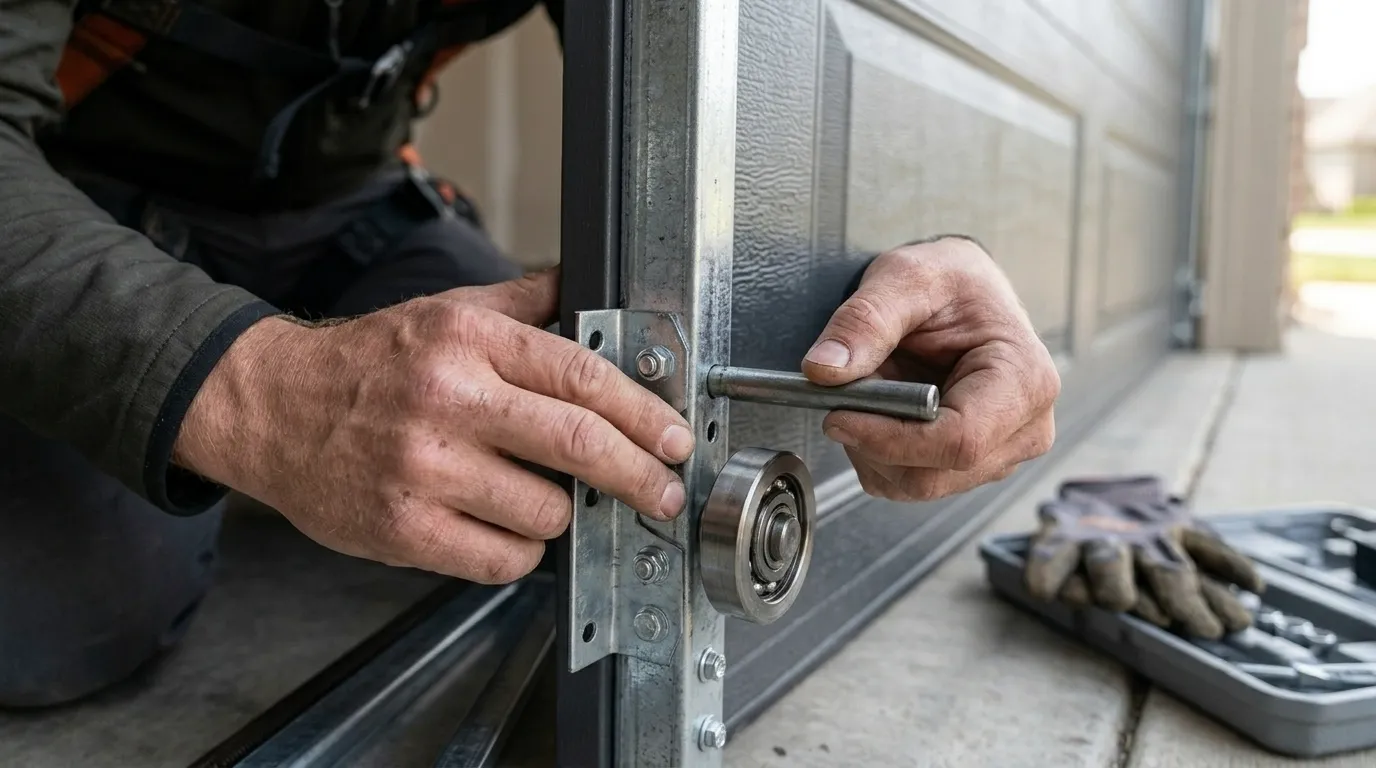
For a call from this part of the map, we load torsion springs in the sizes that match 1970s-era single and double door openings, plus extension spring sets for the side-mounted setups still common on original garage frames of that vintage. We carry standard cable, rollers, and hinges sized for both steel and older wood-panel doors, since either can still be in place on a house built in 1977.
We don't carry every opener logic board or every specialty low-headroom torsion kit - those get ordered in when a job calls for something outside what a standard 1970s-through-90s door needs. If your door turns out to need a part like that, we'll tell you on site rather than have you wait on a truck that doesn't have it. That's the one honest limit here: we stock for the door stock this area actually has, not for everything that's ever been installed.
What It Costs
We don't quote a price over the phone without knowing which part failed, and for a 10-mile call like this, guessing wrong means a second trip nobody wants to pay for. Torsion spring replacement and opener repair are priced differently, and door age matters too - a 1970s-era steel door with a straightforward torsion setup is usually the simpler job to price and complete than a door that's been swapped for a heavier insulated panel on original hardware.
We'll give you a real number once we've looked at the door, not before. If the door itself is failing rather than just the spring or cable - rust-through on the panel seams, warping, a frame that's racked - we'll say so plainly, because replacing an old door outright is sometimes the cheaper and longer-lasting call than repairing it piece by piece.