Why This Fails Locally
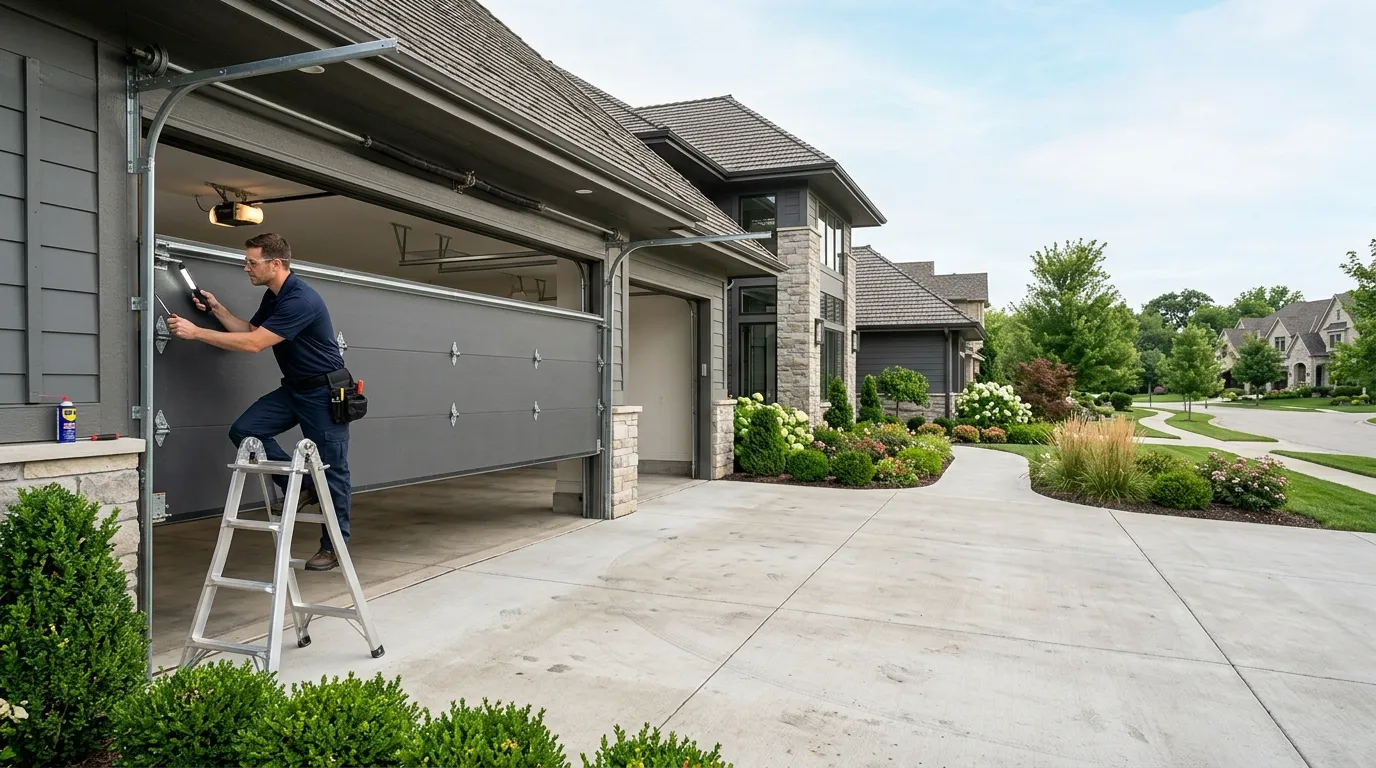
The median home in Dogtown went up around 1977, which puts most of the neighborhood at the tail end of the extension-spring era, right before torsion springs became the standard setup on new construction. That matters because extension springs - the long stretched coils that run along the horizontal tracks - wear differently than torsion springs. They stretch, fatigue, and eventually snap a coil rather than failing all at once, and the cheap safety cables meant to catch a broken spring are often missing or rusted through by now.
The wider service area runs from 1946 to 2001 in housing stock, with most of it built through the 60s and 70s, so we see a mix of torsion and extension setups depending on the block. But Dogtown sitting right at 1977 means extension-spring failures - a snapped coil, a frayed pulley cable, a bent hanger - are more often what we're driving out for than a torsion spring wearing out on its cycle count. It's a different failure than what you'd see on a house built in 1955 or one built in 1995, and it changes what we check first.
What Is on the Truck
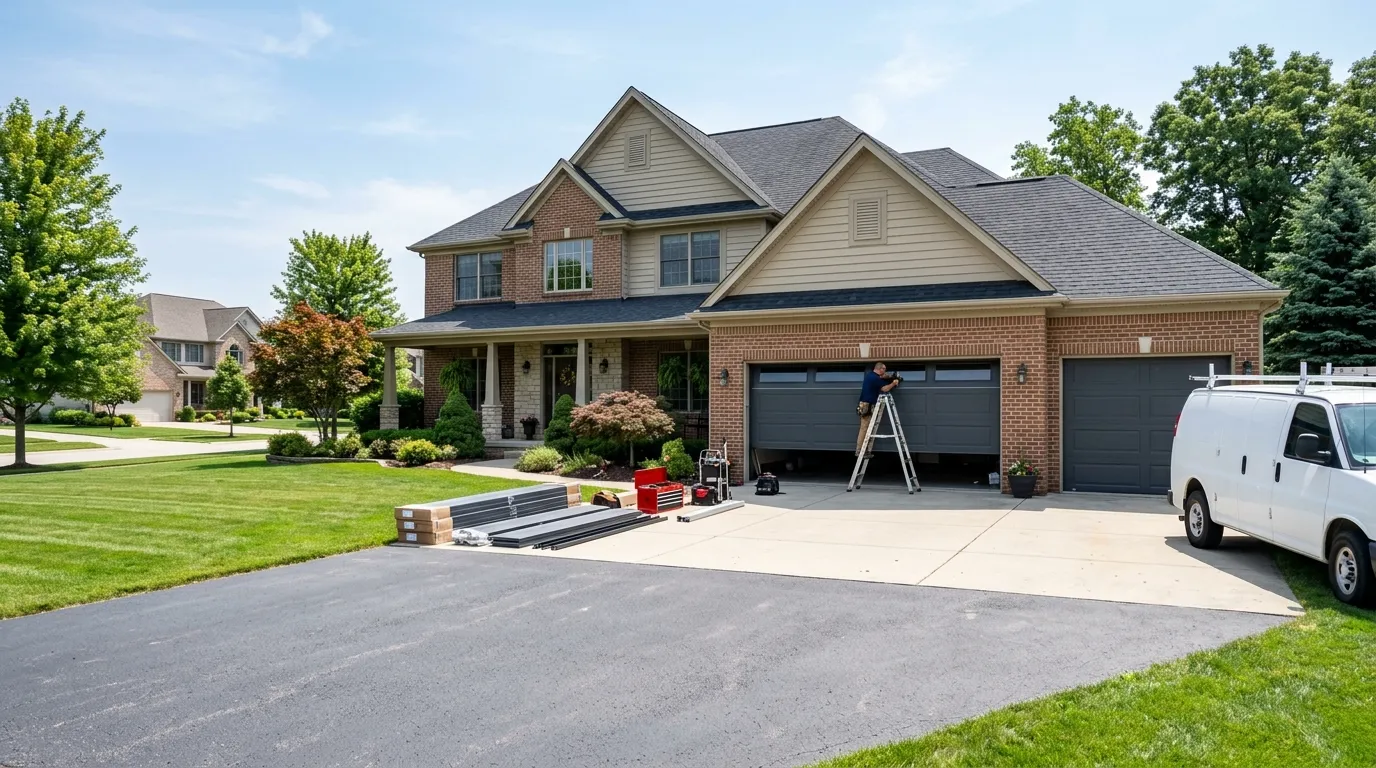
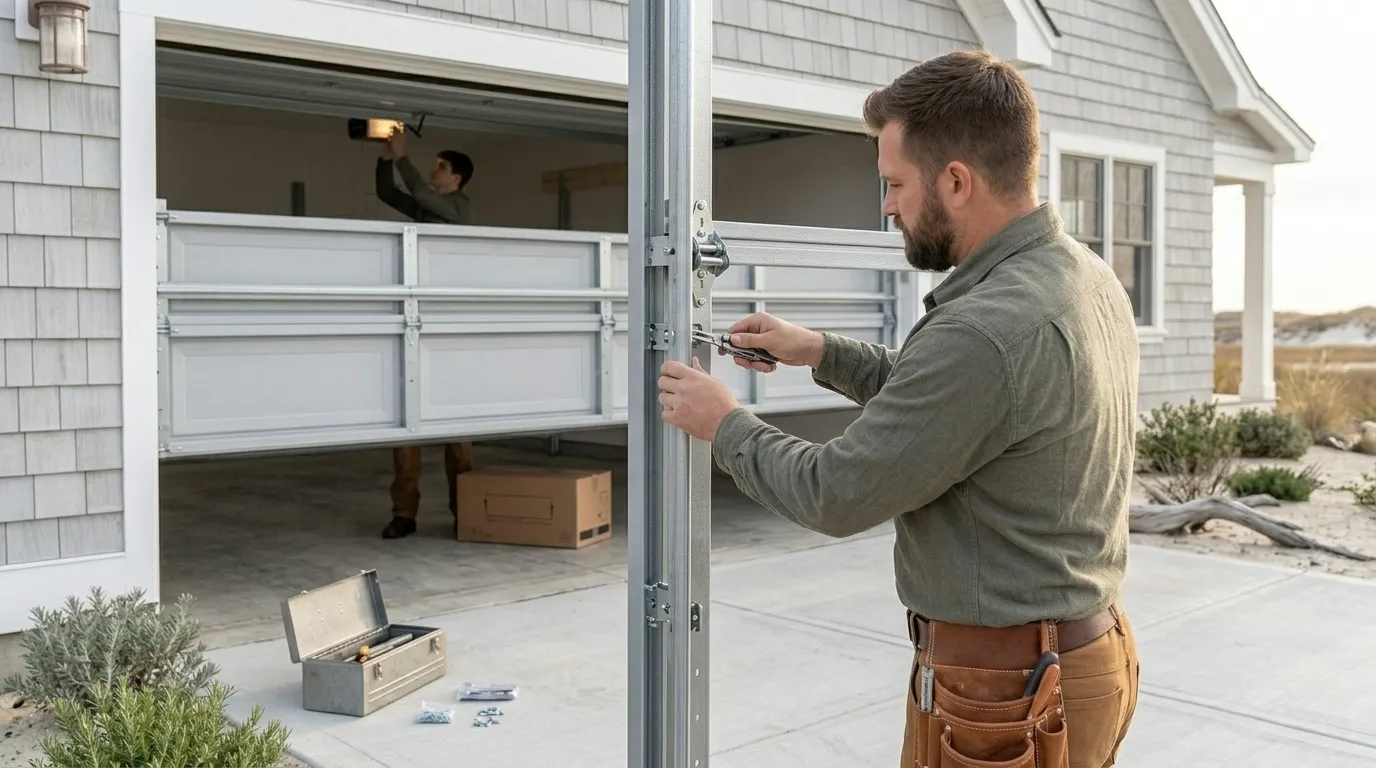
Because the extension-spring era is common on this stretch, we carry replacement extension springs in the standard weight ranges, plus the safety cables that should run through them - a lot of older installs never had one, or the one they had has rusted solid. We also stock the small stamped-steel pulleys and the flat idler brackets that these systems use, since those wear out quietly and get blamed on the spring when the real problem is a seized pulley dragging the cable.
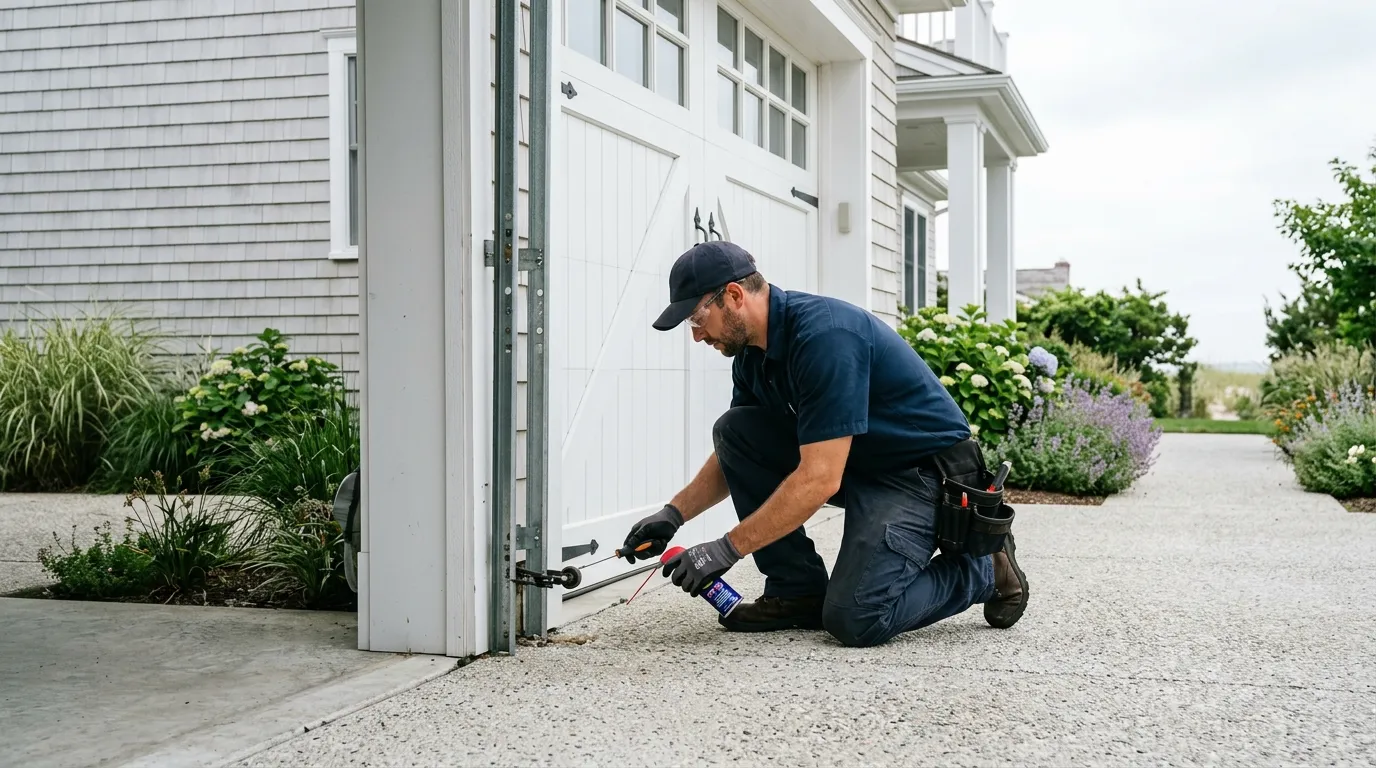
We carry rollers and hinges in both nylon and steel, since a 1970s-era door might still have its original galvanized rollers grinding in a track that's never been lubricated. Openers get swapped out on these houses often enough that we keep a couple of standard chain-drive units on hand too, along with the wall buttons and safety sensors that a lot of older setups are missing entirely.
One honest limit: we don't carry every obscure spring size or a full stock of specialty wood-panel doors on the truck. If your door needs a size we don't have loaded, that part gets ordered and we come back for install rather than guessing with something close.
What It Costs
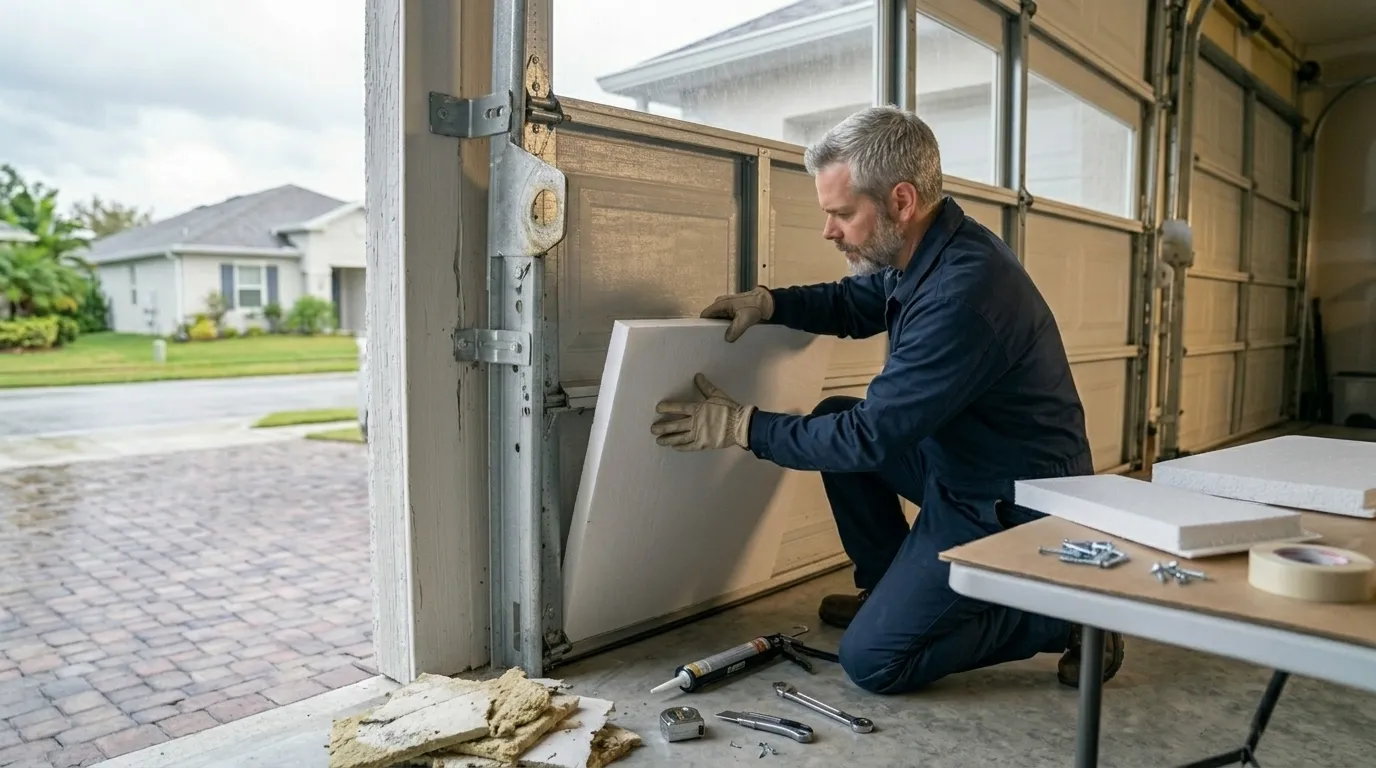
We don't have a fixed number to quote here - Dogtown jobs vary with what's actually broken and whether we've got the exact part loaded on the truck already. A single extension spring and cable replacement is a smaller job than a full opener swap or a pair of new springs on a heavier door. What we can tell you is what drives the number up: a door that's been running on a torn cable for months tends to have worn tracks or a bent panel by the time we get there, which adds labor beyond just the spring.
Given the income level typical of this area, we don't push a full door replacement when a spring and hardware repair will get another decade out of the same door - that's usually the cheaper and more sensible call unless the panels themselves are rusted through or badly dented. Ask for a number over the phone once you can describe what's happening; we'd rather quote against the actual fault than a guess.