Why This Fails Locally
Dogtown's housing stock centers on 1977, later than the 1946-2001 spread across the wider Lodi service area. That decade matters because it's when a lot of these houses got their first chain-drive opener, and by now most of those units have already been swapped once - in the late 80s or through the 90s - for a second-generation opener with an early circuit board rather than a simple relay.
Those boards are the failure point. They're old enough to corrode or crack a solder joint, but not old enough that owners think of them as antiques needing replacement on sight. The door looks fine, the springs are fine, and the opener just won't answer the remote - that's a board or capacitor problem sitting on 1970s-era house wiring that was never built with a smart opener in mind.
Heat plays a part too. The service area sits in a moderate-heat climate band, and motor capacitors in older openers degrade faster after years of summer attic temperatures pushing 130°F or more in the housing above the garage. That's a slow failure, not a sudden one, which is why owners often think the opener 'just quit' rather than tracing it to age.
What Is on the Truck
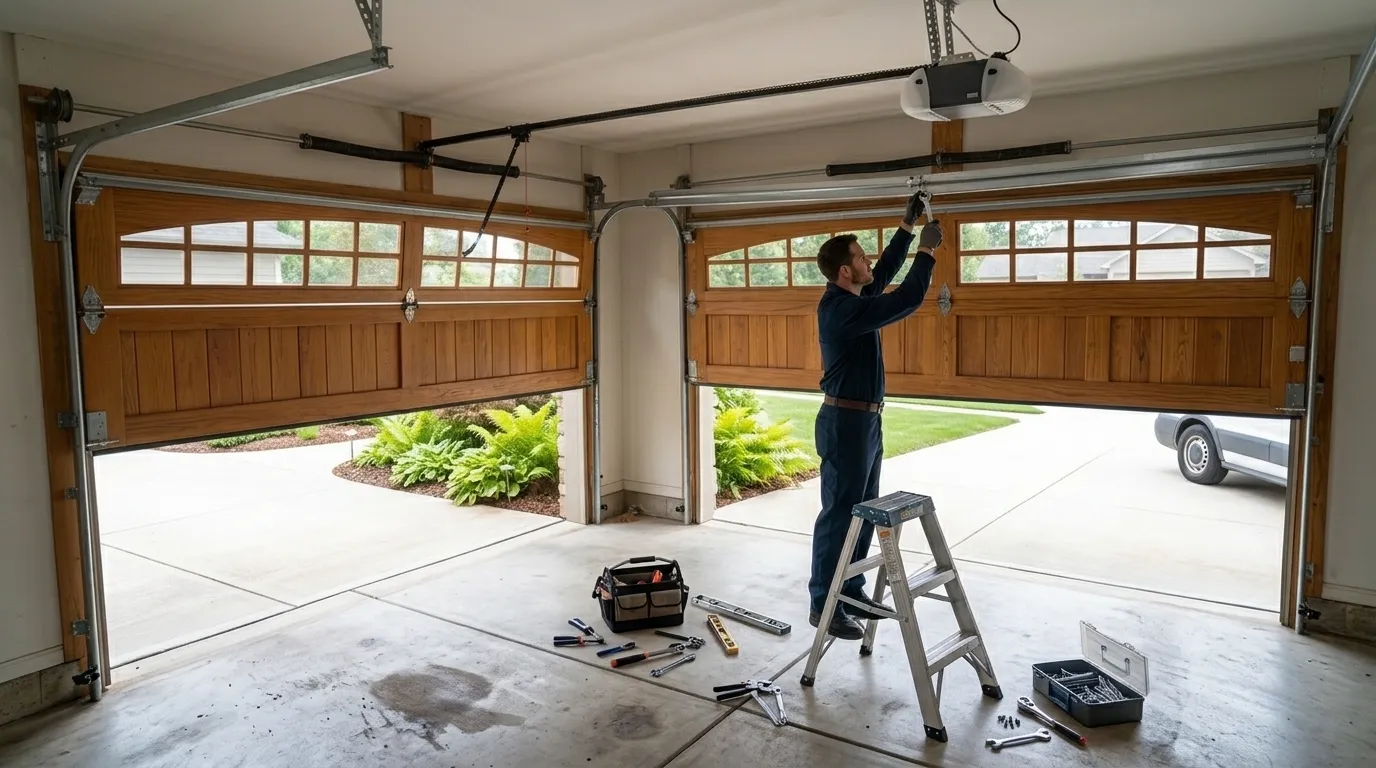
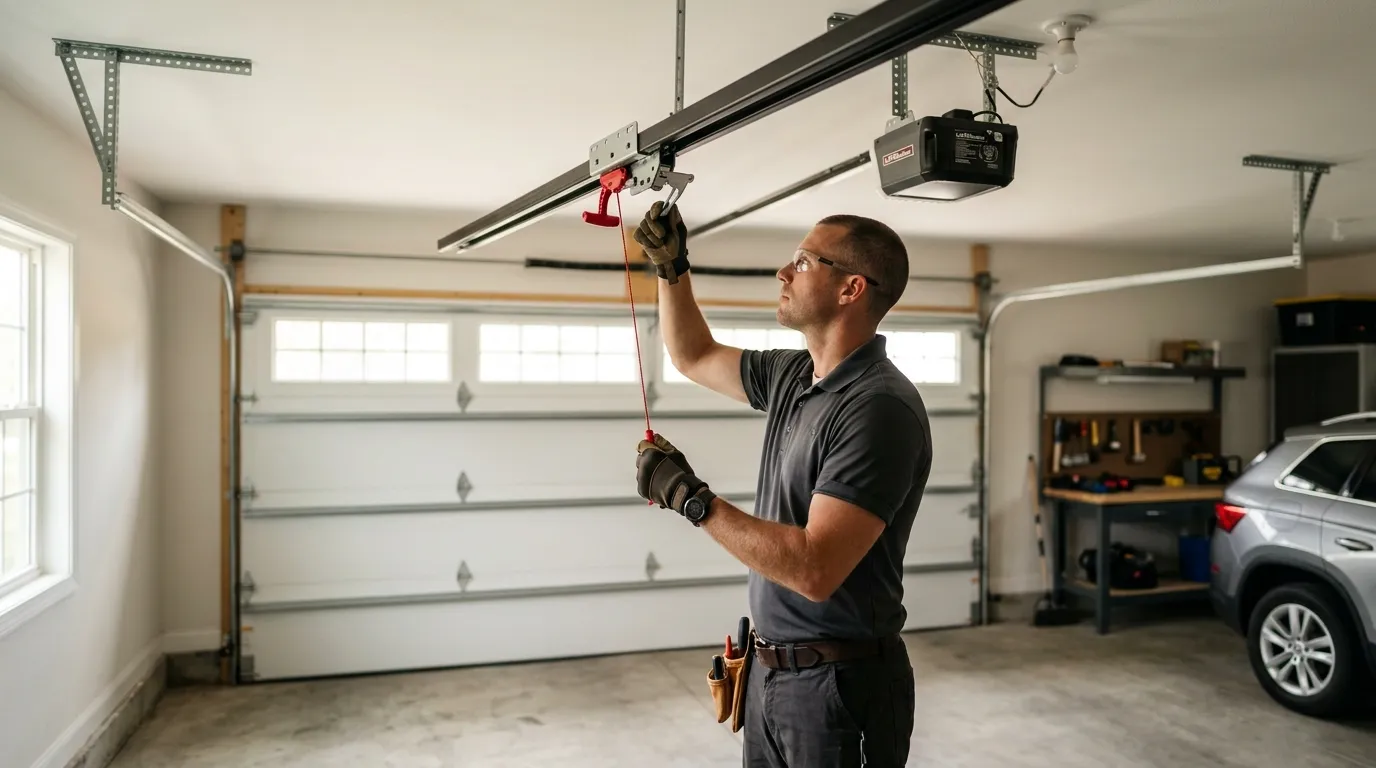
For opener work we carry the parts that fail most on units of the age common to Dogtown: drive gears and gear kits for chain and belt units, standard logic boards for the major brands still in production, safety-sensor eye pairs, remotes, and wall control replacements. Capacitors for the common opener motors are stocked too, since that's the part most likely to have quietly died from heat cycling.
What we don't carry on the truck is a logic board for an opener made before the mid-1980s. Those parts are discontinued by the manufacturers themselves, not just by us, and if your opener falls in that window we're ordering a compatible board or recommending a full opener swap rather than promising a same-visit fix. That's the one honest limit here - if your unit is that old, expect a second trip or a straightforward replacement conversation instead of a patch.
We also carry standard mounting hardware for converting an old chain-drive bracket to a newer belt or wall-mount unit, since that's a common ask once a homeowner decides the old opener isn't worth chasing anymore.
What It Costs
We don't publish a flat price here because opener repair cost depends on whether it's a gear, a board, a capacitor, or a full unit swap, and we're not going to quote a number we can't back up on this page. What we can tell you is how the decision usually goes in Dogtown specifically.
At a median household income of $126,042 - well above the $91,429 median across the broader service area - most owners here don't spend much time debating a mid-range repair. When the diagnosis comes back as a board that's discontinued or a motor that's near the end of its practical life, the math tends to favor replacing the opener outright rather than paying for a part that might fail again in a year or two. That's a different calculation than in lower-income pockets of the service area, where stretching one more repair out of an old unit makes more sense.
We'll always give you both numbers - repair and replace - before doing the work, and we're not going to talk you into the bigger job if the cheaper fix is genuinely sound.