Lockeford homes built mostly in the 1960s-70s era mean specific door and hardware sizing. Lodi Garage Door Pros travels the 8 miles to install correctly the first time.
At a median household income of $93,438, Lockeford sits a notch above the wider service area's $91,429, and that number matters more than people think when they're staring at a door that won't lift right. It's the line where a repair bill and a new-door bill start to look close enough that replacing makes more sense than patching. If your opener is original and your track is bent, you're not saving money by nursing it along for another two years.
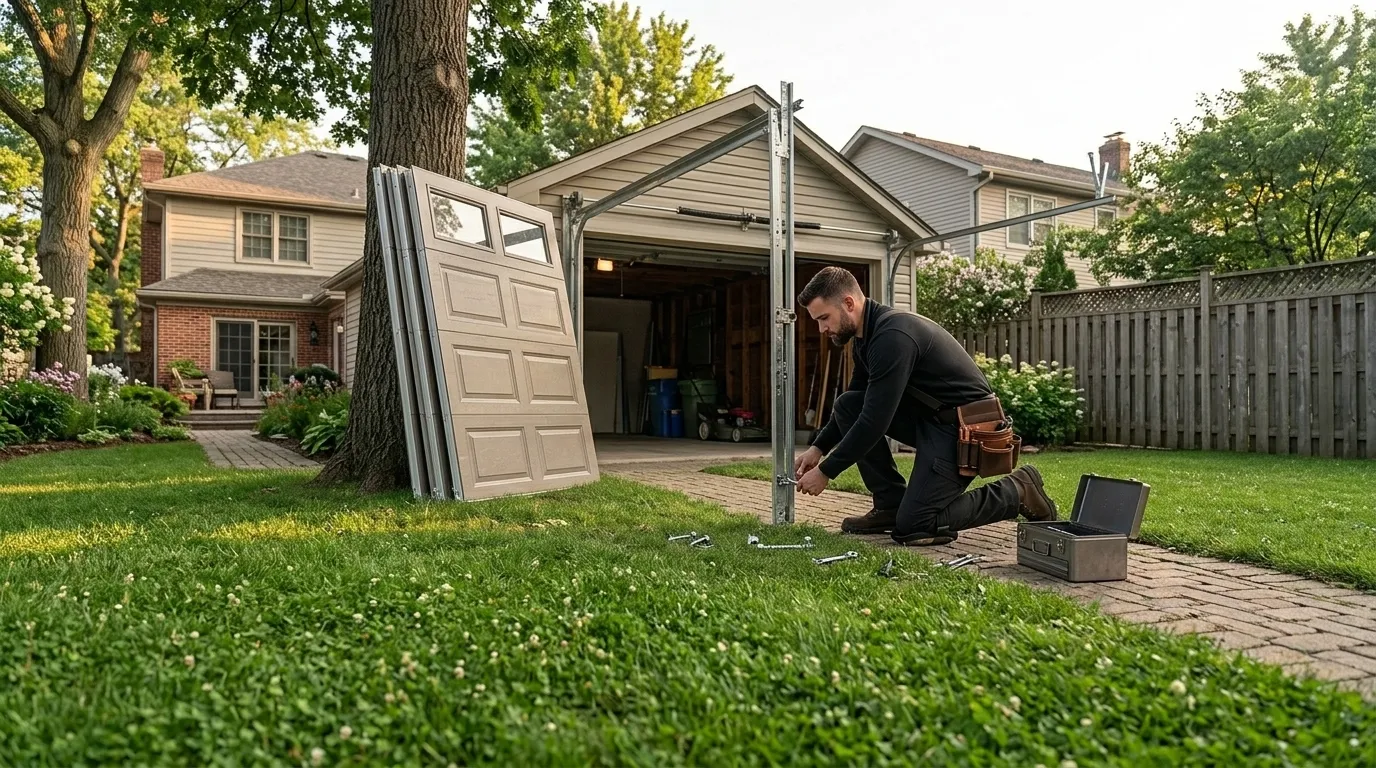
Could you buy a kit box door and hang it yourself over a weekend. Some people do. But sizing a new door and opener to a house built in the 1979 range - which is roughly the median build year out here - means matching spring wind to a heavier insulated panel than what these houses shipped with new, and getting the header height right on framing that's over forty years old. A mismatch there doesn't just look wrong, it strains the opener from day one. We'd rather quote it and let you decide, than have you find out mid-install that the track brackets don't line up with the studs behind the old trim.
How It Shows Up
Lockeford's housing stock runs mostly 1960s-70s across this part of the service area, and the local median build year of 1979 puts most houses right at the tail end of that run. What that means for a new install: openers from that era were often bolted to headers sized for lighter single-layer doors, and homeowners who've since upgraded to a heavier insulated panel are running that old header past what it was built for.
You'll see it as a door that installs fine for a year, then starts sagging at the top corners, or an opener that strains audibly lifting a door it was never sized for. Sometimes it shows up faster - a header that flexes visibly the first time the new door goes up. None of this is dramatic. It's just a mismatch between a house built for one generation of door and a new one sized for today's insulation standards.
Why This Fails Locally
This isn't a Lockeford-specific defect - it's a Lockeford-specific pairing of house age and heat exposure. The area sits in a moderate heat climate band, which doesn't crack panels the way a harsher freeze-thaw zone would, but it does mean insulated doors here earn their keep differently: less about frost, more about keeping a garage that backs onto living space from turning into an oven by.
Houses built around the 1979 median in this part of the service area typically have single-layer steel or wood doors on hardware never rated for an insulated panel's extra weight. Swap in a new door without upgrading the springs and the opener drive gear to match, and you've built a door that lifts hard for a while and then doesn't lift at all. It's an 8-mile trip out from Lodi for us either way, so we spec the springs to the actual door going in, not to whatever wound up on the old torsion bar.
What Can Go Wrong
The header issue is the big one - undersized framing behind a heavier new door - but it's not the only thing worth flagging before you commit to a new install. Opener horsepower rated for a lightweight door won't move an insulated one smoothly, and running it anyway shortens the motor's life fast.
Honest limitation: we don't do same-day walk-in installs out to Lockeford. It's a real trip from Lodi, and a new door install takes proper measuring first - header height, track clearance, opener mount - before we ever order the panel. Rushing that step to save you a day is how you end up with a door that binds on the track a month later. We'd rather measure twice and install once than come back out for a fix that a slower first visit would have caught.
How it works
From “it’s stuck” to “it’s fixed”
1
Tell us what’s wrong
Describe the symptom - won’t open, loud bang, opener runs but the door won’t move.
2
On-site diagnosis
A technician tests the door under power and by hand and finds what actually failed.
3
Clear, up-front plan
You get the fix that’s needed and what drives the cost - before any work starts.
4
Repaired & tested
The repair is done, the door is set true and tested, and the work area left clean.
Next step
Serving Lodi, CA - tell us what your door’s doing and we’ll take it from there.
Is a new door worth it if my current one still opens, just slowly?
Often yes, once you factor in the header and hardware mismatch common on houses built around 1979 in this area. A slow door usually means strained hardware, not a healthy door. At local income levels, replacing before the opener burns out tends to cost less than repeated repair visits.
Do you have a branch in Lockeford?
No. We're based in Lodi and drive out roughly 8 miles to reach Lockeford. There's no local depot or drop-off point here - every install is scheduled from the Lodi shop.
Will a new insulated door help with summer heat?
Some. This area sits in a moderate heat climate band, so it's less about extreme cold and more about keeping an attached garage from overheating. An insulated panel helps, but it won't outperform its rating - we size it to the door opening, not to a guess.
Ready to get your garage door sorted?
Tell us what it’s doing and where you are in Lodi - we’ll take it from there.