What Lodi's 1960s and 70s Garage Doors Are Telling You
Lodi's housing runs 1946 to 2001, most of it 1960s and 70s stock. Here's what that means for the grinding, popping, and slamming your garage door makes.
Most people treat every garage door sound as background noise until the door won't open. That's a mistake here more than most places, because Lodi's housing stock skews old. F1 puts the build range at 1946 to 2001, with the median landing in 1974, and F2 shows that pattern holding across 19 named areas in the service territory, not just one neighborhood. That means a big share of doors out there are still running original torsion hardware or a replacement opener bolted onto 50-year-old track.
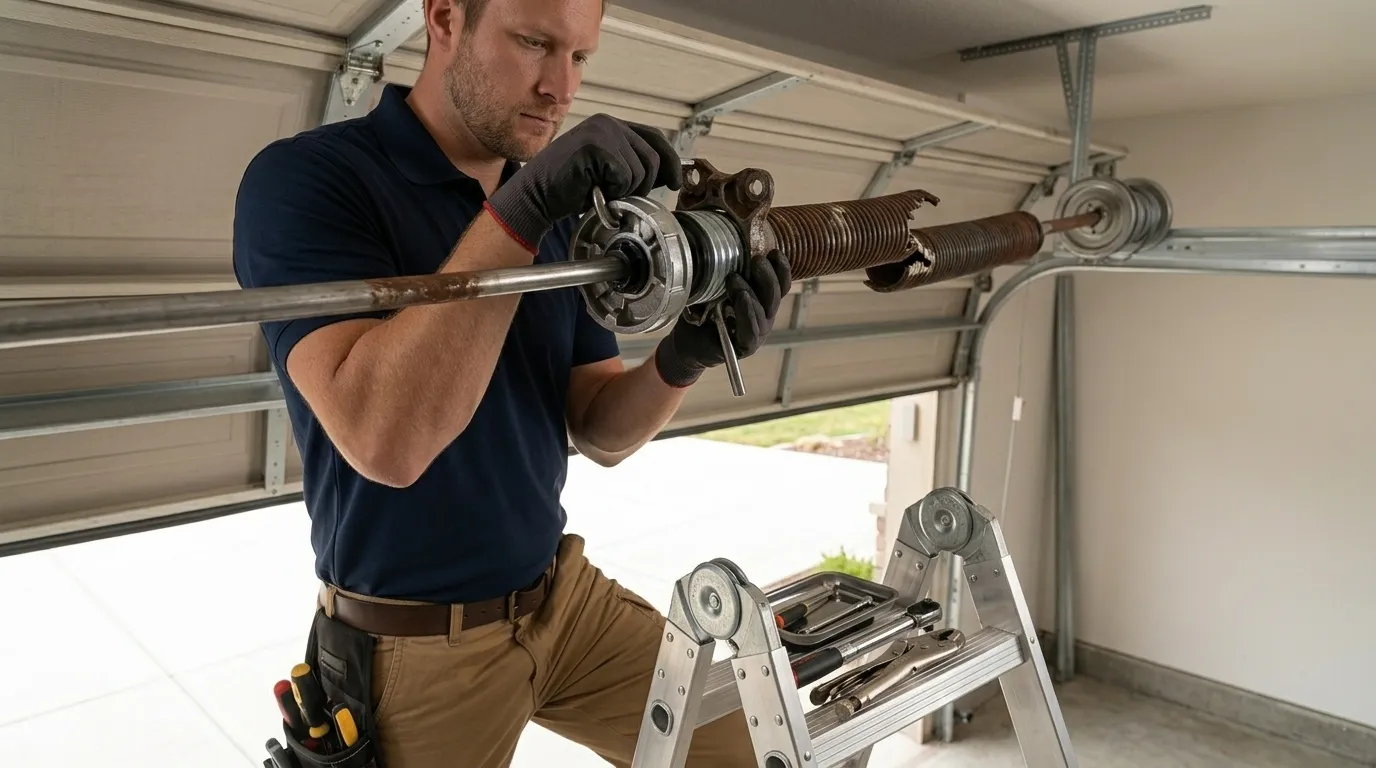
The grinding sound people wave off as "just old" is usually a roller that's worn its bearing shell down to bare metal. The rhythmic thump on lift is a cable strand starting to separate. On a house built in the 60s or 70s, that hardware has had four or five decades of thermal cycling and use it was never rated for past year twenty. Waiting for it to fail completely, on a door that old, usually means the drum or the shaft goes with it, not just the spring.
If you're in Woodbridge, Morada, or Collierville, or further out toward Lockeford or Galt, the odds are good your door and your neighbor's door came off the same build spec. The noise isn't random. It's the hardware telling you its age.
What the Weather Here Does to It
F3 puts this area in a moderate heat band, not the severe swings that crack steel or snap cable in colder climates. That's the good news. The less obvious news is what steady heat does over decades to lubricant and to the nylon rollers common on doors from the 60s and 70s vintage this area is full of.
Grease that isn't reapplied dries out and turns to a hard film rather than staying workable, which is where the squeal comes from on a hot afternoon opening. It's not the door failing, it's the lubricant that failed years ago and never got redone. On original hardware from the F1 build era, that dried lubricant sits on parts that were never replaced, so the wear underneath has been building the whole time nobody addressed the sound on top.
There isn't a freeze-thaw story to tell here the way there would be somewhere with hard winters. What there is instead is a long, slow bake that never lets up, on doors that in a lot of cases have never had a hardware inspection since they were installed. The moderate climate means less dramatic failure, but it doesn't mean no failure. It just means the failure creeps instead of snapping.
The Situation
Across the service area, F6 counts 17,555 owner-occupied houses out of 26,985 households. A large share of those sit in the F1 window, built between 1946 and 2001, median year 1974. That's a lot of original hardware still hanging on a lot of walls, and a lot of it hasn't been touched since a garage door installer left the jobsite decades ago.
F7 puts median household income for the area at $91,429. That matters for one practical reason: when a torsion spring finally lets go on a door that old, the repair is affordable for most owners here rather than a financial gut-punch, which is worth knowing before you decide to keep patching instead of fixing.
The honest situation is this: a door built to 1970s spec, with 1970s-width track and a spring rated for a wood panel door that may since have been swapped for a heavier insulated one, is running outside its original design load. That mismatch is common enough in this housing stock that it's worth checking, not assuming.
Doing Nothing For Now
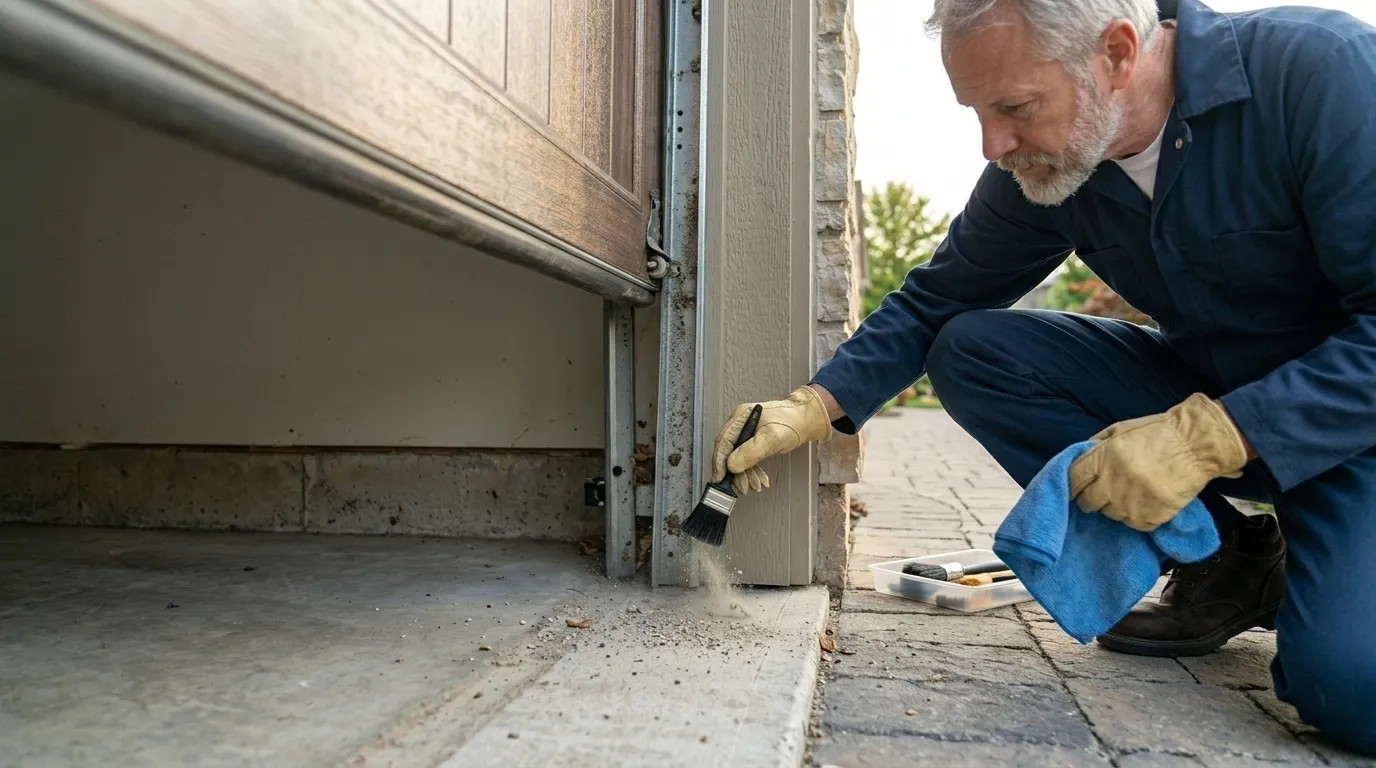
Sometimes the right call really is to wait. If the noise is a light squeak on lift and the door still opens smooth and level, lubricating the rollers and hinges yourself can buy real time, especially given the moderate heat band here doesn't stress hardware the way harsh winters would elsewhere.
Here's the limitation, plainly: we don't do same-day work on every call, and if a part specific to an older 1960s or 70s track width needs ordering, that adds days you should plan for rather than assume away. If your door is one of the originals from that F1-era build, don't expect a same-day swap on obsolete track hardware.
What you shouldn't wait on is a cable that's frayed, a spring that's visibly gapped, or a door that drops instead of lowering evenly. Those aren't noises to note and move past. On hardware this old, across a housing stock built mostly in the 1960s and 70s, the gap between "still working" and "about to fail hard" is often a matter of weeks, not years.
How it works
From “it’s stuck” to “it’s fixed”
1
Tell us what’s wrong
Describe the symptom - won’t open, loud bang, opener runs but the door won’t move.
2
On-site diagnosis
A technician tests the door under power and by hand and finds what actually failed.
3
Clear, up-front plan
You get the fix that’s needed and what drives the cost - before any work starts.
4
Repaired & tested
The repair is done, the door is set true and tested, and the work area left clean.
Next step
Serving Lodi, CA - tell us what your door’s doing and we’ll take it from there.
Why does my garage door make more noise now than it used to?
If your house falls in the common Lodi build range of the 1960s or 70s, the hardware is old enough that lubricant has dried out and rollers have worn down. New noise on old hardware usually means wear finally reaching a point you can hear, not a sudden new problem.
Is it normal for older Lodi homes to still have original garage door hardware?
Yes. Housing here runs 1946 to 2001 with a median build year of 1974, and that pattern holds across most of the service area. A lot of original torsion springs, track, and rollers from that era are still in service and were never rated to last this long.
Does the heat here cause garage door problems?
The climate here is moderate, not extreme, so you won't get the sudden freeze-cracks colder regions see. What you do get is slow lubricant breakdown from steady heat over years, which shows up as grinding or squealing on older hardware.
Should I fix the noise or wait it out?
A light squeak you can often lubricate yourself and monitor. A frayed cable, a gapped spring, or a door dropping unevenly is not something to wait on, especially on hardware from the 1960s-70s build era common here, where failure tends to be sudden once it starts.
Ready to get your garage door sorted?
Tell us what it’s doing and where you are in Lodi - we’ll take it from there.