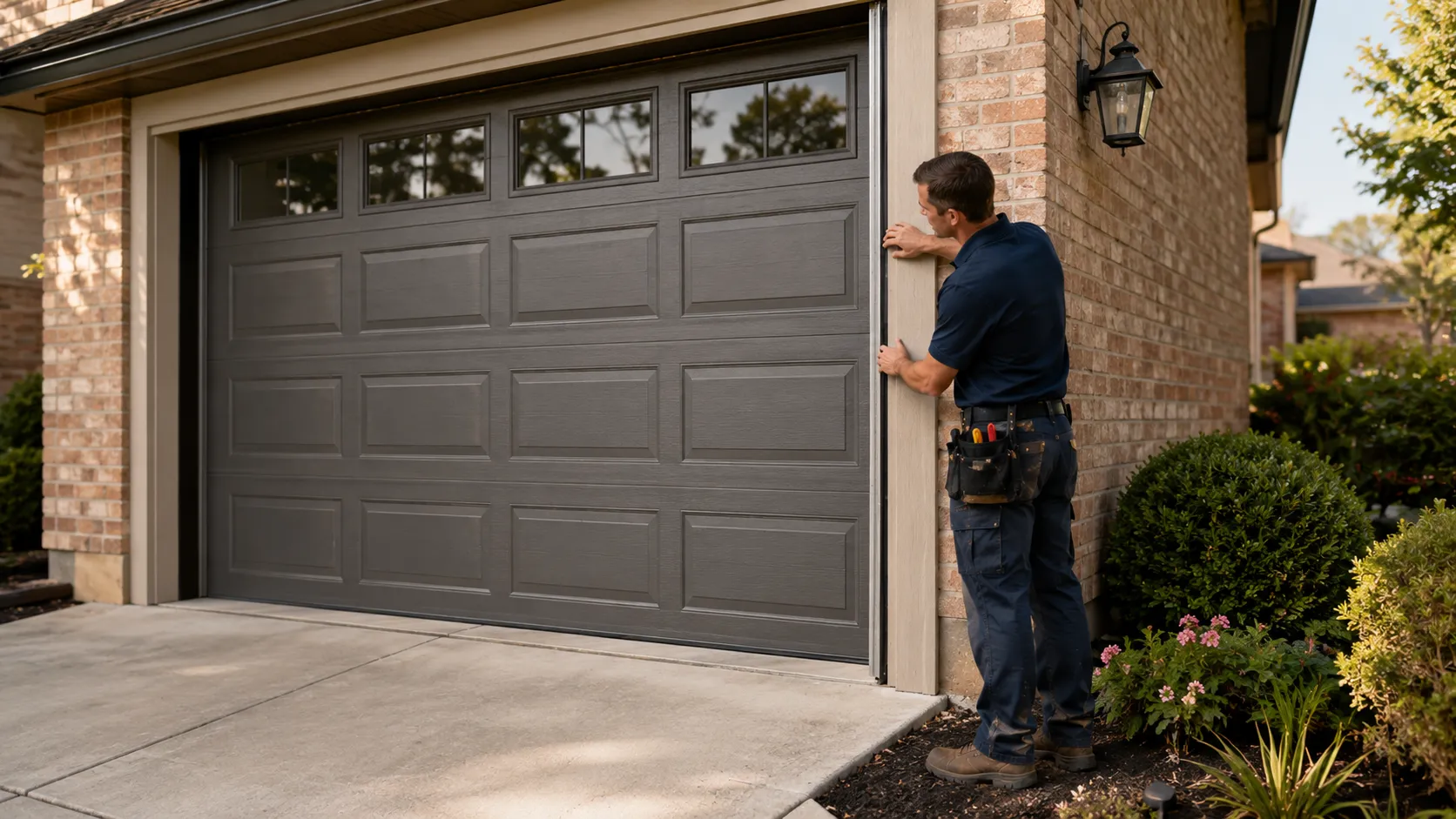
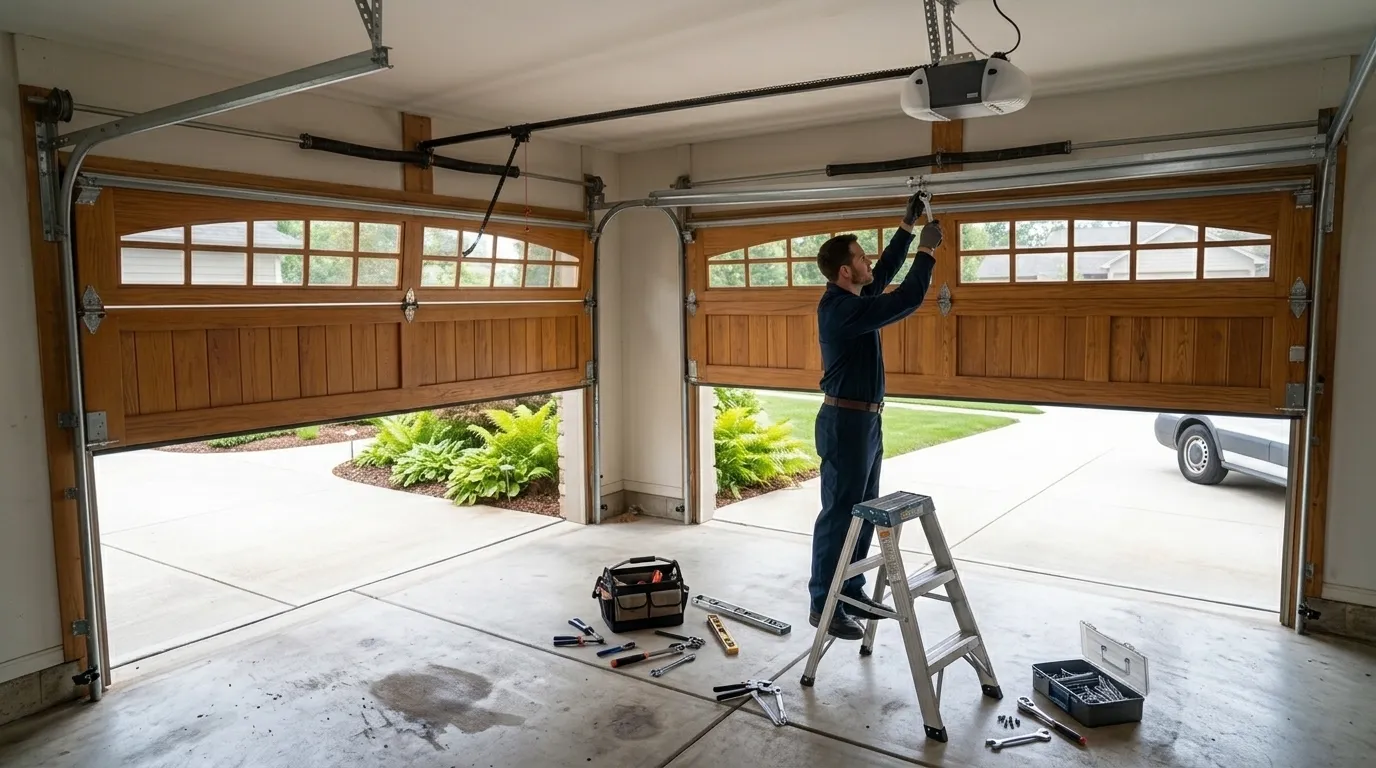
Lodi garage door repair for homes built 1946 to 2001, when torsion springs and steel tracks were sized for a different door than what's on the house now.
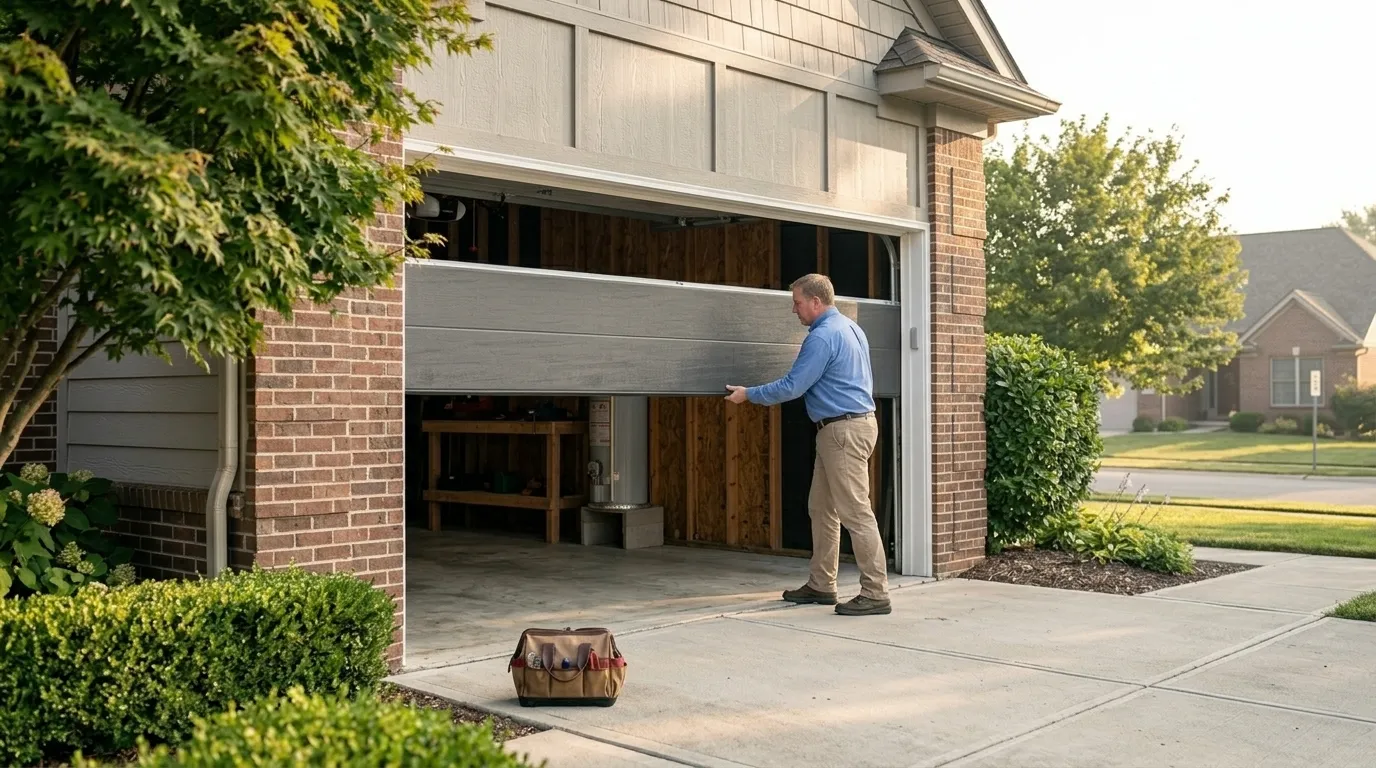
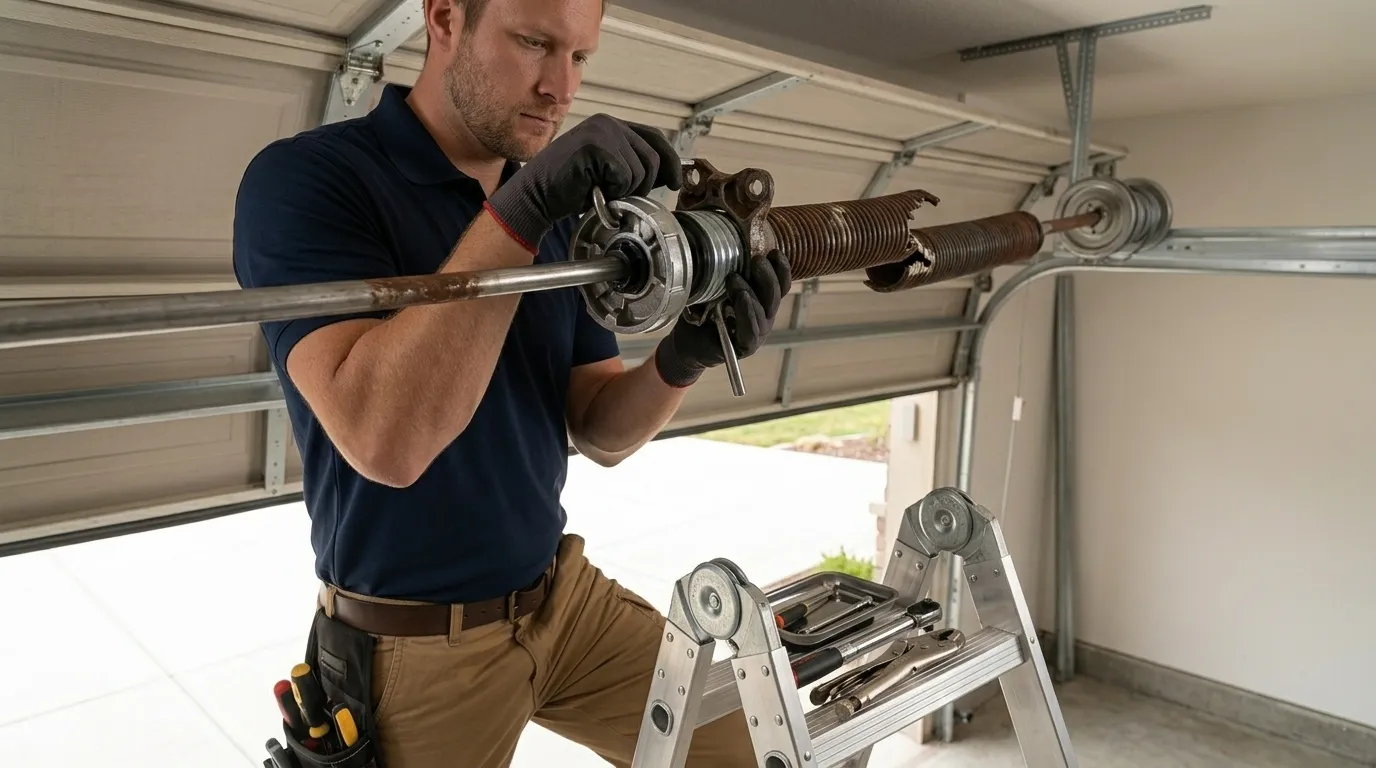
Most calls start the same way: the door won't open, or it opens a few inches and stops, or it comes down crooked with one side dropping faster than the other. On a lot of Lodi houses, that's a torsion spring that's finally given out after decades of daily cycling. You'll also hear it before you see it - a loud bang from the garage is almost always a spring snapping, not the opener failing. Other times it's slower: the door starts sagging on one corner, rollers grind in the track, or the cable frays and starts shedding thin wire strands near the drum. On older tracks, rust at the mounting brackets loosens the whole assembly, and the door walks side to side instead of running straight. None of this is dramatic until it is - a spring under tension that fails while someone's underneath the door is the one call that turns into an ER visit instead of a repair. If your opener motor runs but the door doesn't move, or the door reverses right after it starts closing, that's usually the safety sensors or the travel limits, not the spring, and it's a different fix entirely.
What Is on the Truck
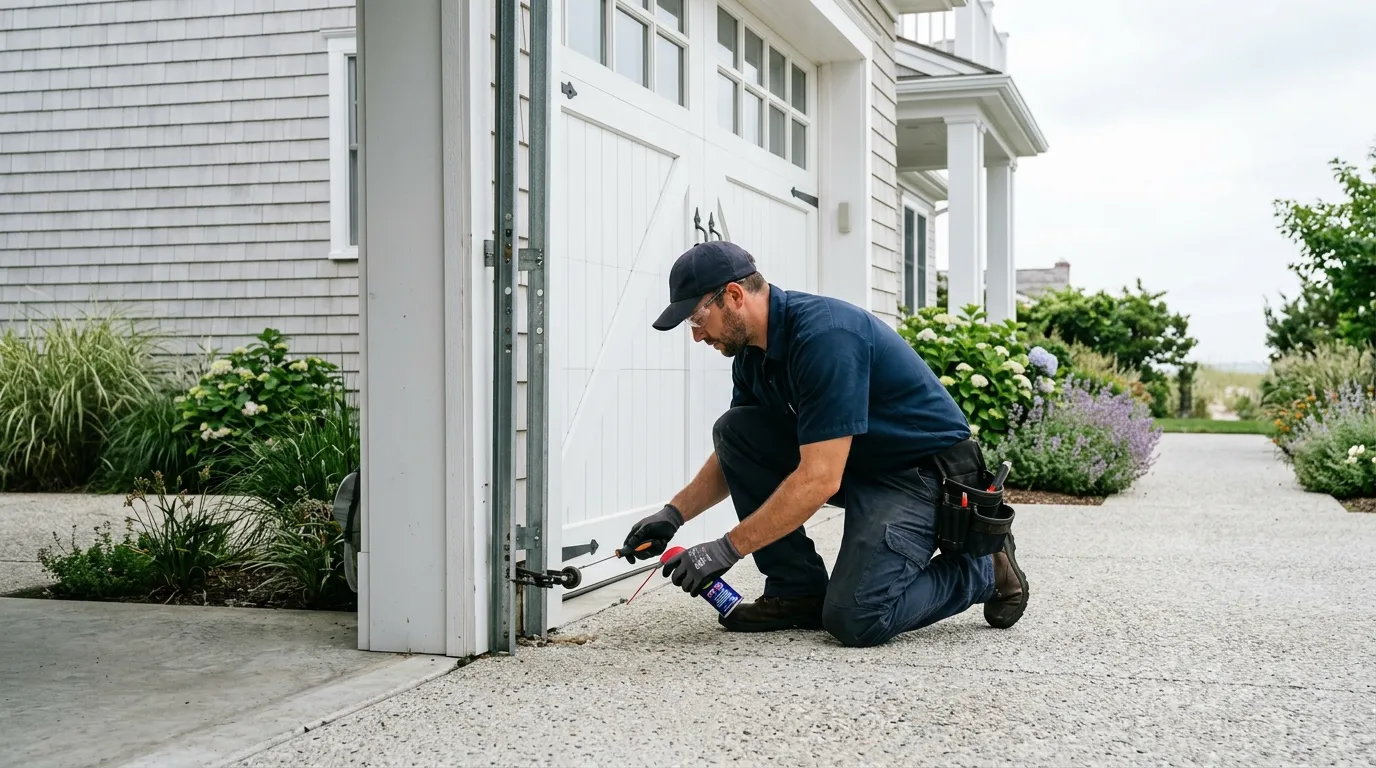
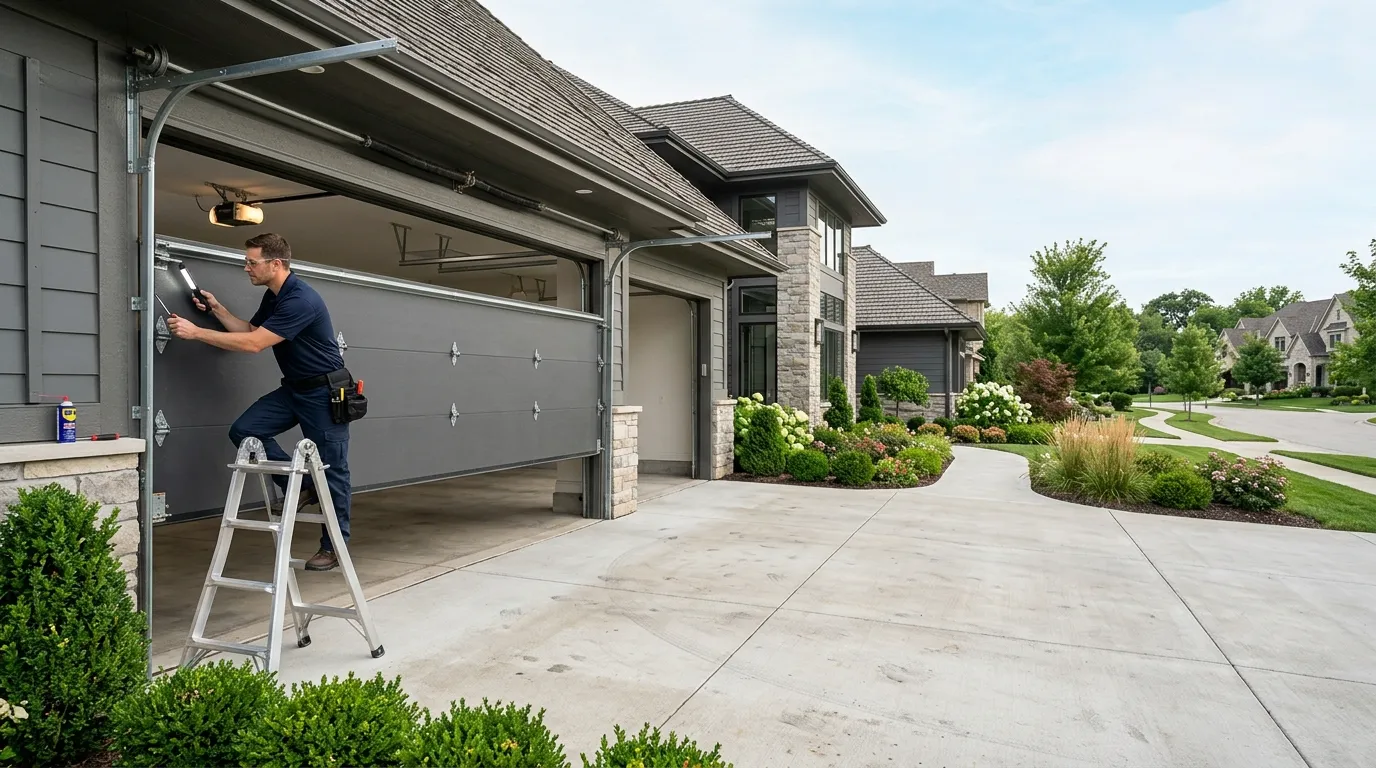
We carry torsion springs in the sizes that match houses built across Lodi's 1946 to 2001 stock, with the heaviest stock in the sizes common to 1960s and 70s construction - that's the era most of the 19 areas we run to were built out in, from Woodbridge four miles away to Bethel Island twenty miles east. That means double-loop and standard torsion springs in the wind and wire gauges that show up most often on original hardware, plus the drums, cables, and end bearing plates that wear alongside them. We also stock steel and aluminum track sections, nylon and steel rollers, and hinges in the common panel-count sizes. For the moderate heat this area sees, we use lubricant and hardware coatings rated to hold up under repeated daily heat cycling rather than gum up or dry out. What we don't carry on the truck are obsolete wood panel sets or specialty hardware for doors that were custom-built decades ago - those get special-ordered, and we'll tell you that up front instead of pretending otherwise.
What the Fix Involves
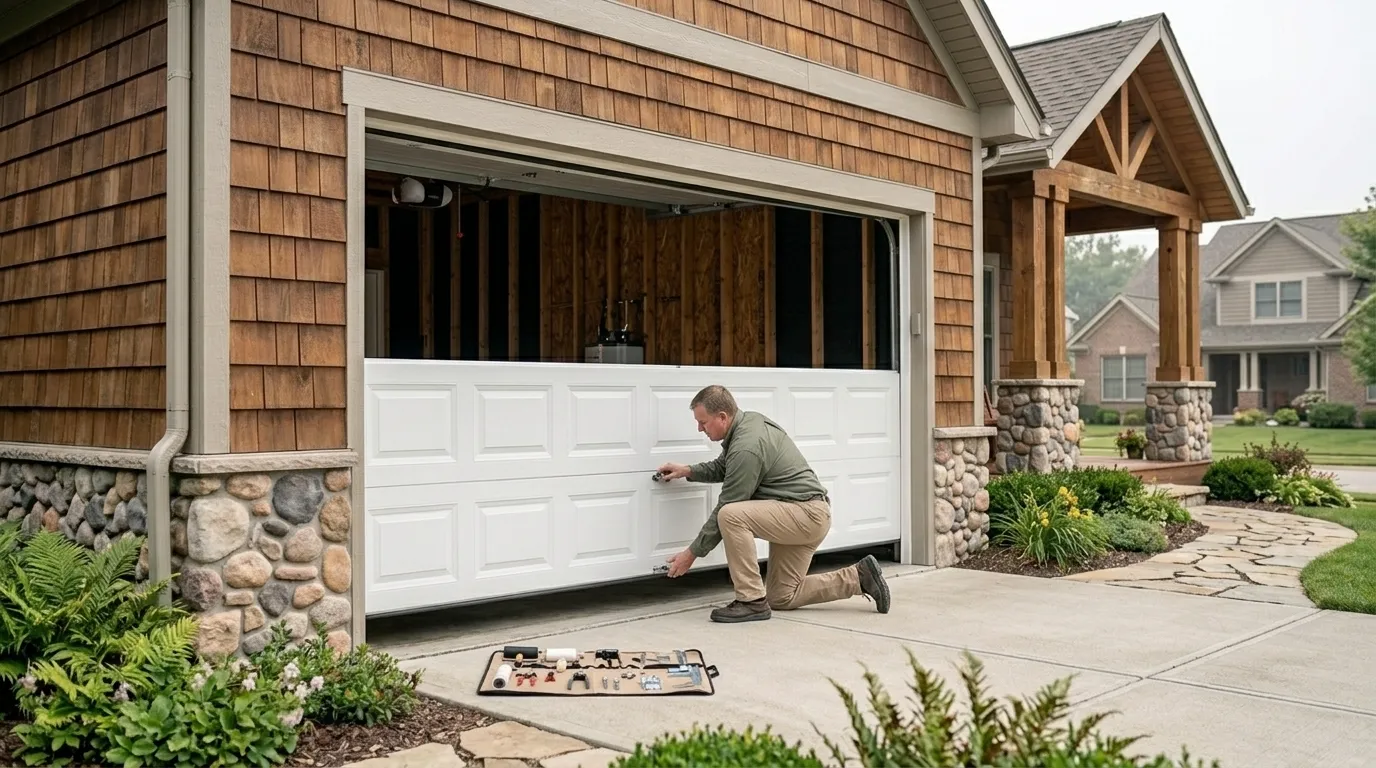
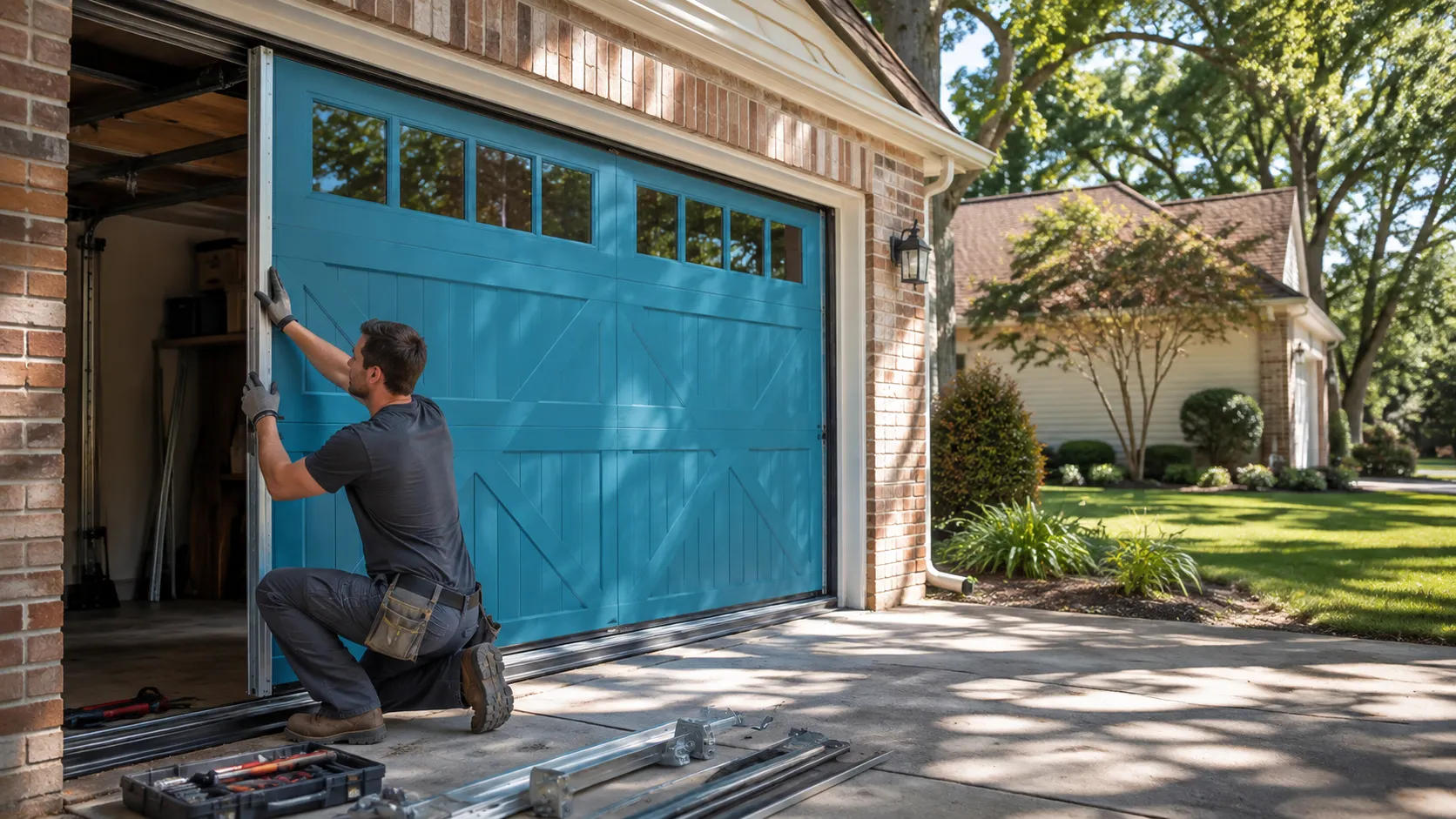
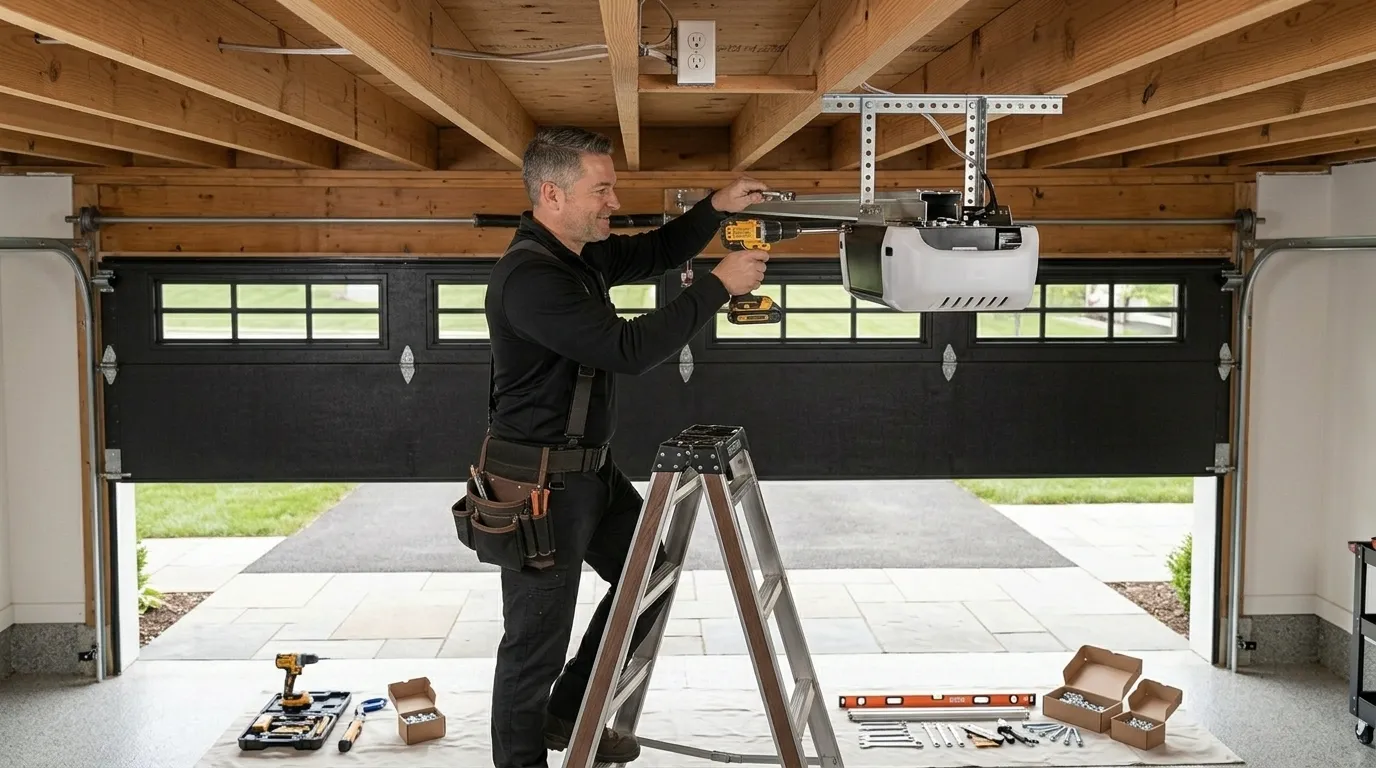
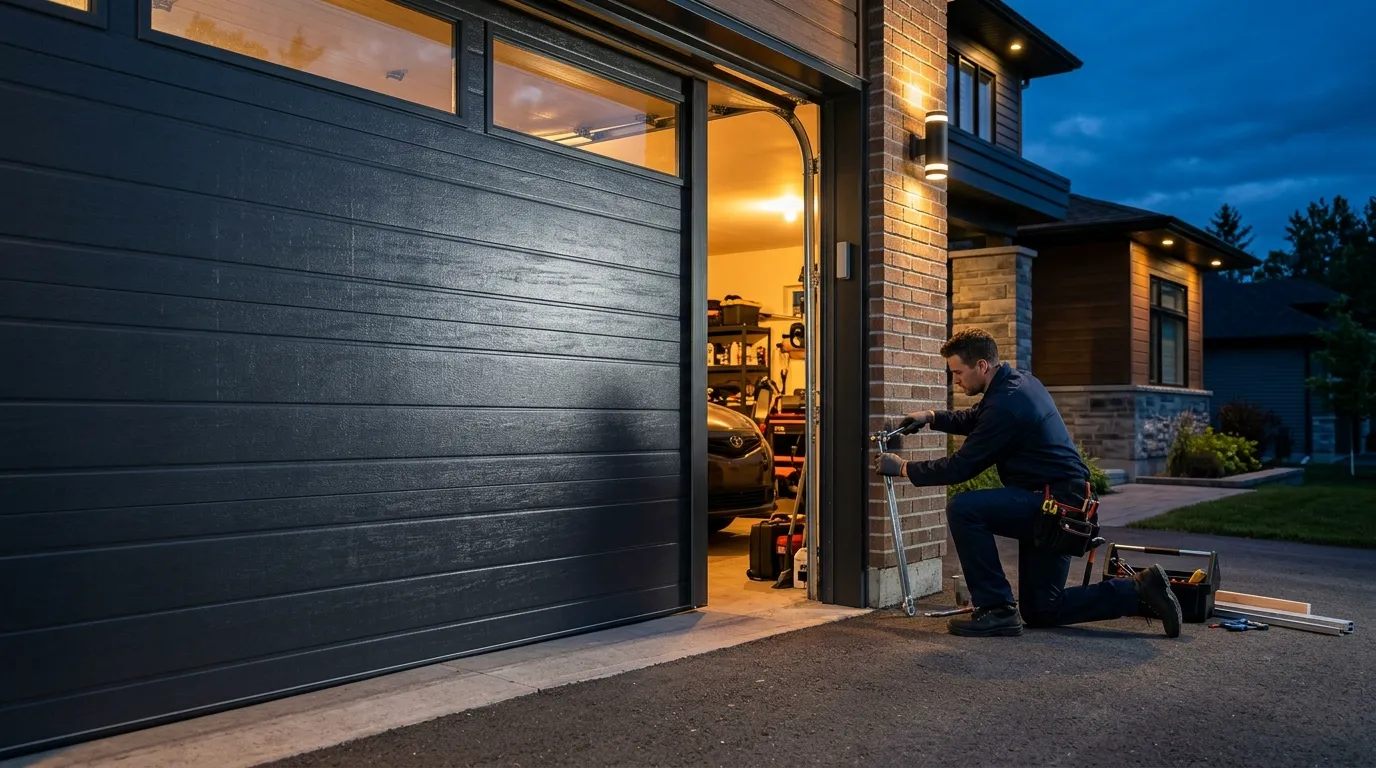
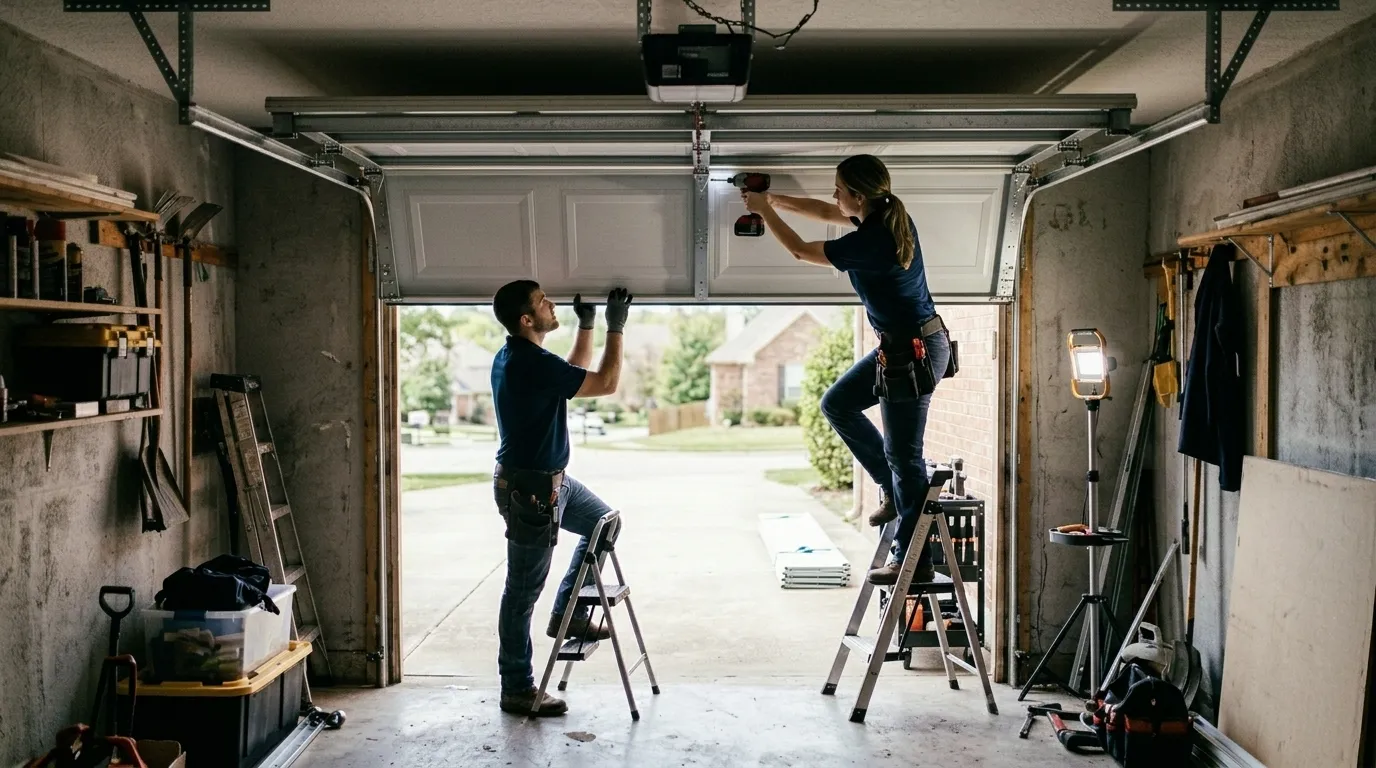
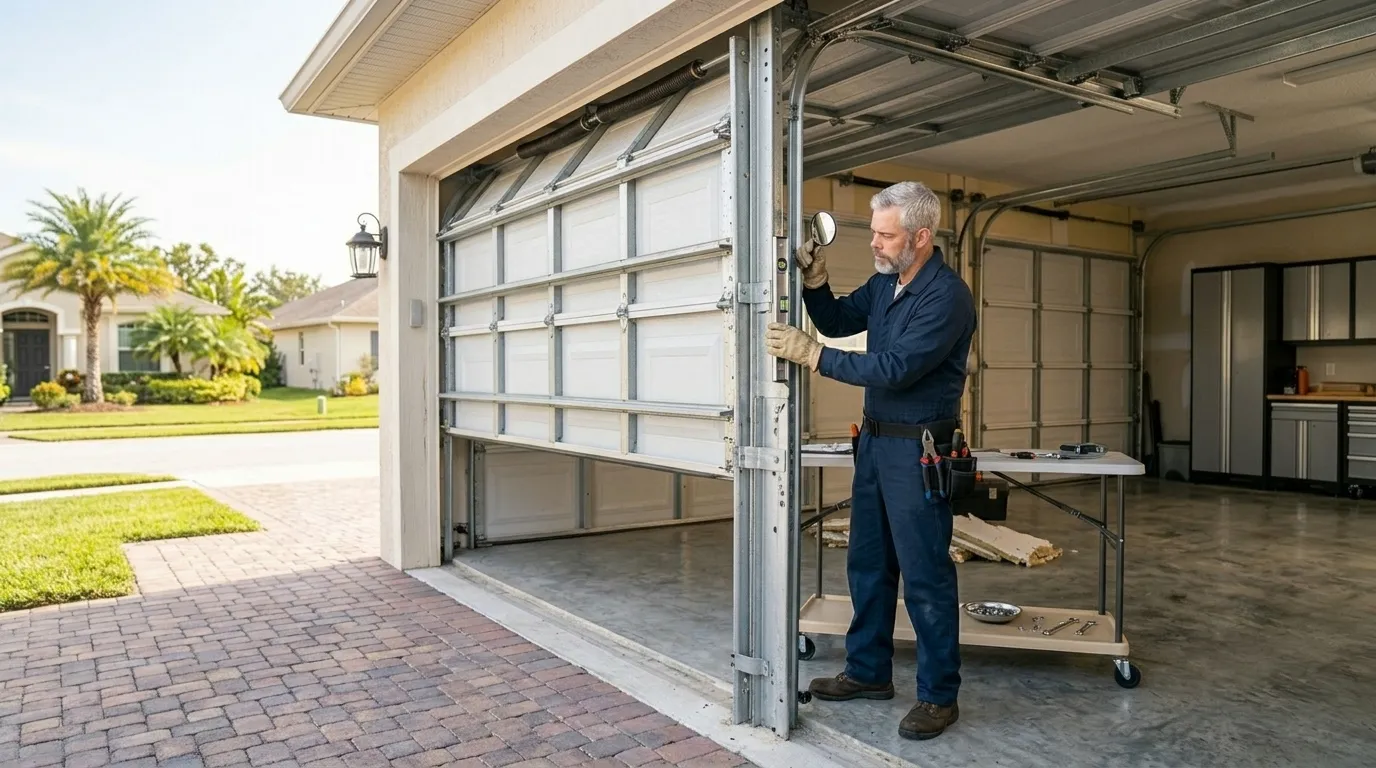
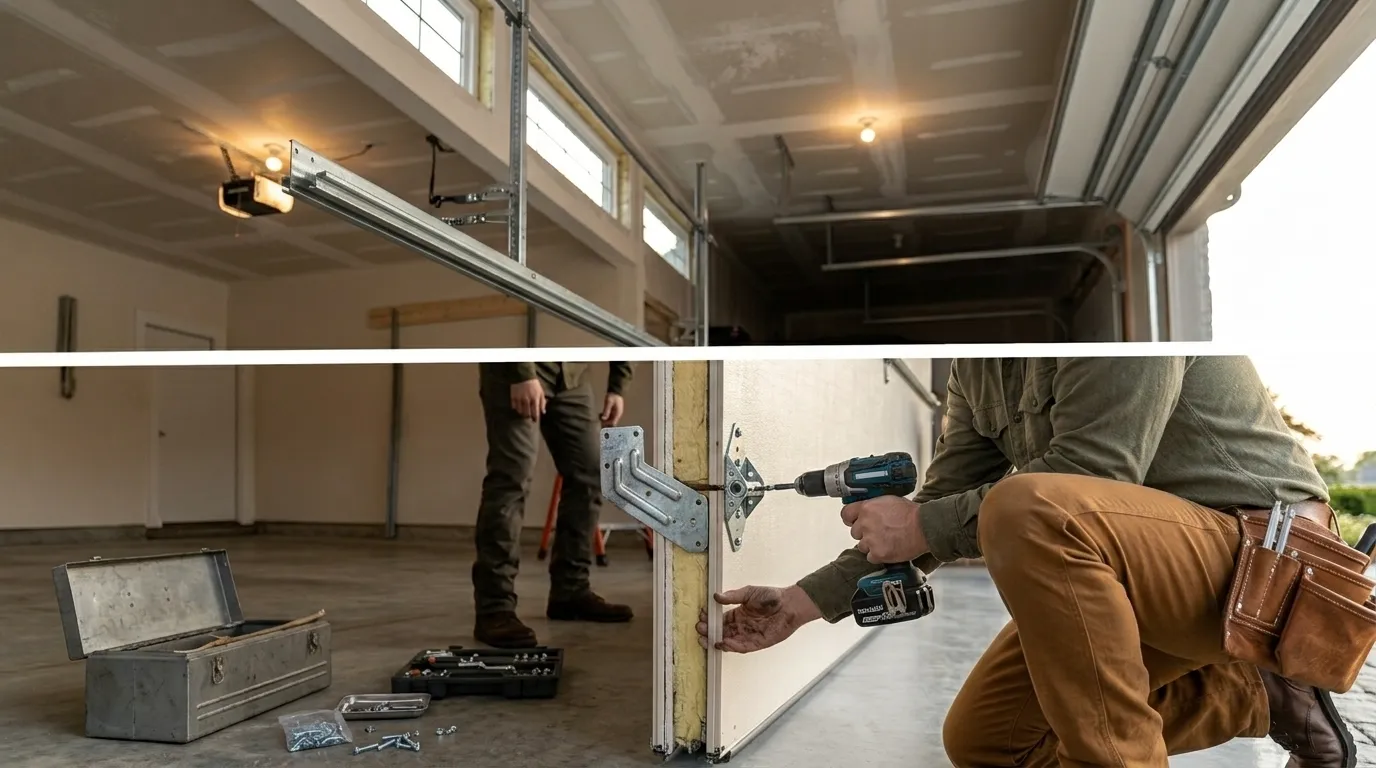
A spring replacement means releasing tension safely, pulling the old spring off the header bracket, matching wind direction and wire size to the door's weight, and setting the new spring's tension so the door balances - meaning it holds still at waist height without help. Cable and roller swaps are usually paired with a track alignment check, since a worn cable often means the track's been carrying the door unevenly for a while. If the opener's travel or force settings are off, we reset those too, since a spring replacement changes how much the motor has to work. One honest limit: if a door's panels are rusted through or the track brackets have pulled out of rotted framing, replacing the spring buys you a few months at best - at that point we'll say so instead of billing you twice. With median household income in this area at $91,429, most owners can weigh a repair against a full door replacement without it being an emergency decision either way, and we'll lay out both costs before we start.
Why This Fails Locally
This area's housing runs 1946 to 2001 with a median build year around 1974, and that matters more than people expect. Doors installed in that window came with torsion springs sized for the single-layer steel or wood doors of the day. Over the decades since, a lot of those original doors got swapped for heavier insulated replacements - but the spring hardware behind them often didn't get upgraded to match, because nobody thinks about the spring until it breaks. Add in this area's moderate heat band, where steel coils expand and contract through repeated daily heat cycles, and you get springs fatiguing faster than their rated cycle count would suggest. Across the roughly 17,555 owner-occupied houses in this service area, that combination - old spring, heavier door, warm-climate cycling - is the single most common reason for a stuck or crooked door. It's not a Lodi-specific defect, it's just what happens when 1960s and 70s hardware keeps doing a job it was never re-sized for.
How it works
From “it’s stuck” to “it’s fixed”
1
Tell us what’s wrong
Describe the symptom - won’t open, loud bang, opener runs but the door won’t move.
2
On-site diagnosis
A technician tests the door under power and by hand and finds what actually failed.
3
Clear, up-front plan
You get the fix that’s needed and what drives the cost - before any work starts.
4
Repaired & tested
The repair is done, the door is set true and tested, and the work area left clean.
Next step
Serving Lodi, CA - tell us what your door’s doing and we’ll take it from there.
Why did my garage door spring snap with no warning?
Torsion springs fail from metal fatigue after thousands of open-close cycles, and that fatigue builds up quietly for years before the coil finally lets go. On houses in this area built in the 1960s and 70s, the original spring is often still in place decades later, well past where it should've been swapped, so the failure looks sudden even though the wear wasn't.
Can I just replace the spring myself?
A torsion spring is under enough stored tension to cause serious injury if it's released wrong, which is why we don't recommend it as a DIY job. Extension springs on older two-spring setups are somewhat safer to handle but still require the door to be secured first. If you're not sure which type you have, that's a sign to call rather than guess.
Is it worth repairing an old door or should I replace it?
If the panels, track, and frame are sound, a spring or cable repair usually makes sense and costs far less than a new door. If the panels are rusted through or the frame's pulled loose, a repair is a short-term patch. We'll tell you which situation you're in before recommending either.
Ready to get your garage door sorted?
Tell us what it’s doing and where you are in Lodi - we’ll take it from there.