Cable Repair for Collierville's 1990s-Era Garage Doors
Collierville homes built around 1992 still run mostly on original cable and drum hardware. We drive out from Lodi with the parts that era of door actually uses.
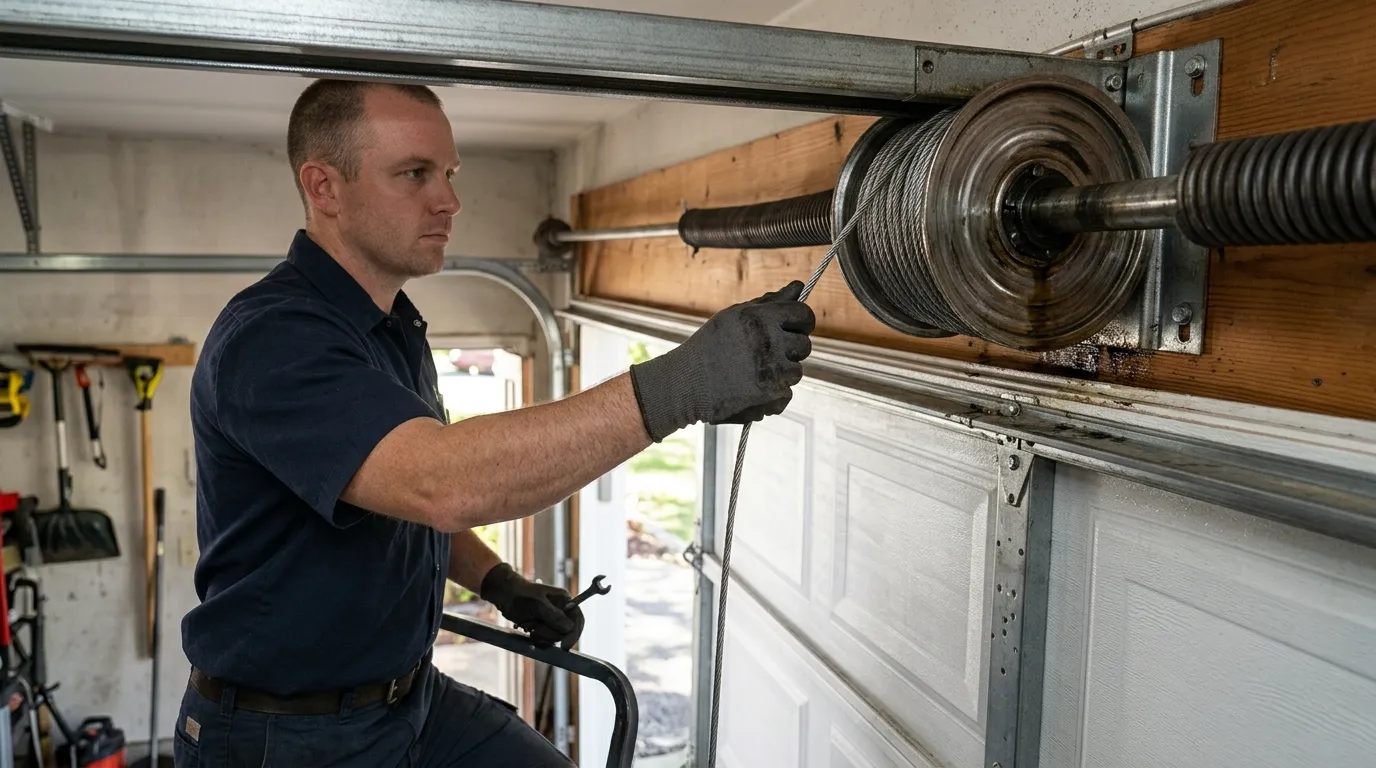
Collierville's housing stock centers on 1992, which puts most garage doors here about three decades past their original install with nobody having touched the lifting cable since. That's a different truck load than an older neighborhood. By 1992, most residential doors had shifted to galvanized aircraft cable on steel drums with torsion spring setups rather than the older extension-spring track cable you'd find in pre-1970s stock. So the truck carries torsion-drum cable in the common residential gauges, drum sets sized for standard 7-foot and 8-foot doors, and the fasteners that hold a drum to the shaft - because on a door this age, the original drum is usually still there and usually worn at the cable groove. We don't stock oddball extension-cable pulley kits for this trip; that's older-house work. What we bring instead is what a 1992-built door in this area actually needs replaced: cable, drum, and sometimes the bottom bracket the cable anchors to, since that bracket takes the wear every time the door seats.
What the Fix Involves
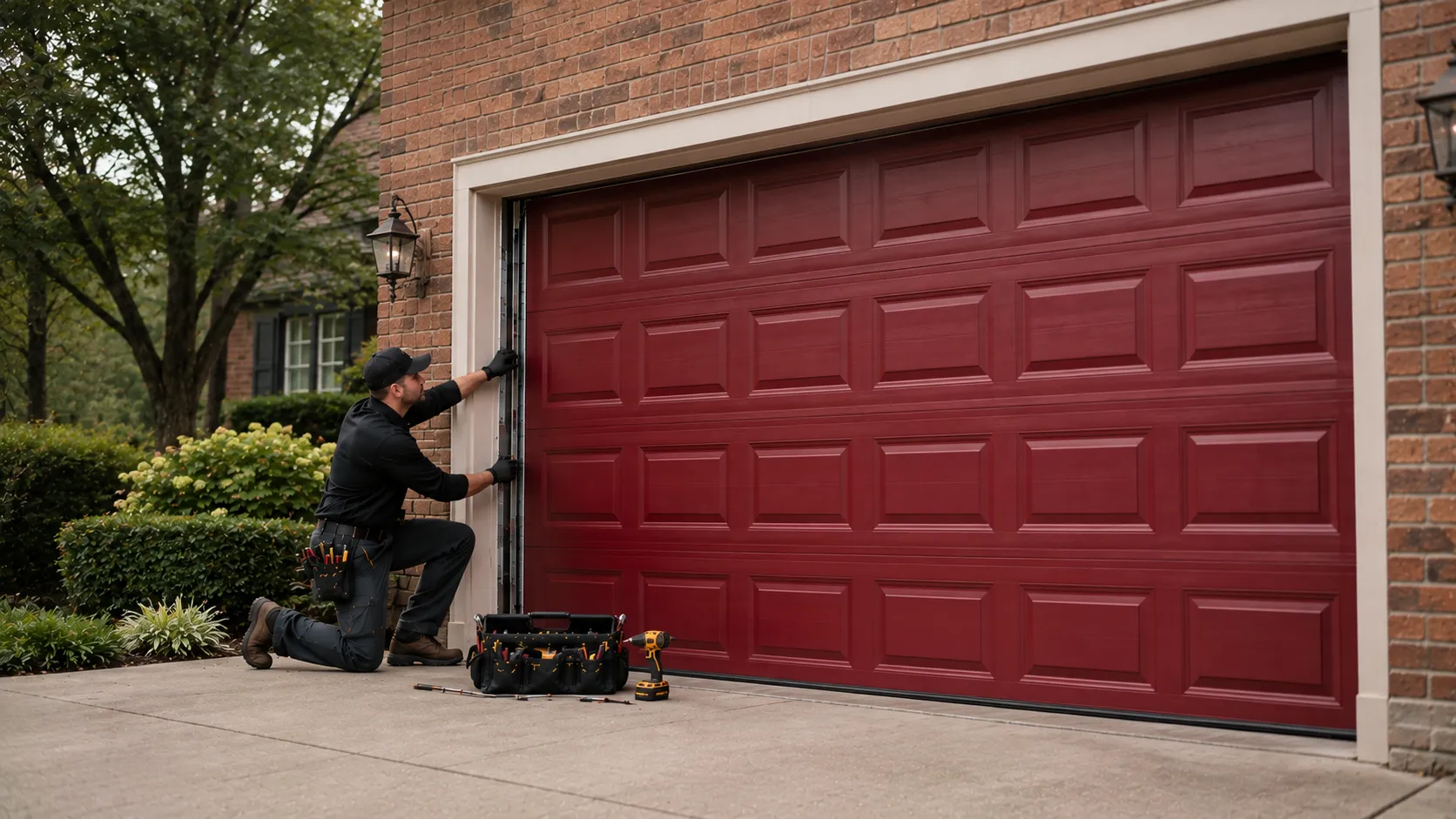
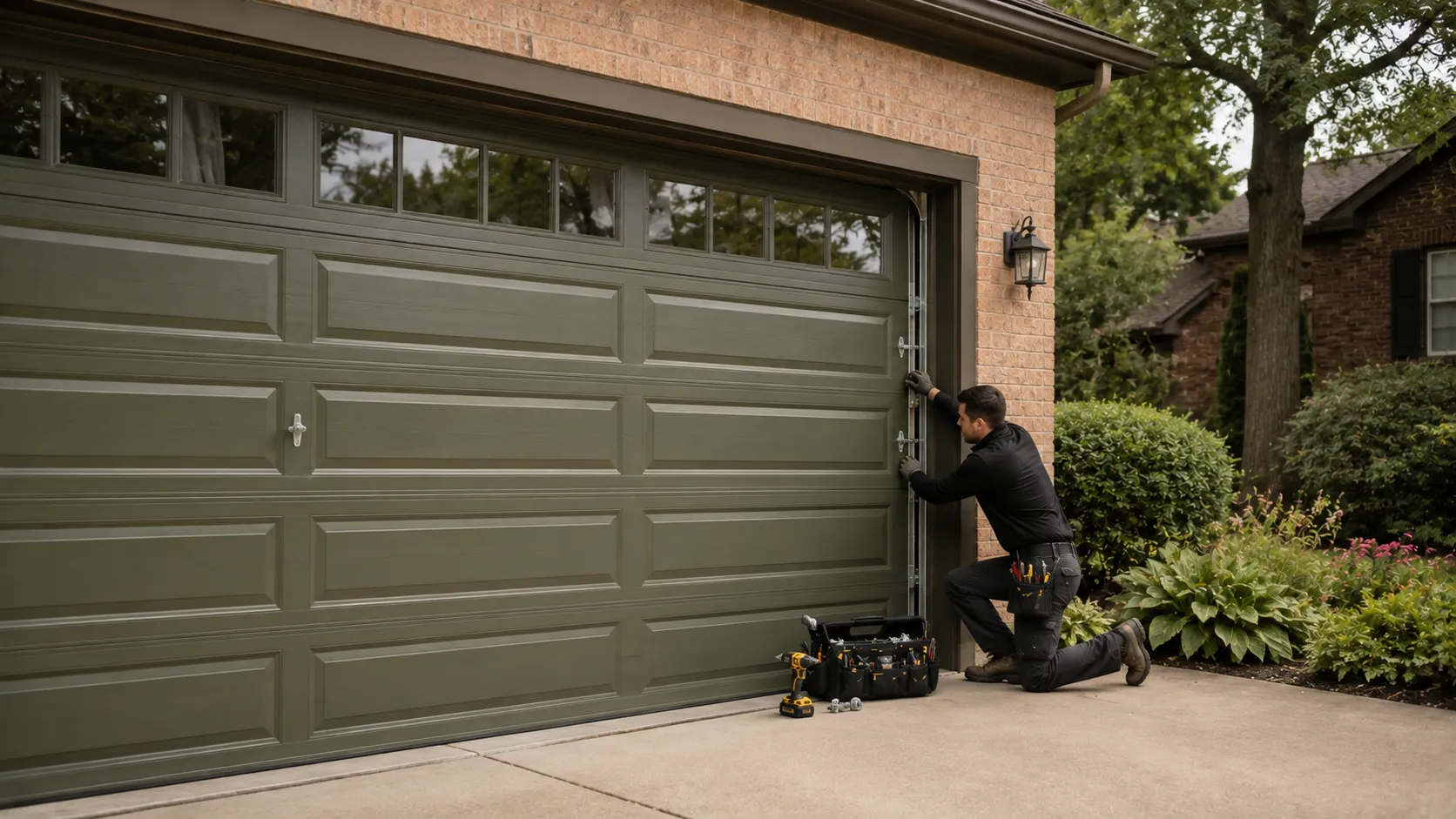
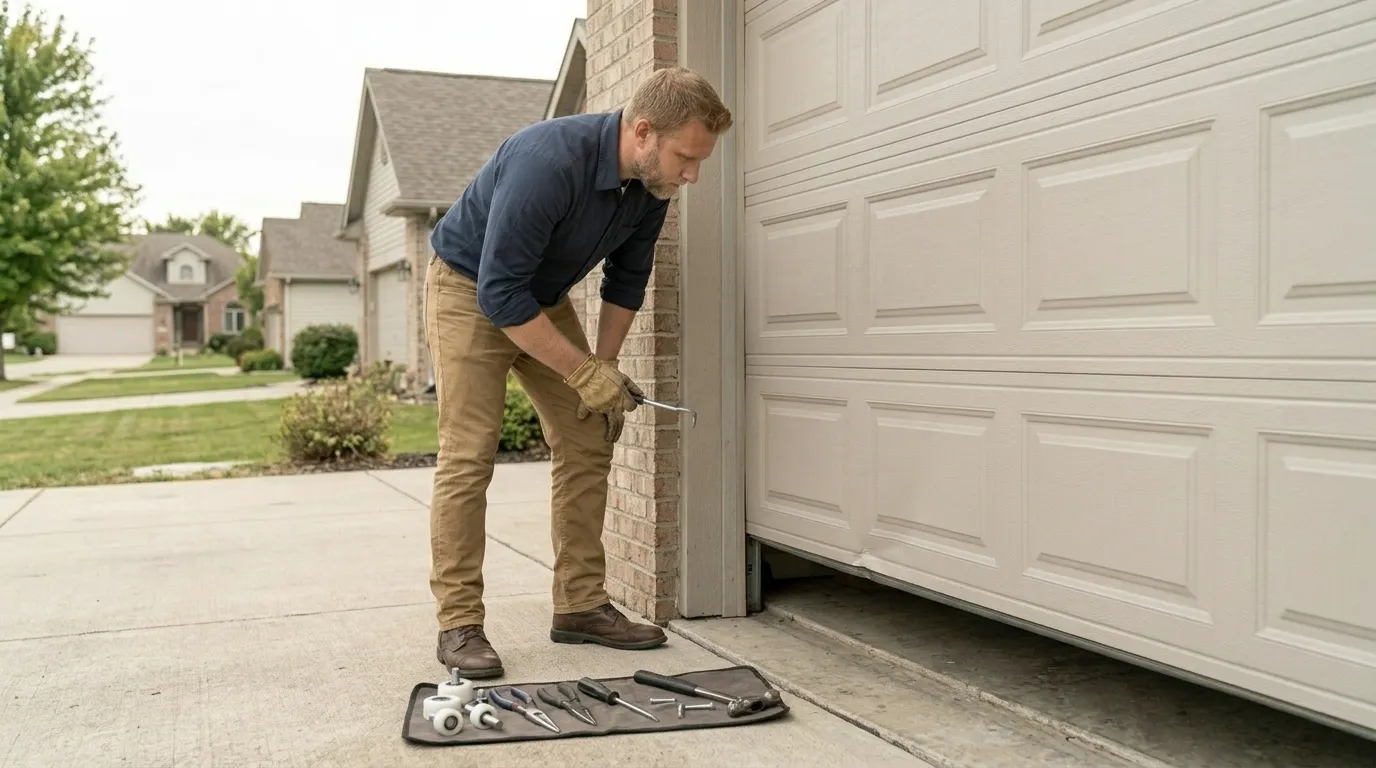
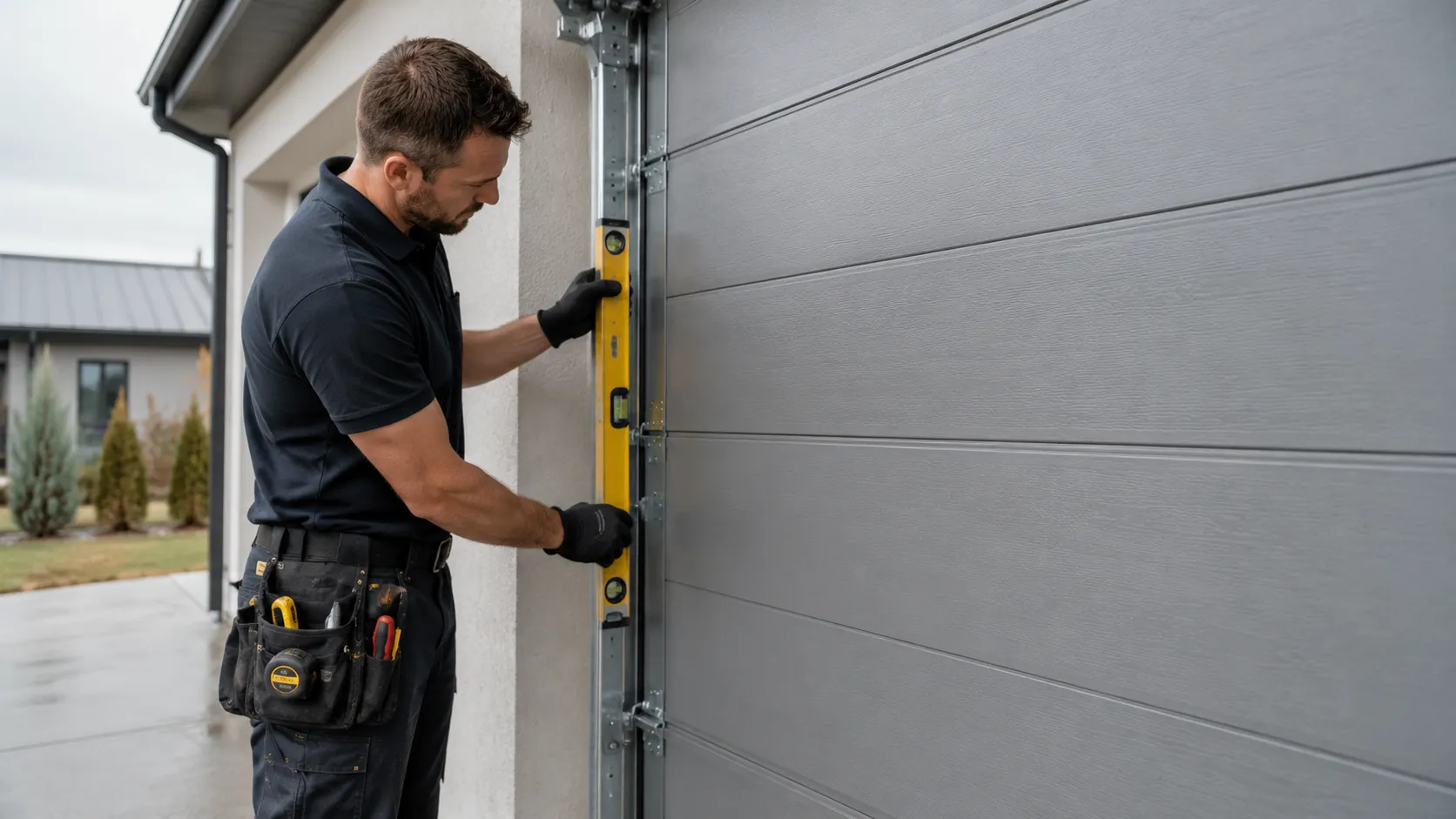
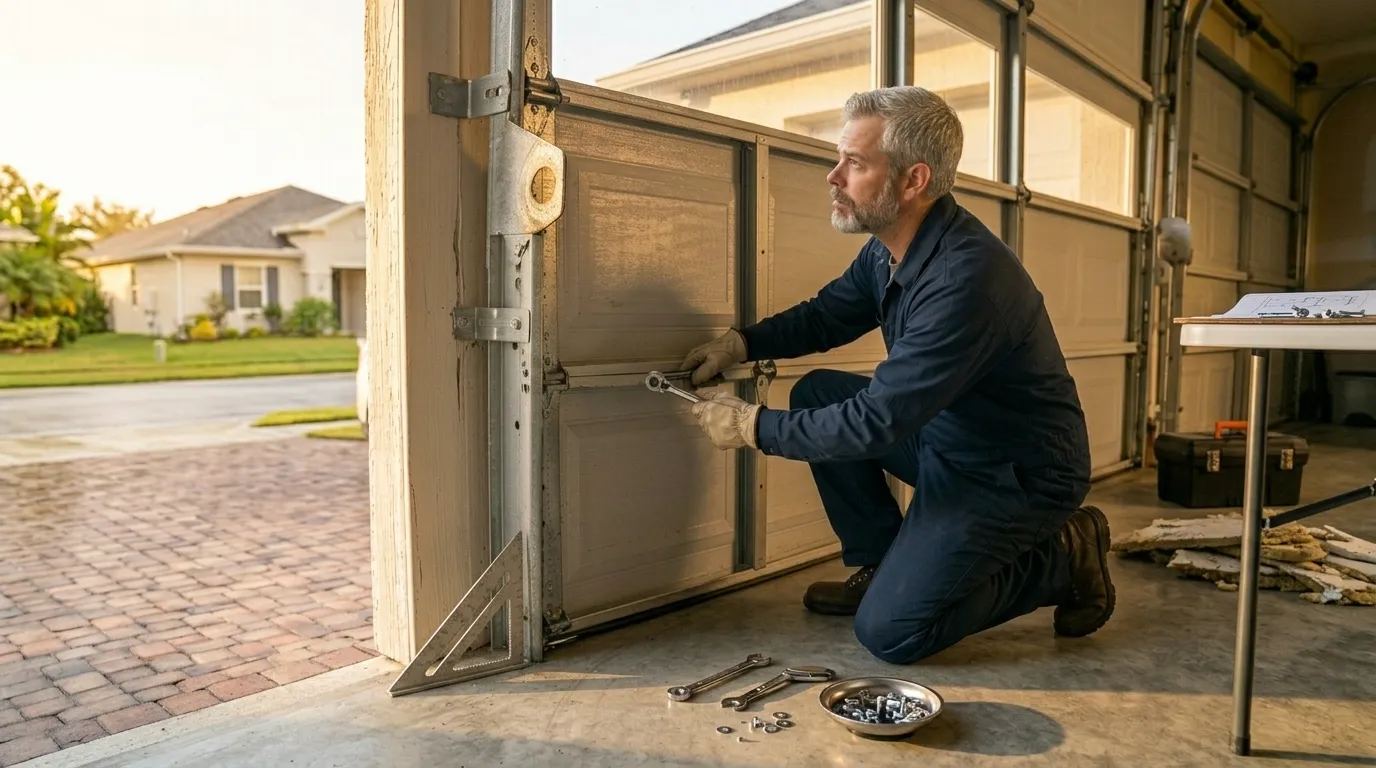
The job starts with releasing tension safely - the spring on a torsion system holds real force, and a frayed cable under load is exactly how people get hurt trying to do this themselves. Once the door is secured and the spring tension is off, we pull the worn cable off the drum, check the drum groove for wear grooves deep enough to have started chewing into the new cable prematurely, and inspect the bottom bracket and track roller on that side, since a bent bracket is often what started the cable fraying in the first place. New cable gets seated and wound to match the opposite side's wrap count, then we re-tension the spring and cycle the door a dozen times watching for drift. On a door running its original 1992 hardware, we're also checking the opposite cable while we're in there - if one side is thirty-plus years old and frayed, the other side is the same age and due, even if it hasn't failed yet.
Why This Fails Locally
The climate here runs a moderate heat band, and heat is what ages a cable's factory lubrication and the cable itself faster than most owners expect - not through rust, but through the coating drying out and the strands starting to separate under repeated flex. A door built in 1992 has had thirty-plus summers of that cycle on the same original cable. Add to that a household base in this area with a median income near $99,792, which tends to mean owners who bought move-in-ready homes and haven't had reason to open the garage door hardware since - no prior repair, no prior spring swap, nothing. That's a cable at the far end of its service life with zero maintenance history, which is a worse combination than an older cable that's already been replaced once. We're driving in from Lodi, about 6 miles out, so this isn't a same-neighborhood callback - it's worth checking both cables in one visit rather than calling twice.
How It Shows Up
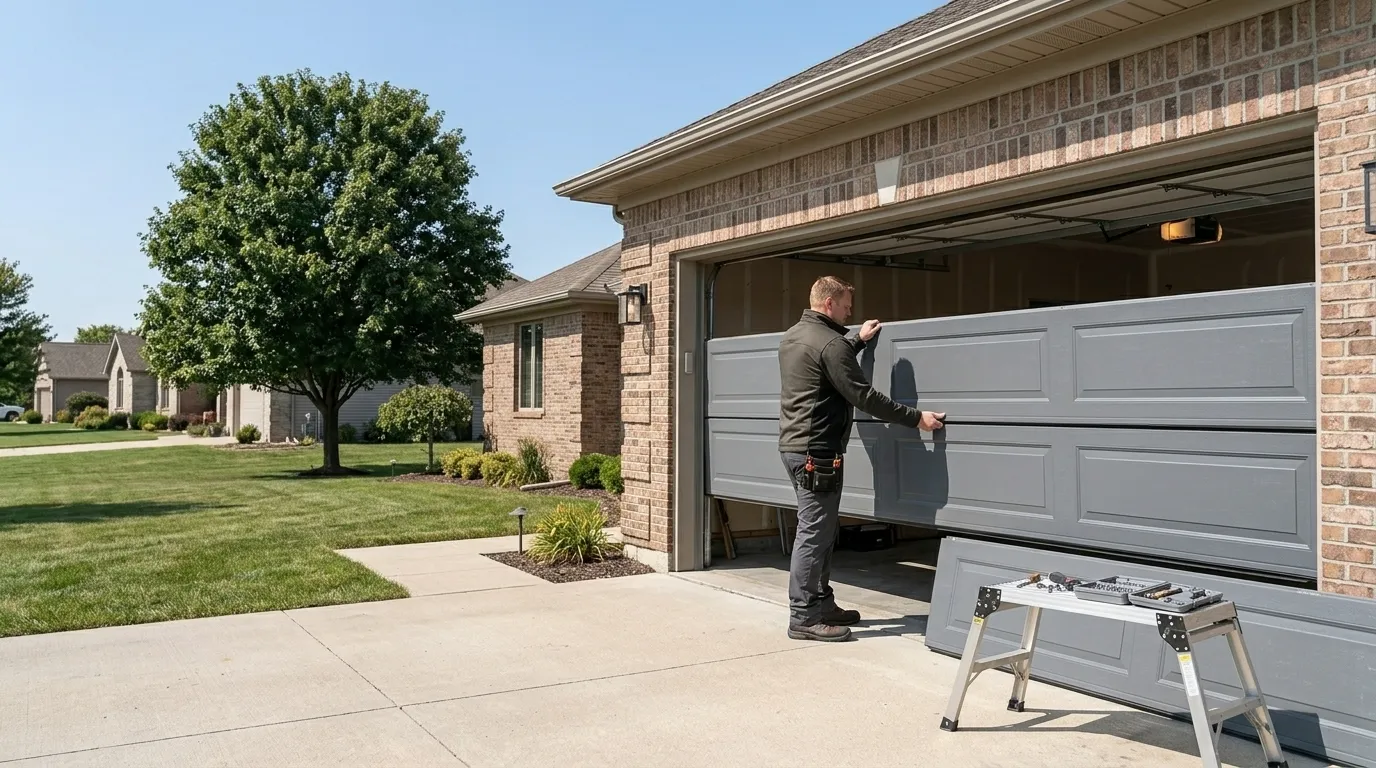
On a door this age, cable failure rarely announces itself as a full snap first. More often it starts as one corner of the door hanging slightly lower than the other, or the door racking side to side as it travels - a sign one cable has stretched or started shedding strands while the other hasn't yet. Some owners hear a faint popping or ticking near the top corner as loose strands catch on the drum. If the door has jumped its track on one side, or you can see silver wire strands poking out from the cable near the bottom bracket, stop using the opener and don't try to force the door by hand - a partially failed cable under spring tension can let go the rest of the way without warning. With about 671 households in this immediate area on hardware from the same build era, we're seeing this pattern repeat rather than it being one unlucky house.
How it works
From “it’s stuck” to “it’s fixed”
1
Tell us what’s wrong
Describe the symptom - won’t open, loud bang, opener runs but the door won’t move.
2
On-site diagnosis
A technician tests the door under power and by hand and finds what actually failed.
3
Clear, up-front plan
You get the fix that’s needed and what drives the cost - before any work starts.
4
Repaired & tested
The repair is done, the door is set true and tested, and the work area left clean.
Next step
Serving Lodi, CA - tell us what your door’s doing and we’ll take it from there.
Is my garage door cable original if my house was built in 1992?
Very likely, if no one's mentioned a repair. Most 1990s-era doors here still run the factory torsion-drum cable, and cable isn't something that typically gets swapped unless it's already failed or frayed visibly. Thirty-plus years on the original strand is well past what we'd call a safe working life, even if it hasn't snapped yet.
Why does one side of my door look lower than the other?
That's usually a cable that's stretched or partly frayed on one side while the other side is still holding. It's a common early sign on doors running original 1990s hardware. Left alone, the weaker side keeps degrading until it lets go, so it's worth getting both cables checked in one visit rather than waiting for the second one to fail.
Do you replace just the broken cable or both sides?
We check both. If your door dates to the early 1990s and one cable has failed or is fraying, the other side is the same age and under the same load history, so it's usually close behind. We'll tell you what we see on both sides before doing the work, not assume you need two repairs.
Can I drive on the broken cable for a day or two?
We'd rather you didn't. A door with one failed or failing cable can rack, jump its track, or drop unevenly, and that puts stress on the opener and the remaining cable. If a cable's already showing frayed strands, treat the door as out of service until it's fixed.
Ready to get your garage door sorted?
Tell us what it’s doing and where you are in Lodi - we’ll take it from there.