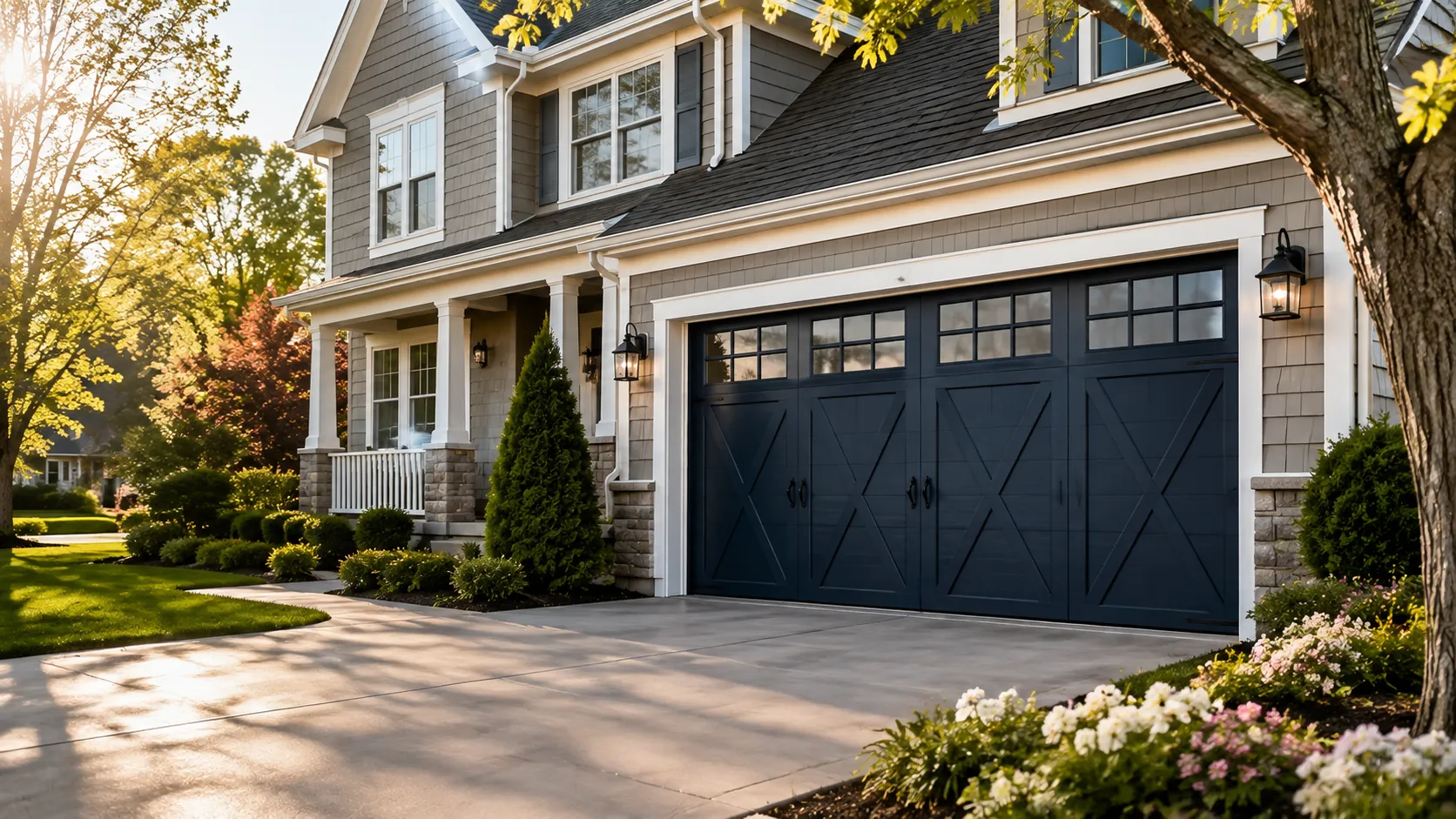
What the Fix Involves
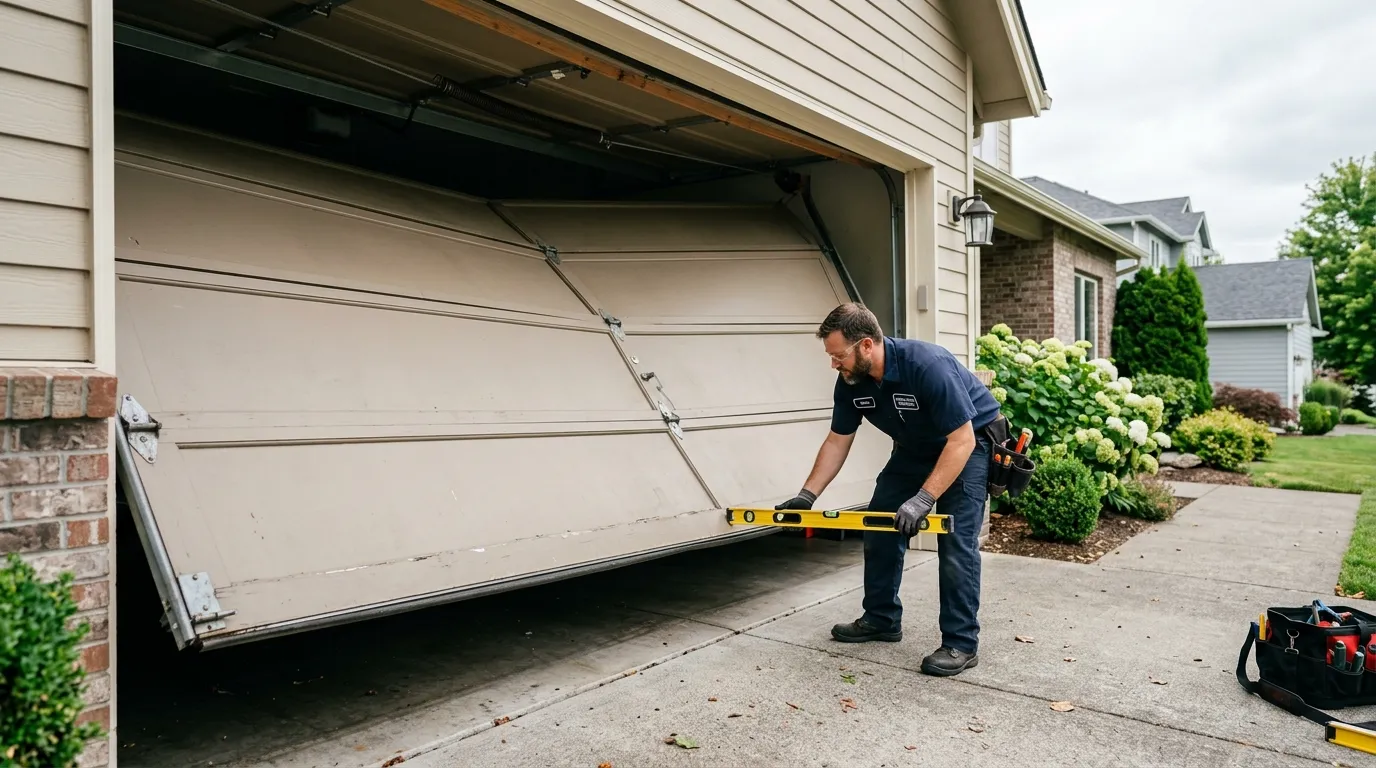
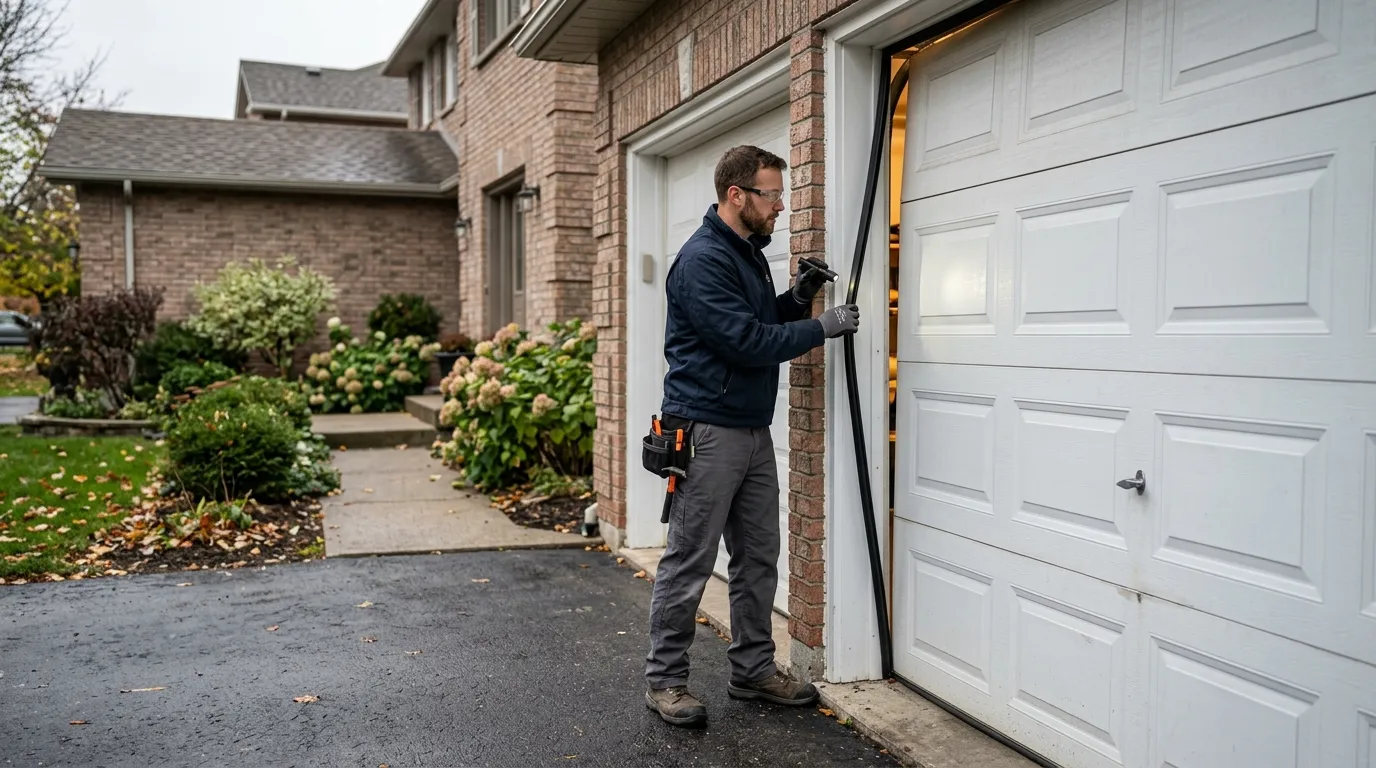
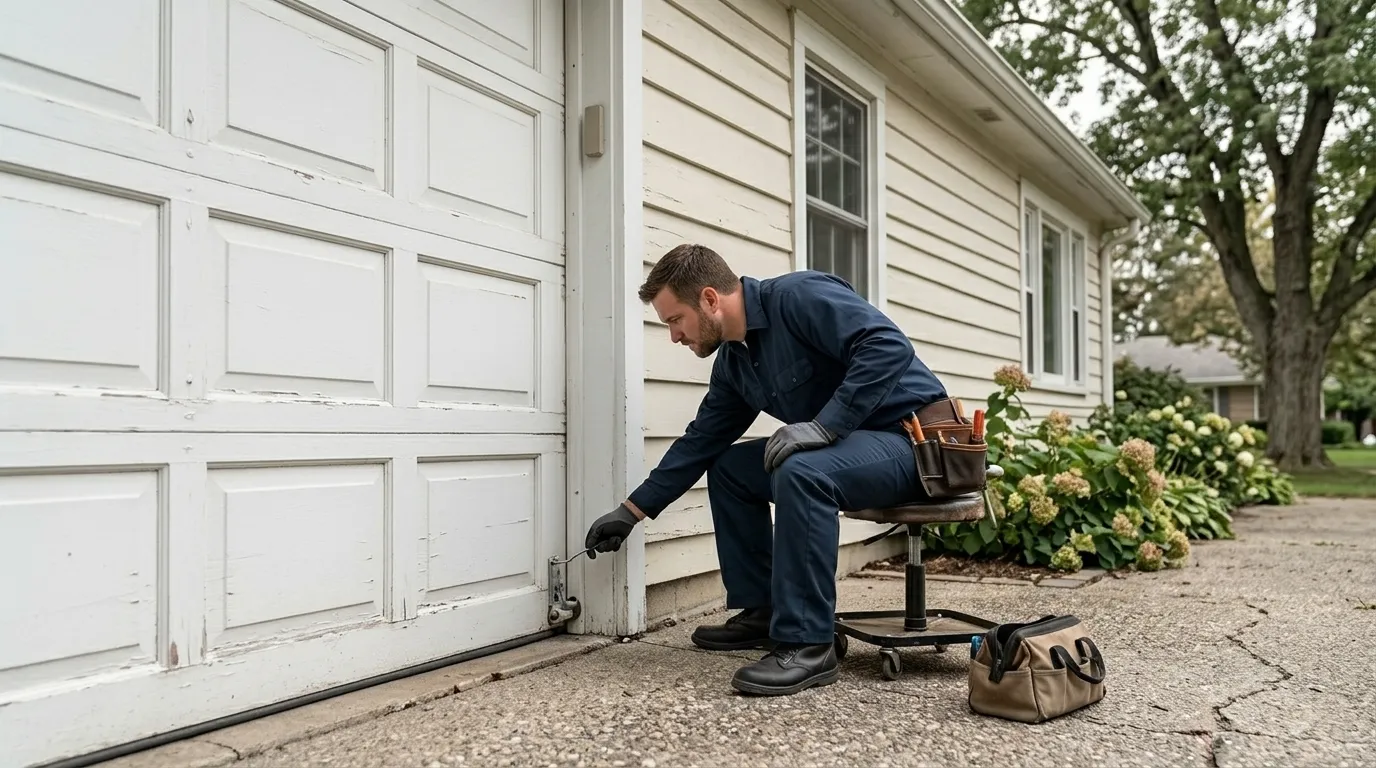
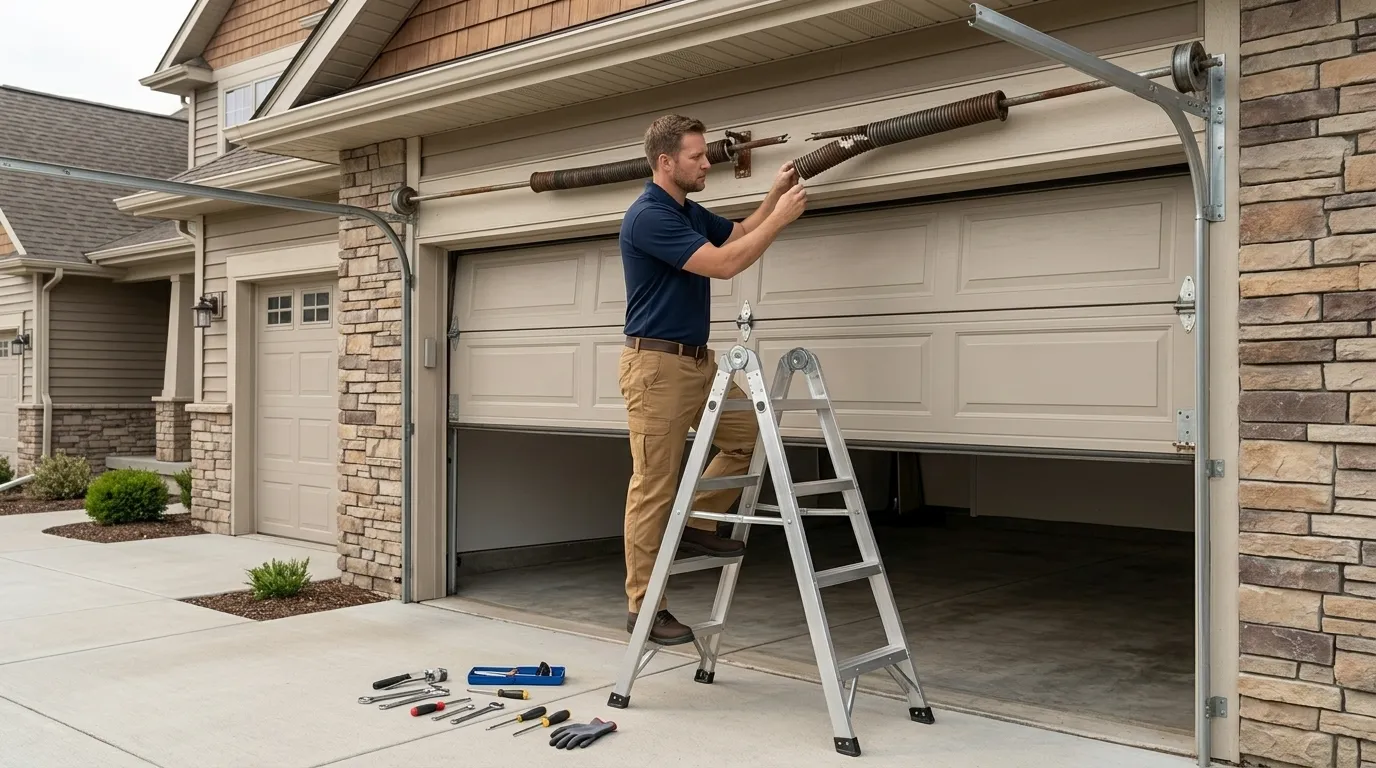
An off-track door on a house from this era usually comes down to one of three things: a bent track section, a roller that's popped its bracket, or a cable that's frayed enough to let the door lean sideways as it travels. On the 1992-and-later builds common in Collierville, tracks tend to be lighter-gauge than what you'd find on an older door, which means they bend more easily under a hard hit but also straighten and realign more predictably once the door's back on its rollers.
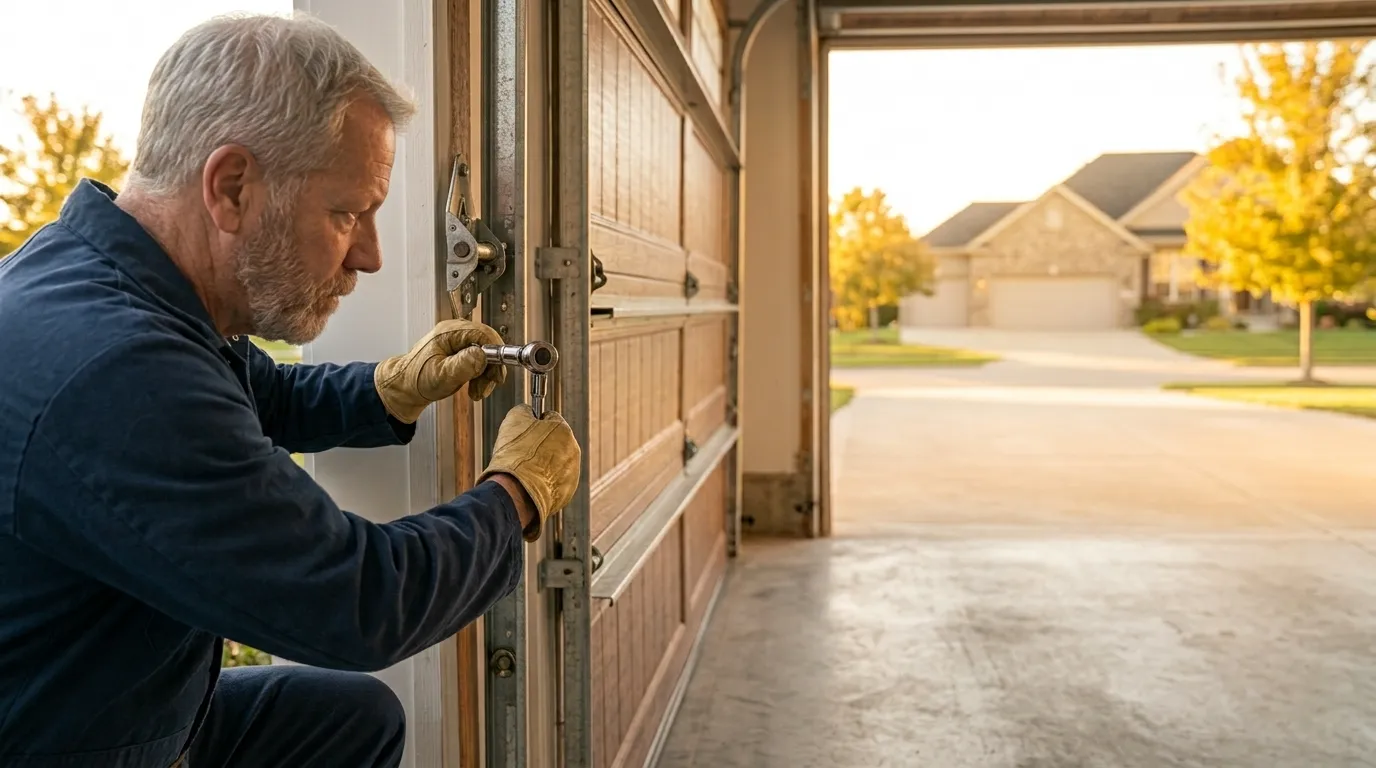
The job starts with the door secured - blocked or clamped so it can't fall while the track's off - then the bent section gets pulled and checked against a straight edge. Anything visibly kinked gets replaced rather than hammered back into shape; a track that's been bent once and straightened is weaker at that spot for good. Rollers get inspected and swapped if the bearing's gone or the wheel's cracked, and brackets get reset to the spacing that matches the door's actual panel weight. Once it's back in the track, we run it a dozen cycles by hand before we trust the opener to it.
Why This Fails Locally
Collierville's housing pushes later than the region as a whole - 1992 versus a service-area median closer to 1974 - and that later build date means most garages here came with steel sectional doors on standard-width track from the start, rather than the older one-piece doors some of the surrounding towns still have. The failure mode that shows up most in this kind of housing is track knocked out of alignment by an impact - a car bumper catching the bottom section, a bike leaned into the door, a hard gust catching a door mid-cycle. On the lighter track spec used in early-'90s construction, one solid hit is often enough to bow the rail just enough that the rollers ride up and pop free.
With 671 households in Collierville, this isn't a high-volume stop for us, but it's a consistent one - the same handful of failure points recur because the housing stock is more uniform in age than in a town with a wider mix of build decades. Income here runs higher than the service-area average too, at $99,792 against roughly $91,429 across the wider area, which we mention only because it tracks with more owners replacing bent track outright rather than living with a door that drags.